A desktop picture has to come from somewhere, and the answer splits the processor market in two. Integrated graphics is a small graphics engine built into the processor itself. Discrete graphics is a separate card with its own memory and its own outputs. The difference decides what you can run, what you can plug in and what the PC costs before it switches on.
Quick Answer
Integrated graphics is built into some processors and handles desktop work, video playback and light gaming at low settings. Discrete graphics is a separate card you add, and it drives serious gaming and multi-monitor work. The AMD Ryzen 5 5500F at R2,199 has no integrated graphics, so it needs a discrete card to show a picture, and that card sits on top of the processor price.
🧠 What integrated graphics actually is
An integrated graphics engine lives on the same piece of silicon as the processor's cores. It has no memory of its own, so it borrows a slice of the system's DDR4 memory for every frame it draws. That is why a PC with integrated graphics runs better with dual-channel memory, two sticks in the right slots, than with a single stick. A single 8GB stick leaves the graphics engine starved, while 16GB in two sticks gives it room.
For everyday use the trade is fair. A spreadsheet, a browser with thirty tabs, a 1080p video and a video call all sit comfortably inside what an integrated engine can draw. Light games at 720p or 1080p with the lowest settings also run, though a demanding title will not hold a steady frame rate.
🔍 Where the two options split
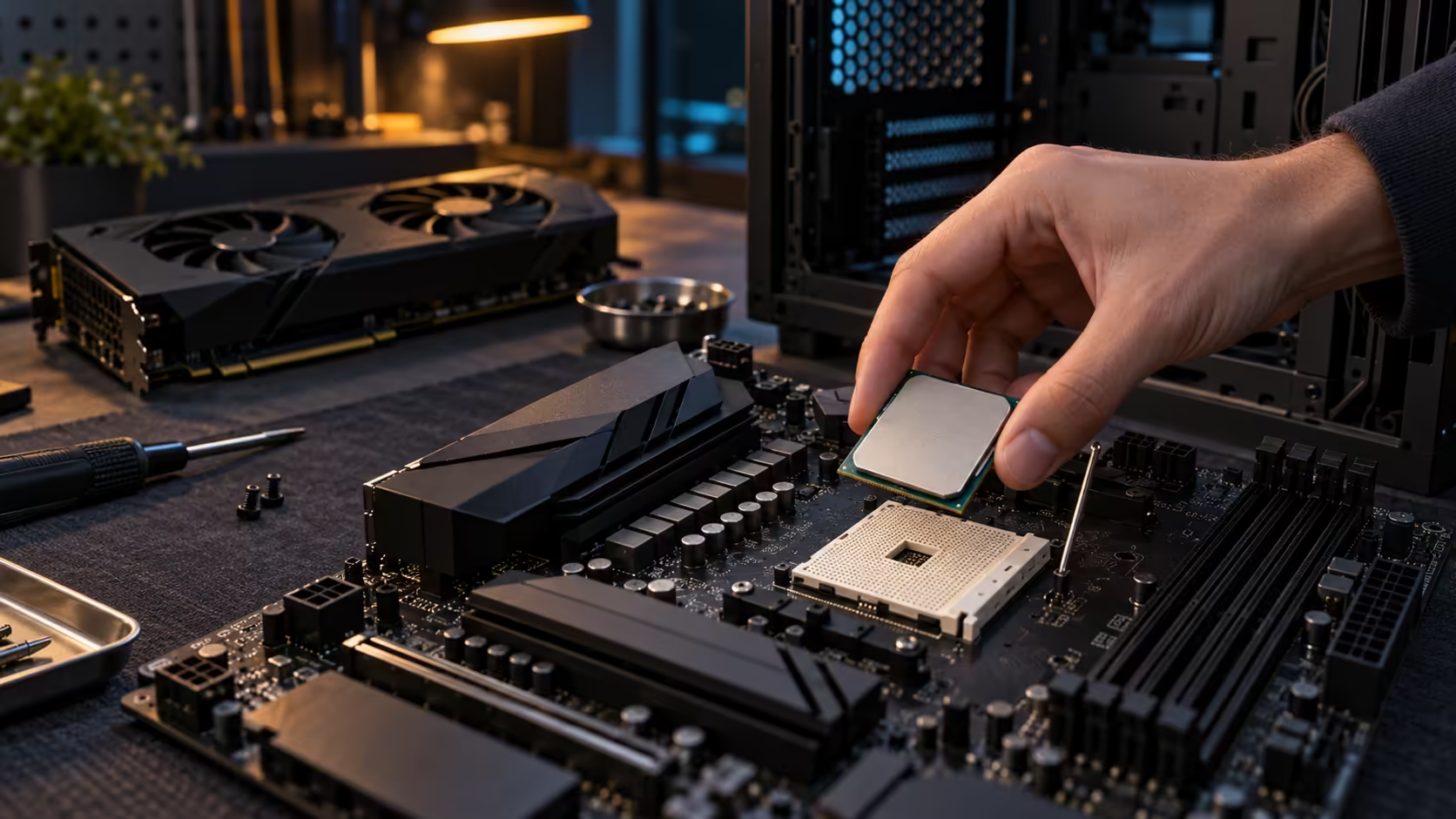
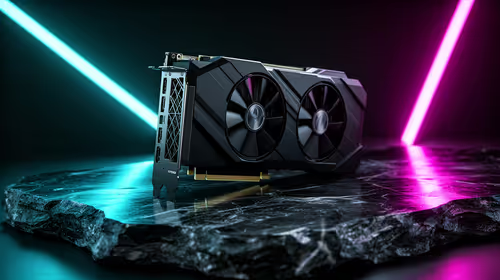
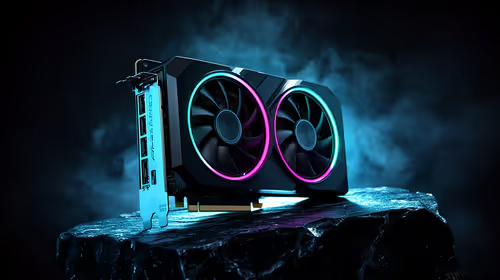
A discrete card brings its own video memory, usually between 4GB and 16GB, and that memory is faster and separate from the system's. A mid-range card can run a 1080p game at high settings at frame rates above 100fps, where integrated graphics would struggle to reach 30fps in the same title. The card also draws more power, often 150W or more under gaming load, against a small fraction of that for an integrated engine.
Outputs are the other split. Integrated graphics on a board usually offers a few video ports on the motherboard's rear panel. A discrete card adds more outputs, and a card with three DisplayPort connectors and one HDMI port runs three monitors at once where the board's ports would not.
Two details trip up buyers. First, some chips with integrated graphics need the board's own video port to show a picture, so the monitor must be connected to the motherboard, not to a card. Second, a discrete card needs a free x16 slot and enough power, which a board with a single slot and a small power supply may not have.
🧾 Which one fits the PC you are building
The Ryzen 5 5500F is a discrete-graphics chip. It has no built-in engine to fall back on, so the card is part of the build from the start. Plan for the card from the first line of the budget. In a spreadsheet, add a row for the card beside the processor, so a missing card never surprises you at checkout.
Suppose you are weighing two builds for a R12,000 total. One uses a processor with integrated graphics and no card, and the other uses the 5500F at R2,199 with a card. For arithmetic only, if that card costs R3,000, the second build spends the R2,199 and the R3,000 for a total of R5,199 on those two parts. Whether the extra money buys enough is a question of what you play. A desk that only needs a monitor and office work does not need the card, while a machine for games does.
The Ryzen 5 chips is the place to see chips that suit a card-first build, while the wider AMD line widen the search. For the complete processor line, the processor range on Evetech puts the Ryzen 5 beside every other option.
Frequently Asked Questions
Does integrated graphics mean a processor cannot play games?
No, but it limits what you can play. Light and older titles run at low settings, while modern demanding games need a discrete card to hold a steady frame rate.
Can I add a card later to a processor that has integrated graphics?
Yes, in most cases. Fit the card in the x16 slot, plug the monitor into the card, and the card takes over the picture. Check the board manual for any setting that switches the integrated engine off.
Is integrated graphics enough for two monitors?
It can be, if the board has enough video ports and the work is office or video. For two monitors used for gaming or design, a discrete card with more outputs is the easier route.
Does dual-channel memory matter for integrated graphics?
It does. The integrated engine shares system memory, so two matched sticks give it more bandwidth than one. Fit the sticks in the slots your motherboard manual marks for dual-channel.
Not sure which graphics route suits your desk?
Compare the processors and graphics cards you need, then decide whether the card belongs in this build.