Competitive PC players in South Africa face a practical problem: the features that matter most in a shooter are easy to name, but the trade-offs take a few sessions to understand. Actuation depth, rapid trigger, SOCD and polling are the four that deserve a look, and each one matters for a different reason. Desk room and the network are the two local factors that often get forgotten when people compare keyboards on paper.
Quick Answer
For competitive PC gaming, the features that matter most are actuation depth, rapid trigger, SOCD and polling, with desk room close behind in a small South African flat. Ping to a Johannesburg or Cape Town server is a separate network delay that no keyboard can fix. This board packs all four features into a package priced at R3,999 with VAT included.
📐 Actuation depth: the feature you feel first
Actuation sets the depth at which a press counts. Covering 0.1mm up to 4mm, the G PRO X2 RAPID TKL moves in 0.05mm jumps, so you can place the press point where your presses are repeatable. In a ranked match, a consistent depth means fewer missed or doubled inputs, which is the reason this feature sits at the top.
Begin at a value close to 2mm, the centre of the scale, and adjust in small steps. Test each value in a practice map before you trust it in a match, and keep the value that gives you the most consistent results.
⚡ Rapid trigger and SOCD: the movement features
A reset test of 20 taps takes about 2 seconds at a ten-tap-a-second pace.
Rapid trigger controls the reset once a key comes back up. It helps when you tap the same key repeatedly, and it is the feature most shooter players notice after depth. Test it by tapping one key twenty times and noting how many registrations you get.
SOCD decides what happens when opposite keys are held together. The G PRO X2 RAPID TKL's KEY PRIORITY setting handles that rule, and a strafe test in a practice map shows how it behaves. A clean, predictable response makes movement easier to plan, which matters in close fights.
🎯 Polling: useful, but not the first thing to buy for
Polling decides how frequently the board reports to the computer. The board runs 8 kHz polling, which means a report every 0.125ms against 1ms at 1kHz. The gain is small, and it only holds if the port and the cable are clean, so plug the board into a rear port with a short cable.
Polling is the last feature to chase, because it depends on the setup as much as the board. A tuned depth and a clean reset will do more for your results than the polling rate alone.
🪑 Desk room in a small South African flat
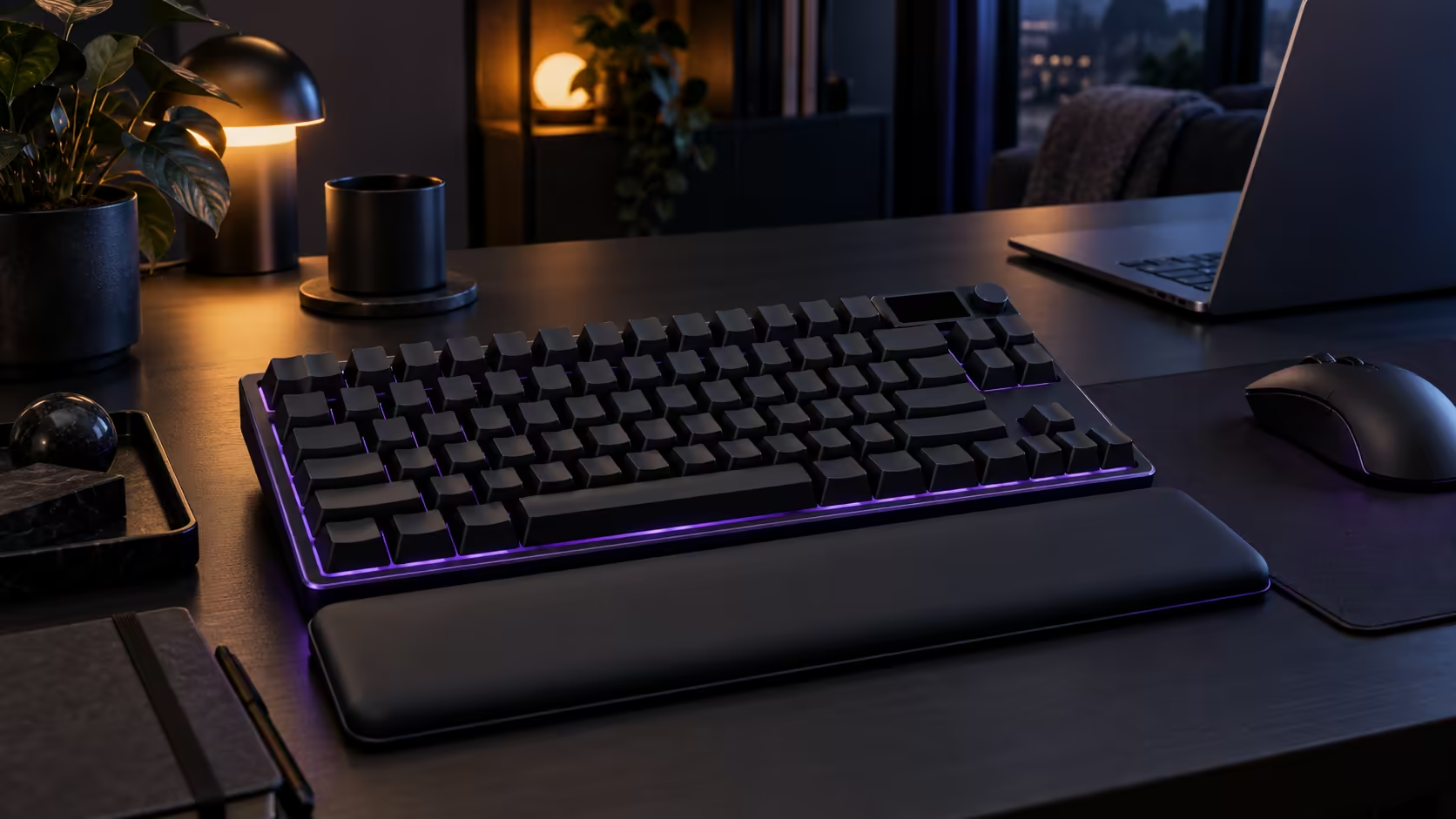
A small flat in Johannesburg or Durban often has a desk that is tight against a wall. A full-size layout squeezes the mouse hand, whereas a TKL returns about 9cm of width. For a competitive player that room means shorter mouse arcs, a real edge over a long night of play.
Measure the desk first. On a 120cm desk a TKL leaves roughly 84cm open, a full-size board roughly 75cm, and that gap can settle the layout question.
🌐 Ping is a separate problem
Ping to a Johannesburg or Cape Town server is the network delay between your PC and the game, and it does not change because of the keyboard. Fibre can deliver a steady ping, and steadiness usually matters more than shaving a few hundredths off input timing. If your matches feel laggy in South Africa, check the connection and the server choice before blaming the keyboard.
Keep the two ideas separate when you judge a setup. The keyboard controls the link from your fingers to the PC, and the network controls the link from the PC to the server.
To compare the boards that have these features, the gaming keyboards category is where to compare them, and the keyboard best sellers list collects the models that South African shoppers pick most, a useful cross-check.
Frequently Asked Questions
Which feature should a competitive player buy a keyboard for?
Depth control and rapid trigger matter most in shooters, because they affect every press and every tap. Polling is a smaller gain.
Is 8K polling necessary for competitive play?
It is useful but not essential. The gain is 0.875ms per report, and it only helps if your port and cable are clean.
Does a TKL help competitive players in a small flat?
Often, because the narrower layout gives the mouse room on a tight desk. Measure the space before you decide.
Will a better keyboard fix my ping?
No: ping measures the trip to the server, a separate problem from keyboard timing.
Building a competitive setup in South Africa?
Browse the gaming keyboards category and compare the features that matter for your games.