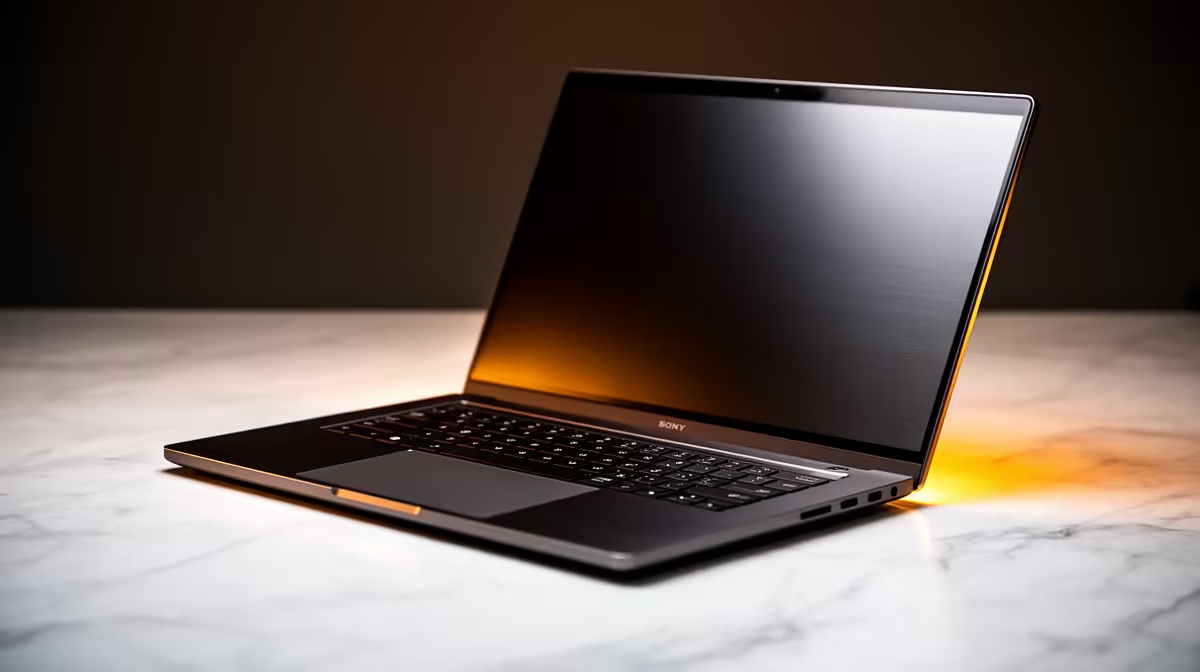
The latest supply-chain whispers point to an awkward split on the M6 MacBook Pro: the long-rumoured OLED redesign may arrive only on the Pro and Max chip configurations, while any base-tier M6 model keeps the current miniLED panel. If that holds, the screen you get would depend on which chip you pick, not just the size you buy, and that changes how SA shoppers should think about the lineup.
Quick Answer
Leaks suggest OLED on the M6 MacBook Pro will be exclusive to the Pro and Max configs, leaving a base M6 model on miniLED. Nothing is confirmed by Apple, so treat it as a credible rumour, not a spec. If the panel matters most to you, the safe read is that the higher-tier chips will carry the better display first.
What the rumoured split means
Apple has a long habit of debuting premium display tech at the top of a range and letting it trickle down later. miniLED itself launched on the high-end MacBook Pro before reaching the iPad Pro line. An OLED-for-Pro-and-Max-only move would follow that exact playbook: the people paying for the most powerful chips also get the newest screen, while the entry model holds the line on the proven miniLED panel.
For buyers, the practical effect is that display and performance get bundled together. You could no longer grab the cheapest M6 Pro chassis and assume it has the same screen as its pricier siblings. The choice of OLED versus miniLED would ride along with your chip decision. Anyone tracking Apple's notebook range can keep an eye on current stock through the MacBook listings at Evetech as the M6 generation lands.
OLED versus miniLED, briefly
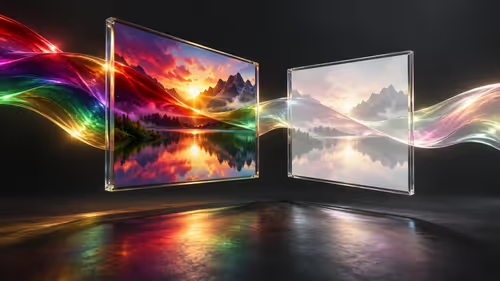
The split only matters if the panels differ enough to care about, and they do. OLED lights each pixel individually, so blacks are truly black and contrast is effectively infinite. miniLED uses thousands of tiny backlight zones, which gets impressively close but can show faint blooming around bright objects on dark backgrounds.
That said, the miniLED panels in current MacBook Pros are excellent, bright, and colour-accurate. A base M6 stuck on miniLED would not be a downgrade from today's machines, it would simply miss the newest jump. For most workflows the difference is real but not dealbreaking, and it shows up most in dark-room video, HDR content, and pure-black UI.
Should SA buyers wait or plan around it?
If you are eyeing a base-tier M6 mainly for the chip and battery gains, the panel question should not stop you, since miniLED remains a strong screen. If OLED is the feature you most want, the rumour suggests you will need to step up to a Pro or Max configuration to get it, which raises the price accordingly. For a fast read on which Apple laptops SA buyers are actually choosing this season, the laptop best sellers page is a useful gauge before you commit.
Frequently Asked Questions
Is the OLED MacBook Pro split confirmed by Apple?
No. This comes from supply-chain leaks and reporting, not an Apple announcement. Treat it as a likely direction rather than a settled specification until official details appear.
Would a base M6 MacBook Pro still have a good screen?
Yes. miniLED panels in current MacBook Pros are bright, colour-accurate, and high-contrast. A base model on miniLED would still be an excellent display, just not the newest OLED jump.
Why would Apple limit OLED to Pro and Max models?
It matches Apple's long pattern of launching premium display tech at the top of a range first, then letting it filter down to cheaper tiers in later generations.
Does OLED really look better than miniLED?
OLED gives perfect blacks and avoids the faint blooming miniLED can show on bright-on-dark scenes. The gap is most visible in HDR video and dark interfaces, and less noticeable in everyday bright-room use.
Planning your next Apple laptop around the M6 rumours? Watch the MacBook range at Evetech for new arrivals and pricing, and check the laptop best sellers to see which models SA buyers are picking right now.