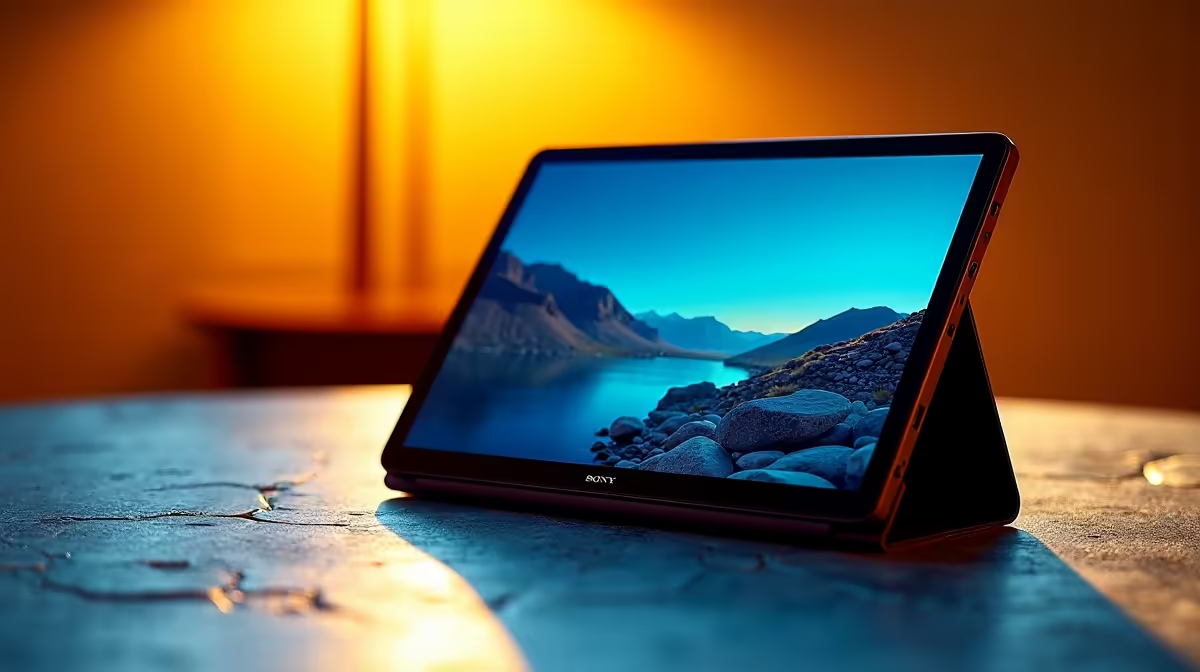
A 2-in-1 tablet can be a strong postgraduate device when reading, handwritten annotation and field interviews dominate the week. It becomes restrictive when research depends on specialist desktop applications, sustained data analysis, several external drives or long typing sessions. The useful question is whether pen and touch modes remove friction from the actual research process without weakening the computer mode needed for submissions.
Rehearse the full research workflow
No factpack-verified 2-in-1 price is available for this comparison. Compare current Evetech devices by operating system, processor, memory, storage, screen aspect ratio, pen inclusion, keyboard stability, ports, webcam, battery support and warranty. Check every required statistics, reference-management, transcription or design application against the exact operating system and processor architecture.
Open a thesis chapter, a large PDF and the normal research software together. Then write for an hour with the device on a desk and use it in tablet mode while standing or travelling. Detachable keyboards can be awkward on a lap, while convertible hinges add weight but keep the keyboard attached. Pen replacement cost and local availability deserve attention.
Use encrypted storage and maintain a separate, tested copy of research data. A versatile device earns its premium when both modes are used every week. If tablet mode is only an occasional novelty, a conventional laptop plus an inexpensive paper or digital-note workflow may offer better typing, ports and repair options.
Selecting a postgraduate device? > Ask Evetech to compare laptops and convertibles against your research software.