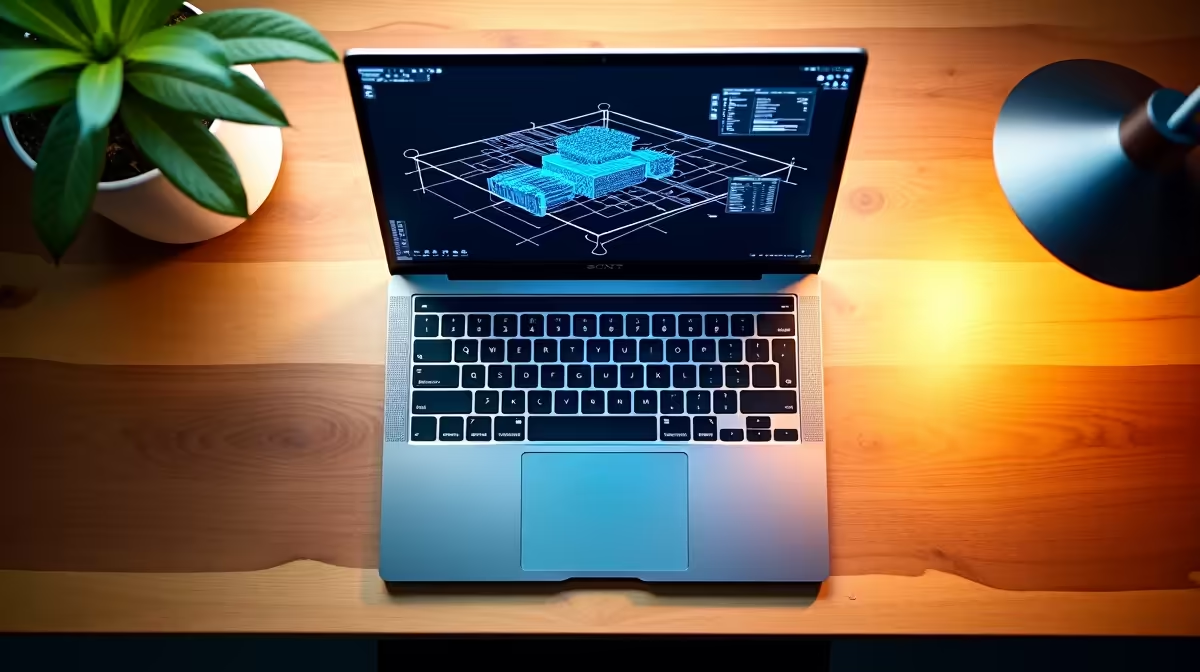
ASUS ExpertBook P1503 i5 at R9,858 suits a quantity surveying student who needs a practical laptop for reports, spreadsheets, drawings, and campus work without paying extra for a foldable screen. A 2-in-1 can be useful for handwritten notes, but it is usually not the first priority if the budget must cover a strong processor, a comfortable screen, and enough everyday reliability.
Better student value than a 2-in-1 hinge
The ASUS ExpertBook P1503 i5 at R9,858 is the sensible starting point because the i5 spec keeps the focus on coursework, PDF plans, Excel schedules, and browser research. For a student who mostly types, measures, checks quantities, and submits documents, a standard clamshell design is often more useful than tablet mode.
Lenovo IdeaPad Slim 3 i7 at R13,400 steps up to an i7, which matters if the student tends to keep many tabs, spreadsheets, and references open while preparing assignments. ASUS Vivobook X1504VA i7 at R13,999 gives another i7 option when the priority is smoother multitasking rather than a touchscreen party trick.
On a quantity surveying student desk in SA
A desk in res, digs, or at home usually has limited space for notebooks, a mouse, a calculator, and printed notes, so the laptop needs to feel steady and useful as the main study machine. ASUS Vivobook S14 OLED at R10,719 is worth considering if the OLED screen matters for reading drawings and long documents with clearer contrast.
Lenovo LOQ RTX3050 at R9,500 is the odd one out, but the RTX3050 spec can make sense for students who also want stronger graphics capability in the same machine. ASUS ExpertBook P5405 at R12,700 sits higher than the P1503 and may suit someone who wants the ExpertBook style with more budget room.
Ready to choose the right laptop?
Use ASUS ExpertBook P1503 i5 at R9,858 as the student desk benchmark, then check whether its listed spec matches the space, workload, and upgrade path.