Tired of your internet dropping mid-match thanks to an unexpected outage or temperamental fibre? You're not alone. A solid 4G LTE router setup can be your ultimate backup... or even your main connection for reliable internet in South Africa. Forget fumbling with your phone's hotspot. We’ll guide you through a simple process that delivers stable, fast internet, so you can focus on climbing the ranks or streaming in crisp HD. Let’s get you connected. 🔧
Why a 4G Router Beats Your Phone's Hotspot
Before we dive into the setup, let's be clear: using your phone as a hotspot is a temporary fix, not a permanent solution. Your phone is designed for calls, apps, and scrolling... not for providing a constant, stable internet connection to multiple devices.
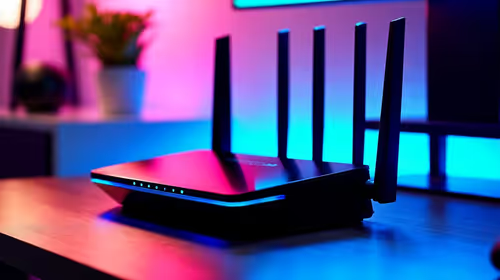
A dedicated 4G LTE router is purpose-built for one thing: turning a mobile signal into rock-solid Wi-Fi. It has more powerful antennas for better reception, can handle more simultaneous connections without slowing down, and won't overheat or drain its battery after an hour-long gaming session. Investing in a dedicated device from a trusted brand like Cudy South Africa is built for the job, ensuring your connection is as reliable as possible.
Your Step-by-Step 4G LTE Router Setup Guide
Getting your new router up and running is easier than you might think. A proper 4G LTE router setup takes just a few minutes and can dramatically improve your online experience. Follow these simple steps for a flawless installation.
1. Choose Your SIM and Check Coverage
First things first, you need a data-only SIM card. All major South African networks (Vodacom, MTN, Telkom, Rain) offer options. The most crucial step is to check which network has the best 4G/LTE coverage in your specific area. Use their coverage maps online to decide. A router can't create a signal where there isn't one!
2. Unbox and Insert the SIM
Carefully unbox your router. Before plugging anything in, locate the SIM card slot. It's usually on the side or back of the device. Make sure you're using the correct SIM card size (most modern routers use a Nano or Micro SIM) and insert it correctly until it clicks into place.
3. Find the Perfect Placement ✨
This is the most important step for performance. Don't just hide your router in a cabinet. For the best signal, place it:
- Near a window: This gives it the clearest possible path to the nearest cell tower.
- As high as possible: On a high shelf is better than on the floor.
- Away from other electronics: Microwaves, cordless phones, and other large metal objects can interfere with the signal.
Signal Strength Pro Tip ⚡
Most router admin panels have a 'Status' or 'Network' page showing your real-time signal strength (RSRP and SINR). Before finalising your router's position, move it around and refresh this page. Aim for the spot with the strongest, most stable signal values for the best performance. It can make a massive difference!
4. Power On and Configure
Plug in the power adapter and turn the router on. Wait a few minutes for it to boot up and connect to the mobile network. The status lights should indicate a successful connection.
Now, connect your computer to the router using the default Wi-Fi name (SSID) and password found on the sticker on the router's base. Open a web browser and navigate to the admin panel address (also on the sticker, e.g., 192.168.1.1). Log in and immediately change the default Wi-Fi name and password to something secure and memorable. Most routers automatically configure APN settings, so you likely won't need to touch that.
Optimising for Gaming and Streaming 🚀
A basic setup is good, but for gamers and streamers, a few tweaks can ensure the best performance. If you're serious about low latency, always connect your primary gaming PC or console to the router via an Ethernet cable. This direct line is always faster and more stable than Wi-Fi.
Furthermore, a more advanced router allows you to prioritise traffic. This feature, often called Quality of Service (QoS), lets you tell the router that your gaming traffic is more important than someone else's YouTube stream in the house. Investing in a powerful Cat 6 router like the Cudy LT700 can significantly reduce in-game lag by providing faster speeds and more stable connections thanks to features like carrier aggregation.
With this straightforward 4G LTE router setup, you'll have a dependable internet connection ready to handle anything from competitive gaming to 4K streaming, giving you the online freedom you need in South Africa.