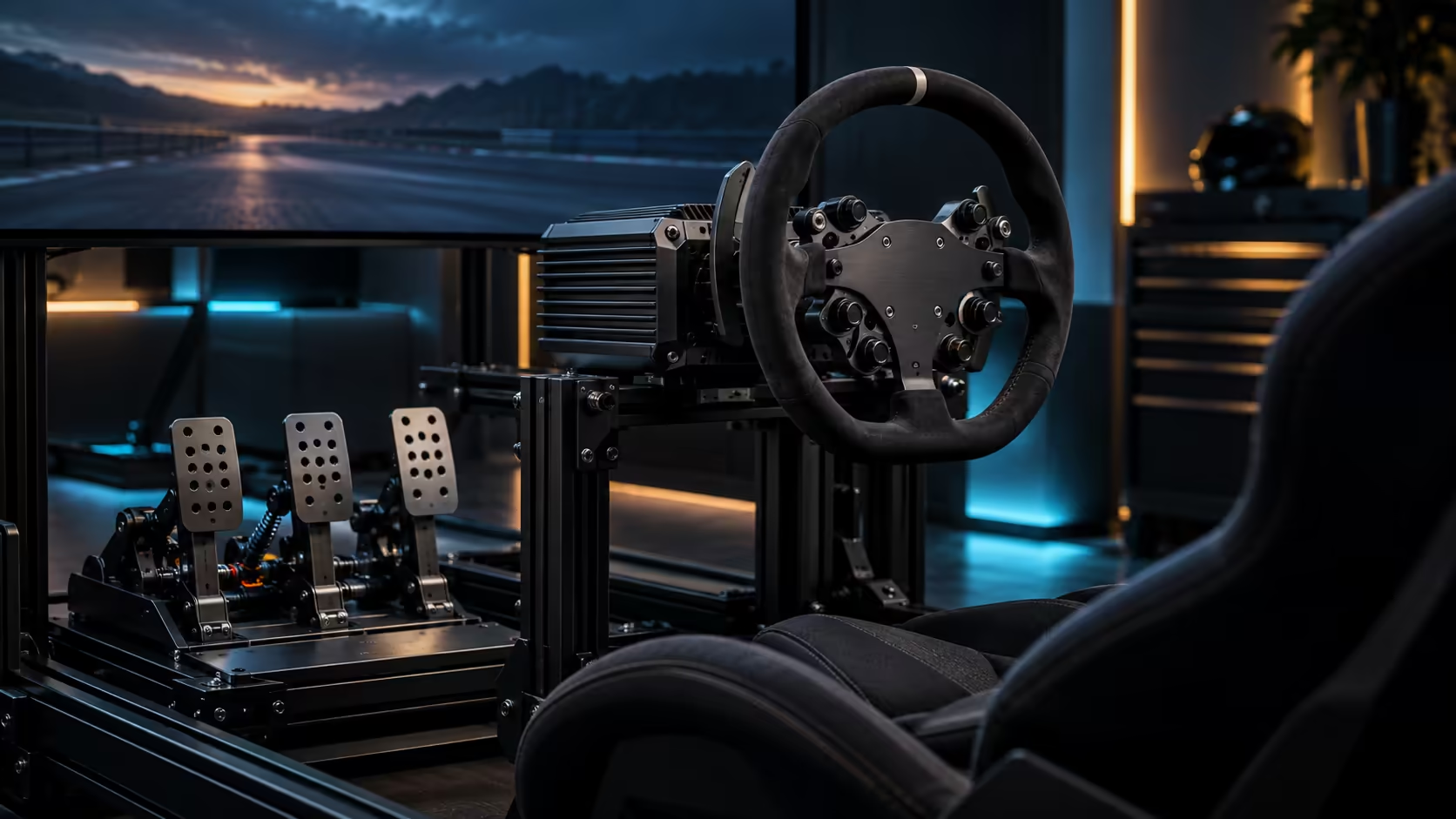
Buying more torque than you need is one of the few mistakes in sim racing that costs you comfort rather than money, because the extra Newton-metres sit there whether you use them or not, and a base you constantly turn down is a base you overpaid to under-use. Wheel base torque has a genuine sweet spot for most drivers, and 9Nm sits close to where headroom stops being wasted and starts being useful.
Quick Answer
Below roughly 5Nm, a base starts running short of force before it runs short of detail, which shows up as heavy cars feeling light even at full strength. Above roughly 12Nm, most drivers turn the output down again rather than run at the ceiling, which is why the 9Nm Alpha EVO in the R14,999 Green Flag bundle lands in the range where the headroom is there to spend rather than to fight.
📉 What happens below about 5Nm
Entry-level direct drive bases in the 2 to 4Nm range are a genuine improvement over gear-driven wheels at a similar price, since the detail advantage of direct coupling shows up regardless of torque figure. Where they fall short is under load: a heavy, high-downforce car cornering hard asks for real resistance, and a base without the torque to provide it simply runs out of push, which reads as the wheel going light exactly when a car should feel planted.
That ceiling is fine for lighter cars and for drivers prioritising precision over strength, particularly in open-wheel or low-downforce classes where the forces involved are genuinely smaller. It becomes a limitation the moment you drive anything heavier and want the wheel to communicate that weight honestly rather than approximate it.
📈 What happens above about 12Nm
At the other end, bases running 15Nm or more exist and are aimed squarely at professional and semi-professional setups, where the driver is running a full motion rig and wants absolute maximum fidelity at any cost. Most home racers running these bases set output well below the ceiling, because sustained force at that level fatigues wrists and forearms faster than the extra detail is worth for a casual or even a serious hobbyist session.
The honest reason to buy well past what you will use is resale and future-proofing rather than day-to-day feel, since a base run at 40 percent of a 20Nm ceiling and a base run at 90 percent of a 9Nm ceiling can produce a very similar felt experience for the price of a much larger outlay on the first.
🎯 Why 9Nm sits where it does
At 9Nm, the Alpha EVO base covers the weight range from light open-wheel cars through to heavy GT-style machinery without hitting a ceiling in normal driving, which means the torque setting you choose is about comfort and fatigue rather than about the base being unable to represent what a car is doing. That is the practical definition of headroom: force in reserve for the moments that need it, rather than force you are permanently running against.
It also means the base rarely needs to run near its maximum output to feel convincing, which matters for session length. A base that has to run near its ceiling to feel strong enough fatigues a driver faster than one with room to spare, because the difference between 70 percent of 9Nm and 100 percent of 9Nm is smaller, and easier on the wrists over an hour, than the difference between 70 percent and 100 percent of a lower-torque base straining to represent the same car.
There is a thermal side to this too. Every direct drive motor generates heat in proportion to the current it draws, and a base run constantly near its ceiling for a 60-minute endurance stint builds up winding temperature faster than one with 20 or 30 percent of its output held in reserve. That reserve is what lets a base keep delivering its sharpest, most detailed output deep into a long race instead of gradually softening as the motor warms up and the control software quietly pulls back to protect the electronics, a pattern worth knowing before a 90-minute endurance stint rather than discovering it lap 70.
🧭 Matching torque to what you actually drive
If your driving is mostly lighter cars and precision-focused disciplines, a lower-torque base is not a compromise, it is a correctly sized purchase, and the money saved is better spent on the frame and mount that let any base perform properly. If your driving spans heavier GT and endurance-style cars, or you expect to race for years without upgrading again, torque headroom in the 8 to 10Nm range is where most buyers land and stay satisfied. Whatever tier you land on, buying it locally rather than importing keeps a warranty claim on a heavy motor assembly a domestic matter rather than an overseas one.
Line up torque figures against price on the sim racing shelf and the racing simulation range before deciding anything else, since that single comparison tells you more than any other spec on the page. Whichever base you land on, the simulation gear range carries the mounting hardware that decides whether the torque you paid for actually reaches your hands.
Frequently Asked Questions
Is 9Nm enough for serious sim racing?
Yes, for the overwhelming majority of drivers and disciplines, including heavy GT-style cars. It only becomes a limiting factor for professional-grade motion rigs chasing maximum fidelity regardless of cost.
Should I buy a higher torque base than I need for future-proofing?
Only if budget allows it comfortably. Running a base well below its ceiling to save wrist fatigue is a reasonable strategy, but the cost difference between torque tiers is real and should be weighed against how much you will actually use.
Does a lower-torque base feel worse for detail, not just strength?
Not necessarily. Direct drive's detail advantage over gear-driven wheels comes from the direct coupling, not the torque figure, so an entry-level direct drive base still communicates fine detail well within its strength ceiling.
Why do drivers with high-torque bases run them below maximum?
Sustained high force fatigues wrists faster than the added detail is worth over a full session, so most drivers keep meaningful headroom in reserve rather than driving at the ceiling.
Ready to match torque to what you actually drive?
Compare figures on the Racing Simulation shelf and buy the headroom you will use, not the number that sounds biggest.