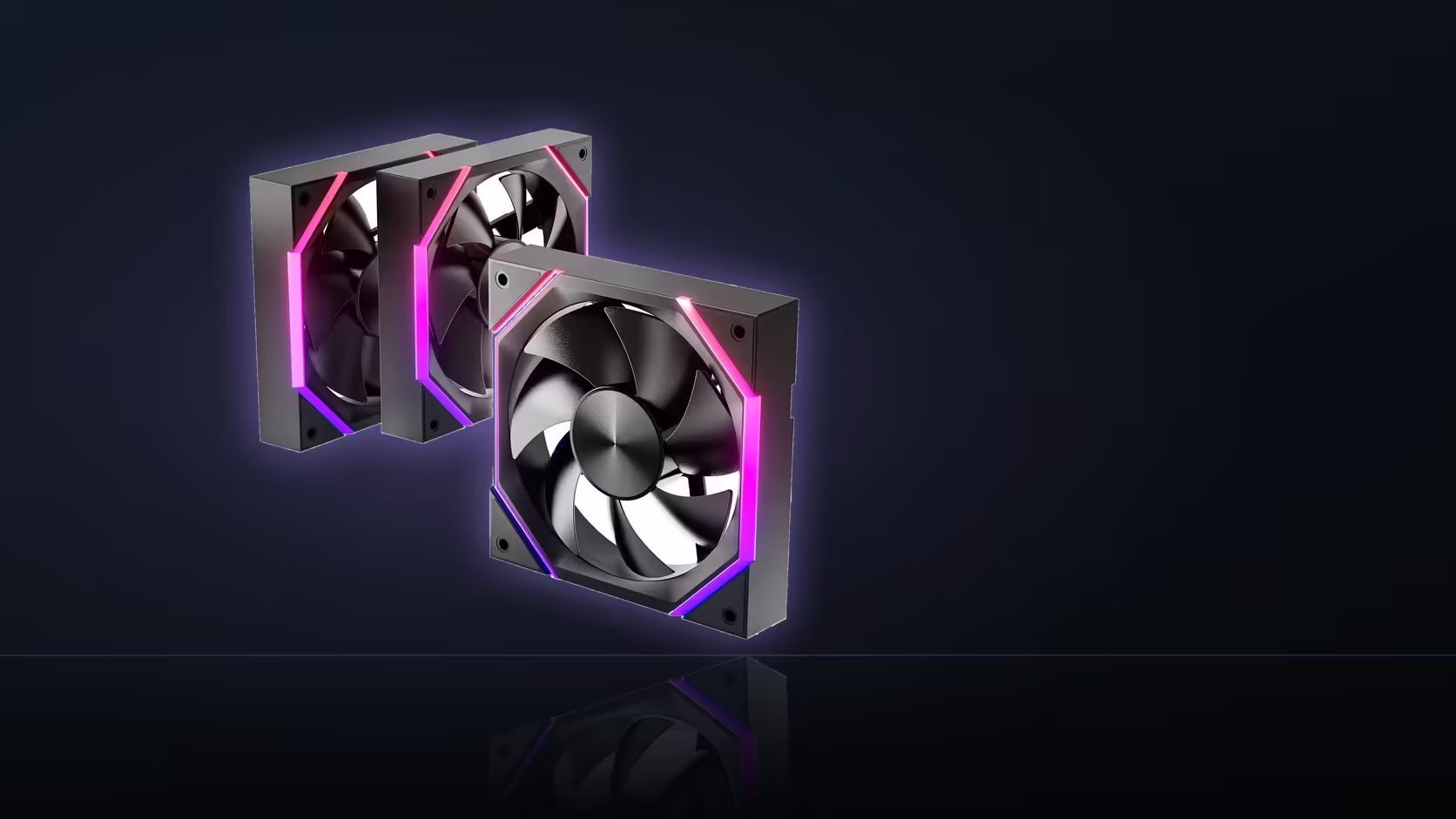
Two curves can reach exactly the same top speed and still feel completely different to live with - one fades in so gradually you barely notice, the other lurches between levels every time the load shifts. For a Nyota A12 row, curve shape matters as much as the numbers it's built from.
Quick Answer
A gradual fan curve changes speed slowly over a wide temperature range, while a stepped curve jumps abruptly between a few fixed points - and the jump is what draws attention, not the noise level itself. Both curve shapes can reach the same final temperatures on a Nyota A12 fan; what differs is whether the transition is audible as a change. The three-pack runs an 800 to 2000 RPM range and costs R499.
🎚️ Why a smooth curve feels quieter, even at the same volume
Human hearing is tuned to notice change far more readily than it notices a steady level. A fan holding one speed for minutes fades into background noise; the same fan jumping from 900 to 1600 RPM in two seconds draws immediate attention, even though the peak volume might be identical between a smooth and a stepped curve reaching the same point.
This is why curve shape, not just curve endpoints, matters for how a build actually feels to sit next to.
What causes an audible step in the first place
Curves with only two or three defined points, spaced far apart on both the temperature and speed axes, force the fan to move quickly from one level to the next whenever a threshold is crossed. Adding more points along the same range - most boards support several - smooths that transition into something closer to a continuous line.
🛠️ Building a smoother curve in practice
Using more of the available curve points, rather than the bare minimum a board defaults to, is the single biggest improvement most people can make. A curve with five or six points spread across the working temperature range gives the fan far more graduated steps to move through than one built on two or three.
Does a gentler curve cool as effectively?
It can, provided the curve reaches the same speeds at the same temperatures as a stepped equivalent - the destination points matter for cooling outcome, while the path between them is purely about how the transition sounds and feels.
Where the 800 to 2000 RPM range comes in
The A12's full operating span gives real room to spread points across - a wide range like this makes a genuinely gradual curve shape practical in a way a narrower range wouldn't allow.
🔗 Response timing and the chained row
Beyond curve points themselves, many boards offer a step-up and step-down timing setting that smooths transitions independently of how the curve itself is shaped - worth adjusting alongside the curve points rather than instead of them. And because the three A12 fans in a pack chain onto one header, all three follow whichever curve and timing is set for that header together, keeping the row acoustically consistent rather than fans at visibly different speeds beside each other.
A practical starting point
Begin with the board's default curve, add two or three intermediate points between the existing ones, and listen for whether the transitions feel less abrupt - a small adjustment that often makes a noticeable difference without touching the endpoints at all.
👂 Why the same jump bothers some rooms more than others
An abrupt step from 900 to 1600 RPM reads very differently depending on what else is going on in the room. In a quiet study late at night, that jump is unmissable; in a room with background noise from a monitor's speakers, a fan, or open windows, the same transition can pass almost unnoticed. That's not a reason to skip smoothing a curve, but it does explain why two people running an identical A12 setup with identical curve points can come away with opposite opinions on whether the fan behaves noticeably.
Case design plays a role too. A case with heavy sound dampening tends to flatten the perceived difference between a gradual and a stepped curve, because the panels are already absorbing some of what makes a sudden change audible. An open-frame or mesh-heavy case does the opposite, letting every transition through more clearly, which makes curve smoothing a more worthwhile investment of time in that kind of build than in one that's already quiet by design.
🔁 Testing a curve change properly before settling on it
Judging a curve shape from a single load cycle can be misleading, since one gaming session might never trigger the threshold where the jump happens, while a different workload crosses it repeatedly within minutes. A fair test runs the machine through a few different kinds of use - browsing, a longer gaming session, something that spikes temperature briefly and drops back down - and pays attention to how often the transition actually gets triggered in each. A curve that feels perfectly smooth under sustained load can still produce an audible jump during bursty, start-stop use if the threshold sits right where that kind of workload tends to hover.
Revisiting the curve after a week of normal use, rather than judging it in the first ten minutes after setting it, tends to give a more honest picture of whether the shape actually solved the original problem or just moved it to a different part of the temperature range.
Frequently Asked Questions
Why does a gradual curve feel quieter than a stepped one at the same volume?
Because hearing notices a change in level far more readily than a steady one, even when peak noise is identical between the two shapes.
What typically causes an audible jump in fan speed?
A curve with too few defined points, spaced far apart, which forces the fan to move quickly between levels when a threshold is crossed.
Does a smoother curve sacrifice any cooling performance?
Not necessarily - as long as it reaches the same speeds at the same temperatures, only the path between those points changes.
How many curve points are actually useful?
Enough to produce a smooth line rather than a jagged one - most boards support several points, and using more than the minimum helps.
Does the A12's 800 to 2000 RPM range support a gradual shape well?
Yes - a wide operating range gives real room to spread multiple curve points across without them clustering together.
Can response timing settings help beyond the curve itself?
Yes - a step-up/step-down delay setting smooths transitions independently of how many points the curve uses.
Do all three chained fans in a pack follow the same curve shape?
Yes - fans linked on one PWM chain share whichever curve and timing is configured for that shared header.
Fading curves work better with the right hardware underneath - see what's available in Evetech's case fans and case accessories ranges before building yours.
Tired of a fan that lurches between speeds?
Browse Evetech's case fan range to plan a setup that ramps smoothly rather than in noticeable jumps.