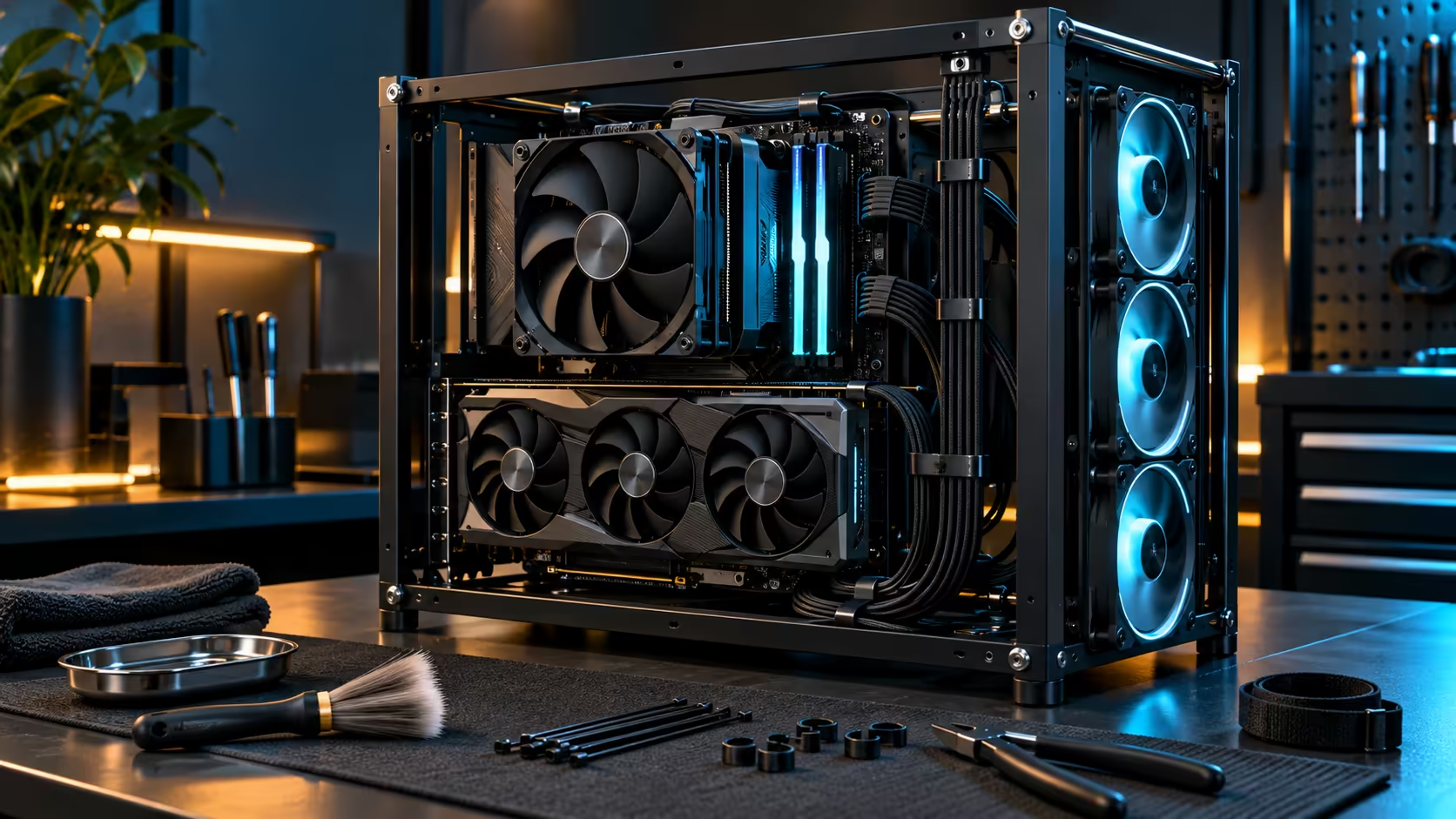
Buying a flagship graphics card in South Africa comes with one advantage nobody advertises: if it does not fit, sending it back is a phone call and a courier collection, not an international ordeal. That single fact should change how carefully you check clearance before ordering, not after, because the safety net is only as good as the source you bought from.
Quick Answer
Current flagship cards typically run 300mm to 360mm long, so a case rated to 368mm leaves margin for the power lead and a gentle bend without exceeding the limit. Check that figure against your card's actual listed length with a connector attached before ordering, and buy from a local retailer specifically so a mismatch is a straightforward return rather than a costly one. The R15,999 GR20 Edition 20 clears cards to 368mm, covering essentially every current high-end card sold with room to spare.
📏 What "high-end" actually measures today
Card length has grown with cooler size across recent generations, and a current flagship or near-flagship card commonly measures somewhere between 300mm and 360mm depending on the specific cooler design, before any power connector is added. That range is why a case's clearance figure has become a genuine buying consideration rather than an afterthought the way it might have been with smaller cards several years ago.
Always check your specific model's listed length, since the range within "high-end" is wide enough that two cards from the same generation can differ by 40mm or more. The graphics card range lists length for each model, and that figure, plus your connector, is what to compare against your case's rating. Two cards with near-identical performance can sit at opposite ends of that range purely because one manufacturer chose a larger, quieter cooler over a compact one, so length is not a reliable stand-in for how fast a card actually is.
🔌 The measurement mistake that catches people out
A card's published length rarely includes its power connector once plugged in, and a 12V-2x6 or 12-pin plug adds real depth past the shroud's own end. A card listed at 355mm can sit within a centimetre of a 368mm clearance limit once that connector is accounted for, which is close enough that guessing rather than measuring is a genuine risk.
Measure your actual card, cable attached, before ordering the case, or check the case's clearance against the card with a small margin built in if you cannot measure directly. A few millimetres of assumed margin has caused more returns than any case genuinely being undersized.
A right-angle power adapter changes the sum again, sometimes adding back some of the length a straight connector costs and sometimes very little, depending on how the specific adapter is shaped. If you are relying on one to make a tight fit work, measure with that exact adapter in hand rather than assuming its effect on the total.
🔁 Why the return path is the real safety net
Buying locally changes what happens when a measurement turns out wrong. A card or case that does not fit, bought from a South African retailer, is a return through a normal process: a courier collects it, and an exchange or refund follows within about 7 days.
Make the same mistake on a card or case bought through a private import and there may be no return at all once it has left the seller's country, or one that only happens after weeks of back-and-forth and a freight bill you cover yourself either way. For an item as large and as fit-specific as a flagship card and its case, that gap in outcome is worth weighing before you place the order, not after the box arrives too small.
This is not an argument against careful measurement; it is an argument for measuring carefully and having a workable fallback if the measurement was wrong anyway. Buying locally gives you both.
🛒 Building the pair with margin, not exact fit
Choose a mid-tower case with clearance genuinely above your card's measured length, rather than one that fits with nothing to spare. A 368mm rating against a 355mm card, connector included, leaves a workable buffer for a future card upgrade too, since cards have consistently grown longer generation over generation rather than shrinking.
If you are shopping for both parts together, check the graphics card deals page against the case's clearance figure before committing to either, since buying the case first and hoping a card fits later, or the reverse, is exactly the sequence that leads to a return either way.
Write both numbers down side by side before you order anything: the card's measured length with connector, and the case's rated clearance. Seeing the gap between them in writing, rather than trusting a mental estimate, is the single habit that prevents most of the returns this whole topic exists to avoid.
Keep that note after the build is finished, too. It becomes the reference point for the next upgrade, when a new flagship card arrives with its own length to check against the same case all over again.
A phone photo of both figures, taken the day the build goes together, is a small habit that pays off years later when the details have long since been forgotten and a new card is sitting unopened on the desk, waiting on a measurement nobody wrote down the first time around.
Frequently Asked Questions
How long is a typical current high-end graphics card?
Somewhere between 300mm and 360mm depending on the specific model and cooler design, before a power connector is added.
Does the power connector really add meaningful length?
Yes, often enough to matter on a card near a case's clearance limit. Measure with your actual cable and connector attached rather than the card alone.
Why does buying locally matter specifically for an oversized card?
If the card does not fit, a local purchase turns the problem into a standard courier return. An imported one turns it into an international dispute paid at your own cost.
Should I buy a case that fits exactly or with margin?
With margin. A case rated comfortably above your current card's length also gives room for a future upgrade, since card length has consistently grown over recent generations.
Ready to buy a high-end card with a return path that actually works?
Measure your card with its connector attached, then buy locally so a mismatch is easy to fix.