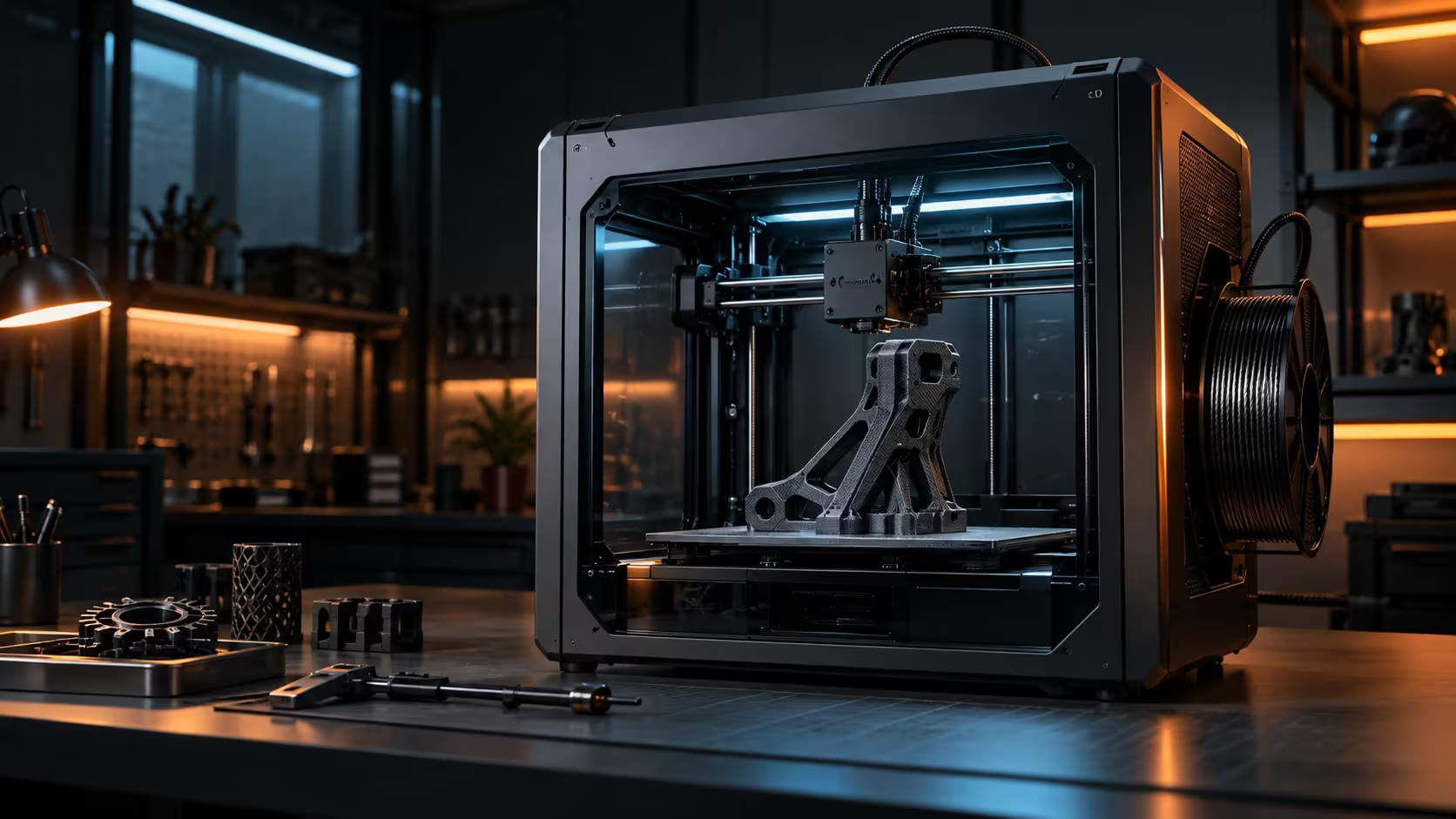
Working backward from the material you actually need is a more reliable way to choose a printer than working forward from a spec sheet, since the material decides the nozzle and the nozzle decides which machine is even worth considering. High-speed carbon fibre 3D printing for a South African buyer starts there rather than with the top speed figure.
Quick Answer
Start from the materials your projects actually need, since that choice decides the nozzle, and the nozzle decides which machine belongs on your shortlist. A 300C tri-metal nozzle tip paired with a 50N direct drive extruder covers the filled, abrasive blends carbon-fibre printing requires, while CoreXY motion supplies the pace to make that printing genuinely fast rather than just theoretically capable. Evetech carries this exact combination in the Creality K1C at R12,599.
🧪 Step one: name the material before naming the machine
Carbon-fibre reinforced PLA, PETG or nylon all behave differently, but they share two demands: heat 10 to 30C beyond what a basic hotend reaches, and abrasion resistance a standard nozzle does not have. Identify which specific blend your projects actually need before comparing printers, since a machine that cannot meet these two demands is off the shortlist regardless of anything else it offers.
🔩 Step two: let the nozzle set the shortlist
A 300C tri-metal nozzle clears both demands at once, reaching the heat these blends need while resisting the wear that chopped fibre causes in a soft brass tip. Any printer lacking this specific combination either cannot print the material reliably or will need frequent, costly nozzle replacements, which quietly erodes whatever price advantage it seemed to have at purchase.
🚀 Step three: check that speed does not undermine the first two
A fast printer that skimps on feed strength or nozzle capability to hit an impressive top speed figure is not actually solving your problem, since a slipping extruder or a worn nozzle produces bad carbon-fibre prints regardless of how quickly the toolhead moves. CoreXY motion paired with a strong 50N direct drive feed is what lets speed and material capability coexist rather than trading one for the other.
Apply this order, material first, nozzle second, speed third, to any comparison rather than starting from the headline speed number on a box. Browse filament with your project's material needs in mind, and check Elegoo's resin range as a comparison point for projects where fine detail matters more than fibre reinforcement and speed is not the priority at all.
💰 What high-speed carbon-fibre printing actually costs beyond the machine
A carbon-fibre spool typically costs noticeably more per kilogram than a standard PLA or PETG spool of the same weight, and that gap is the ongoing cost that a printer's purchase price alone never shows on its own. Budget for a spare hardened nozzle too, since even a properly rated 300C tri-metal tip is still a wear part on genuinely abrasive material over hundreds of printing hours, not a fit-once-and-forget component.
Drying matters just as much as the nozzle rating for these blends. Carbon-fibre reinforced filament absorbs moisture from the air readily, and a damp spool produces popping, stringing and a rough surface finish that gets blamed on the printer far more often than the actual cause. Dry a spool for roughly 6 to 8 hours at around 60C in a dedicated filament dryer before any print that genuinely needs to come out clean, especially once a spool has been open on a shelf for more than a week or two in a humid coastal city.
🧵 Matching motion speed to what the print actually needs
Fast CoreXY motion is only an advantage if the print settings driving it are actually tuned for the material in the toolhead. Carbon-fibre blends generally print best at a first-layer speed noticeably slower than standard PLA, often somewhere in the 20 to 30mm/s range, since adhesion to the bed matters more for these stiffer, less forgiving materials than raw top speed does for that specific first layer. Once that first layer is down cleanly, later layers can run considerably faster without the same adhesion risk.
Bed temperature needs matching too, generally somewhere between 60C and 90C depending on the specific blend, since a bed running too cool lets a large, flat carbon-fibre part lift at the corners well before the print even finishes. None of this tuning shows up on a spec sheet's headline speed number, which is exactly why starting from material needs first, as covered above, catches these details before they become a failed print. Have a look through the 3D printer range for listings that publish these kinds of practical print settings alongside the usual headline speed figure, since detail thorough enough to mention bed temperature and first-layer speed is usually a reasonable sign the rest of the machine was built with the same level of care.
Frequently Asked Questions
Why start with material choice instead of comparing printer speeds directly?
Because material determines nozzle requirements first, and a printer failing that requirement is unsuitable regardless of how fast it claims to print.
Can a slower printer still be a good choice for carbon-fibre work?
Yes, if its nozzle and feed system properly handle the material; speed is a separate, later consideration once material capability is confirmed.
Does buying locally matter for this kind of specialised printing?
Yes, since a warranty claim on specialised hardware resolves faster through a local retailer than through an international import process.
Is CoreXY motion strictly necessary for carbon-fibre printing specifically?
Not strictly, but it helps maintain speed and accuracy together on the larger, functional parts carbon-fibre filament is often chosen for.
How long should carbon-fibre filament actually be dried before a print?
Roughly 6 to 8 hours at around 60C in a dedicated dryer is a reasonable starting point, longer still if the spool has genuinely been open on a shelf for more than a week or two.
Does bed temperature matter as much as nozzle temperature for these blends?
Yes, genuinely so, a bed running too cool for the specific blend lets a large, flat part lift noticeably at the corners well before the print even finishes, regardless of how well the nozzle itself is performing throughout.
Ready to shortlist a printer for real carbon-fibre projects?
Start from your material needs, then let that decide the nozzle and the machine.