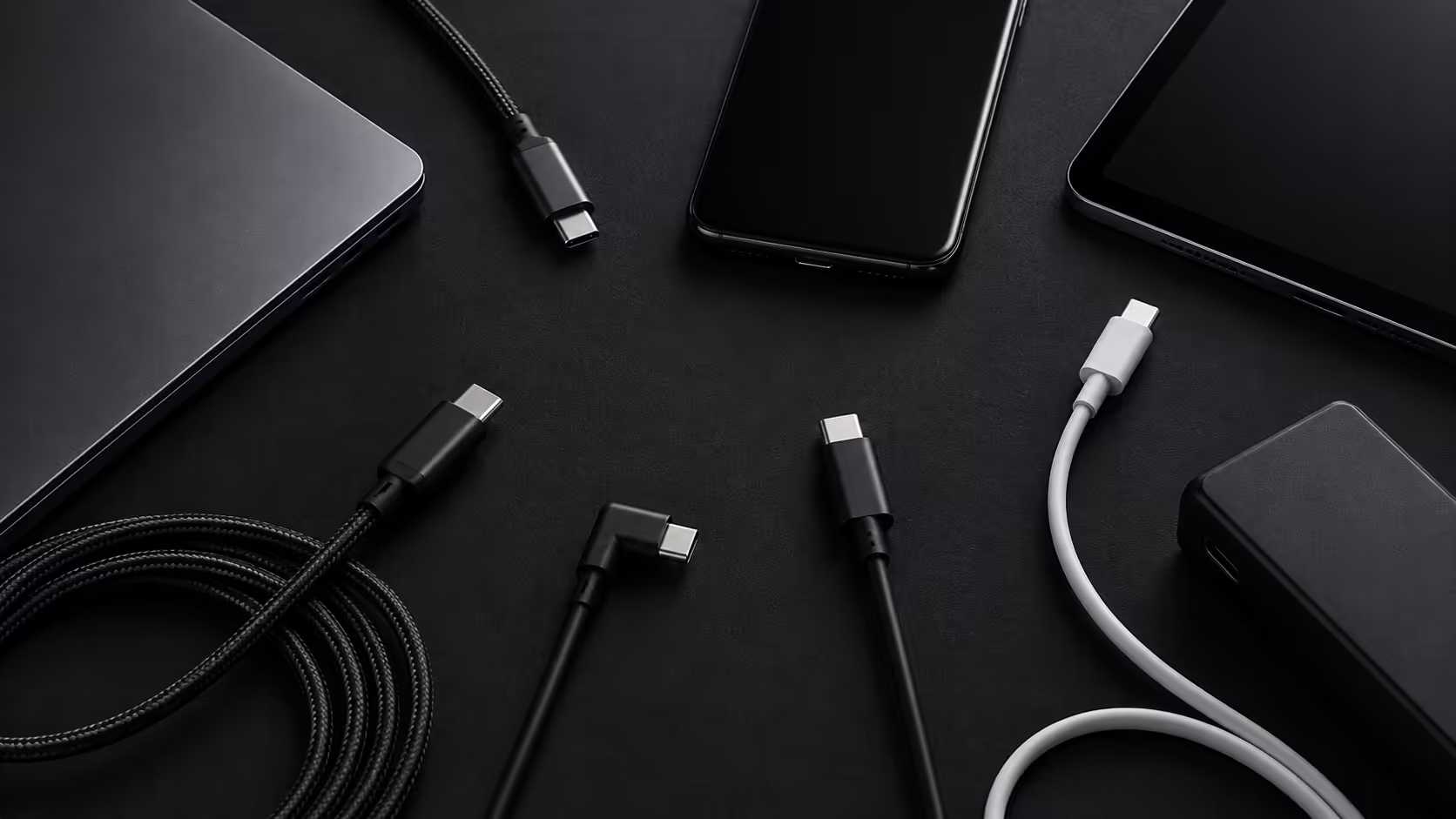
A South African household's USB-C cables for laptops, tablets and phones can all be the same purchase repeated once, provided that purchase is matched to the most demanding device rather than the least demanding one.
Quick Answer
Buy one certified 5A cable from the comprehensive cable range for the largest laptop in the house and everything below it is covered. In South Africa that means about R399 for a 1.8m run, warranty handled locally, and a braid rated for the commuting a shared household puts a cable through.
🗂️ Why sizing to the smallest device backfires
The instinctive approach for many households is to buy a cheap, basic cable for whichever device seems least demanding, a phone or an older tablet, and assume it will work fine everywhere else too. This backfires the moment that same cable ends up plugged into the household laptop, capping it at 60W and leaving everyone wondering why charging suddenly feels sluggish. Sizing to the biggest device from the outset avoids this exact trap entirely.
💻 Laptops set the actual requirement
A demanding laptop drawing anywhere from 65W up to 140W needs a genuine 5A e-marker cable to reach its full charging speed, since anything below that class holds the connection to 60W no matter what the charger sitting behind it is otherwise able to supply. This is the device that decides which cable class a household actually needs, since nothing lighter will ever ask for more.
📱 Tablets sit comfortably within the same cable
Browse our tablets range and you will find even the fast-charging models sit nowhere near a 5A cable's ceiling, so the same cable already serving the household laptop takes on a tablet with zero adjustment. Whatever lower figure that specific tablet asks for is simply what it gets the moment it connects.
🧳 What this looks like when a family travels together
Pack one certified 5A cable for a family holiday rather than one cable per device, and every phone, tablet and laptop in the group still charges exactly as it would at home, since each device negotiates its own appropriate rate the moment it connects regardless of who else is plugged in. This single-cable approach also means less to lose, forget or fumble with while actually travelling, which matters as much as the charging speed itself once bags are being packed and repacked at every stop along the trip.
📞 Phones never come close to the ceiling
A phone typically requests well under 30W even at its very fastest charging speed, making it comfortably the least demanding device a shared household cable will ever be asked to serve. There is no downside to using a high-rated cable here either, since the phone's own hardware caps things at its own ceiling no matter how much extra capacity the cable happens to have on tap.
👨👩👧 Why one standard beats a drawer full of exceptions
A household that buys a different cable for every device type ends up with a drawer nobody can reliably sort through under pressure, the exact moment a working cable matters most. Standardising on a single 5A class from the start removes that guesswork permanently, turning "which cable do I grab" into a question that never needs asking again regardless of whether the next device to charge is a laptop, a tablet or a phone.
🧑🤝🧑 Why this guide applies whether the household is one person or six
None of the USB-C reasoning above changes based on how many people actually live under the same roof. A single professional with a laptop, a tablet and a phone faces exactly the same buying decision as a family of six sharing a charging drawer, since the logic starts and ends with whatever the single most demanding device in that household happens to be. Scale simply means buying a few more of that exact same correct cable, never reaching for a different one at all.
🇿🇦 Buying once for the whole South African household
In South Africa, that single purchase works out to around R399 for the 1.8m Anker 544, a genuinely certified 5A cable with a 30,000-bend rating suited to the daily handling a shared household cable typically experiences. Sourcing it locally keeps any repair conversation on home turf rather than turning into an overseas shipment, and checking against our laptop range confirms the specific wattage your own household's biggest device actually needs before you commit to the purchase.
Frequently Asked Questions
Can one cable really serve a laptop, a tablet and a phone equally well?
Yes, as long as it meets the laptop's own charging requirement, that same figure sails well past what a tablet or phone will ever ask of it.
Does a household with only phones and tablets need to spend on the higher-rated option?
For that specific household, a standard 3A cable already covers everything, and the higher-rated option only pays off once a demanding laptop joins the mix.
Does buying locally matter for a cable used across an entire household?
Yes, since a shared household cable sees more handling than a single-device one, making an intermittent fault more likely and a local warranty considerably more useful.
Should each family member have their own dedicated cable instead of sharing one?
It depends on convenience preferences, but a few identical, properly rated cables distributed around the house work just as well as one shared cable moved between rooms.
Does a shared household cable need a higher bend rating than a single-person one?
Generally yes, since more hands and more daily connections put it through more flex cycles overall, making a strong published bend rating worth prioritising for that specific use.
Is it worth buying a slightly longer cable for a family charging station shared by several devices?
Yes, extra length gives more flexibility for positioning several devices around one socket without any of them pulling the cable taut, which matters more the more devices share that single spot at once.
Does a growing family need to reconsider its cable choice as children get their own devices?
Only in terms of quantity rather than class, since the same 5A, certified cable already suits a child's tablet or phone just as comfortably as it suits the household's main laptop, with nothing to reconsider beyond simply buying one more.
Ready to buy one cable class that covers your whole household?
Match it to your biggest device, and everything else follows automatically.