Print a batch of ABS overnight in a closed room and you will smell it the next morning, a faint sweet chemical tang that lingers. That smell is styrene and a mix of other gases, and it sits alongside a far larger cloud of particles too small to see. The reason activated-carbon and VOC filters for 3D printing keep coming up is simple: carbon and HEPA solve two different halves of the same air-quality problem, and most enclosure printers expose you to both at once.
Quick Answer
Activated carbon adsorbs the gases (VOCs like styrene from ABS and ASA), while HEPA H13 media traps the ultrafine particles. They are not interchangeable. A combined two-stage unit with both layers is the only setup that cleans the air properly, and carbon needs replacing roughly every 200 to 300 print hours on ABS.
What each filter actually removes
The confusion starts because both are sold as "3D printer filters", yet they target completely different pollutants. A HEPA H13 filter is a dense physical mesh rated to capture at least 99.95 percent of particles down to fractions of a micron. That handles the ultrafine particle stream that every hot nozzle throws off, including from PLA, which many people wrongly assume is harmless.
Activated carbon does nothing for particles. It is a porous material with an enormous internal surface area, and gas molecules stick to that surface through adsorption. Styrene from ABS and ASA, plus the assorted VOCs from PETG, nylon, and polycarbonate, get caught here. Run carbon alone and your fine particle count stays high. Run HEPA alone and the room still smells of melting plastic. That is why serious enclosure setups stack them.
Why a combined two-stage unit wins
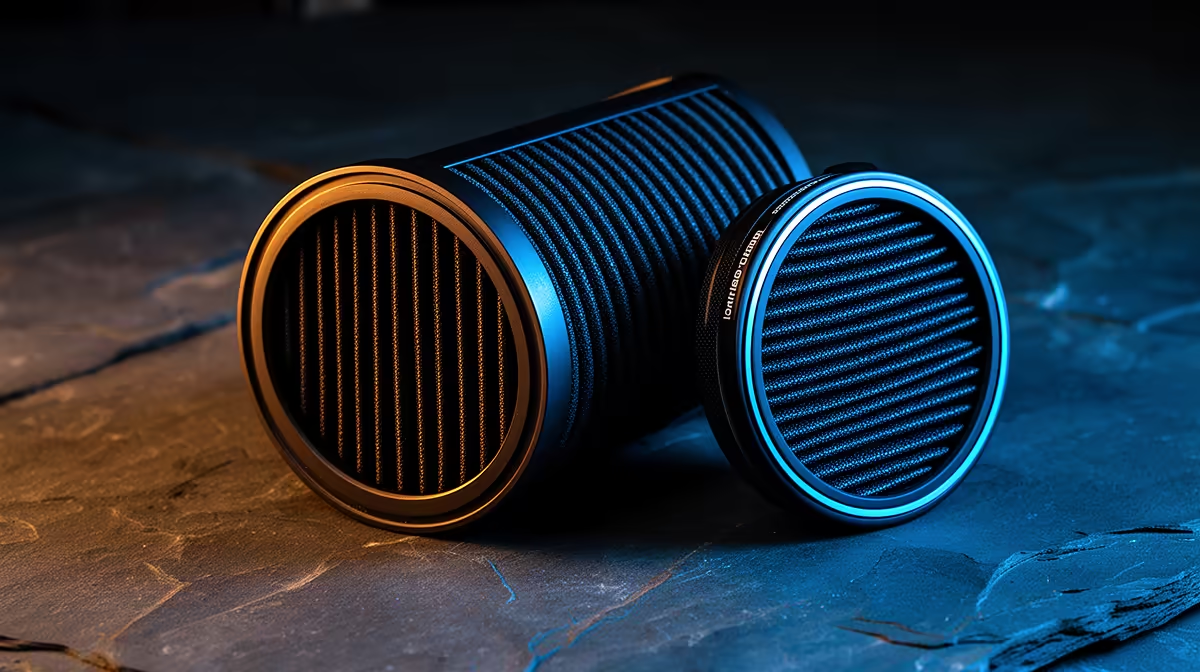
Bolt-on filter boxes that mount inside or on top of an enclosure almost always run a pre-filter, then HEPA, then carbon in series. Air is pulled through the pre-filter to catch larger dust, through the H13 layer to strip particles, and finally across a bed of carbon pellets to scrub the gases. The order matters because you want particles out before they clog the carbon.
The trade-off is airflow. Every layer you add creates resistance, so combined units use a fan sized to push air through the full stack. A unit that is too weak will read quiet and clean while doing very little, because the air is simply finding an easier path around the enclosure gaps. Match the fan to the enclosure volume and seal the obvious leaks first.
Sealing the enclosure matters as much as the filter
A filter only treats the air that passes through it. An open or leaky enclosure lets fumes drift straight into the room before the fan ever sees them. Treat the enclosure as the first line of defence: closed panels, a sealed door, and the filter unit drawing a slight negative pressure inside so air leaks inward rather than out. This is also why a standalone room air purifier is a weaker fix than capture at the source.
What it means for a South African workspace
Most home printing here happens in a spare room, garage, or study rather than a ventilated workshop, and opening a window is not always practical year round. That makes filtration at the printer the realistic answer rather than relying on cross-ventilation. Budget for the consumable cost up front: carbon is a wear item, not a buy-once part. On heavy ABS or ASA use plan for a carbon swap around every 200 to 300 hours, and roughly 400 to 500 hours on lighter PLA or PETG loads.
If you are still assembling the rest of the setup, browsing the 3D printer range at Evetech helps you pair a printer to an enclosure designed to accept a filter unit. The spare filters and consumable accessories you will reorder regularly are well represented among the accessories best sellers, which makes it easy to track down the items you need to restock.
Reading the labels without getting fooled
The filter market is full of vague claims, so a few specifics keep you honest. For particles, look for a HEPA rating of H13 or better, which is the medical-grade tier that captures at least 99.95 percent of fine particles. Anything sold as "HEPA-type" or "HEPA-style" without a grade is a weaker mesh trading on the name, and it will not give you the same particle capture.
For the gas side, what matters is the amount of carbon, not just its presence. A thin sprinkle of carbon granules adsorbs very little and saturates fast, which is why combined units use a proper bed of pellets rather than a token layer. More carbon means more surface area and a longer service life before the smell returns.
Acid-free carbon and why it is mentioned
Some 3D printing filters specify acid-free activated carbon. The point is that ordinary carbon can carry residues that are not ideal for an enclosed printing space, whereas acid-free grades are processed for cleaner use around the print and the room. It is a small detail, but it is one of the things that separates a purpose-built 3D printing filter from a generic carbon pad repurposed for the job.
Match the unit to the enclosure volume
A filter rated for a small benchtop enclosure will be undersized on a large machine, and vice versa. The fan has to cycle the full enclosure volume often enough to keep the air clean, so check the unit's airflow rating against the size of your enclosure rather than assuming any filter box will do. An oversized fan on a tiny enclosure is wasteful but harmless; an undersized one on a big enclosure quietly fails to do its job.
Frequently Asked Questions
Does PLA need filtration too?
PLA smells milder and is often called safe, but it still emits ultrafine particles from the hot nozzle. A HEPA layer is worth having even for PLA-only printing. The carbon layer matters far more once you move to ABS, ASA, or other styrene-heavy filaments.
How often do I replace the carbon?
On ABS and ASA, plan for roughly every 200 to 300 print hours. On PLA and PETG you can stretch that to around 400 to 500 hours. Carbon that has stopped adsorbing simply lets the smell through again, which is your practical signal to swap it.
Can one filter do both jobs?
Only if it physically contains both media. A 2-in-1 cartridge that layers HEPA and carbon together does both. A single-material filter does only one job, so check exactly what is inside before assuming it covers fumes and particles.
Is a room air purifier enough on its own?
It helps, but it treats the room after the fumes have already escaped the printer. Capturing at the source with an enclosure filter is more effective because it deals with the concentrated air before it dilutes into the room.
Printing ABS or ASA indoors is far safer once you pair a sealed enclosure with a HEPA and carbon stack. Browse the 3D printer range at Evetech to find a machine ready for filtration and get your workspace air sorted from the first print.