The Visual Edge: AMOLED vs LCD Smartwatch Displays
Ever tried checking your notifications while walking down Umhlanga Rocks Drive or hiking Lion's Head? If you are squinting at a washed-out screen, you are likely facing the classic AMOLED vs LCD smartwatch dilemma. In the world of wearables, the display is not just a spec... it is the primary way you interact with your tech. Choosing the right panel determines whether your watch looks like a premium piece of kit or a budget toy. ⌚
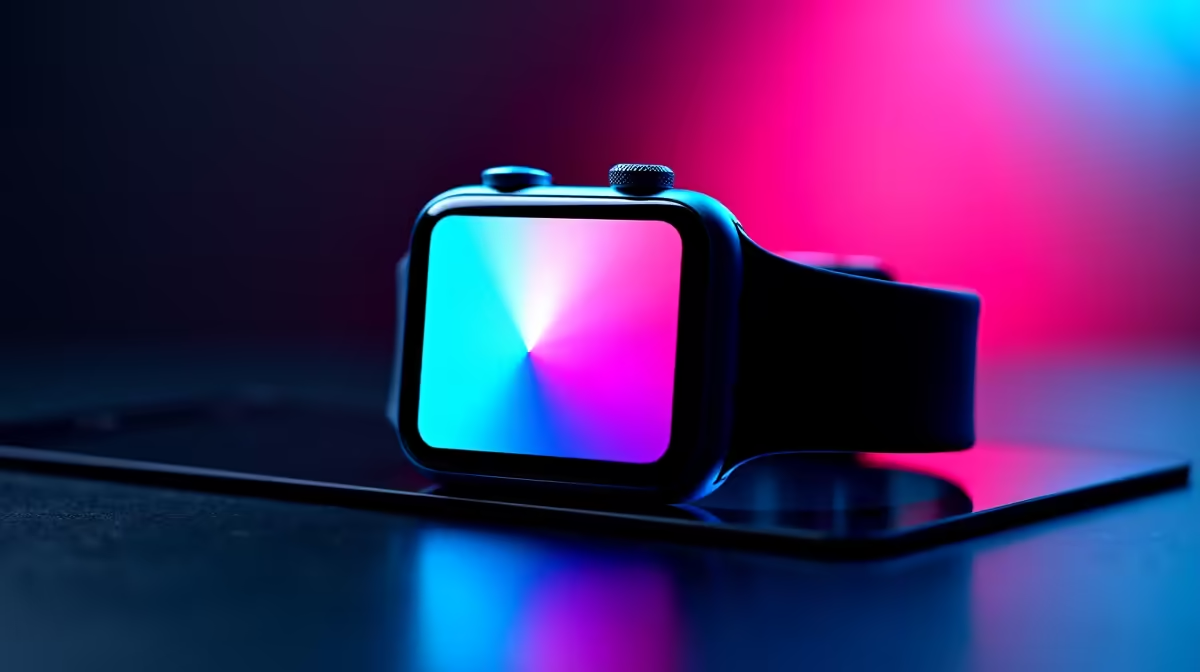
When we talk about why AMOLED wins, the biggest difference lies in how these screens handle light. LCDs (Liquid Crystal Displays) use a backlight that stays on even when showing black... which often results in a greyish, muddy look. AMOLED pixels are self-emissive, meaning they can turn off completely. This creates "true blacks" and a contrast ratio that makes colours pop. If you want a display that looks vibrant under the harsh South African sun, browsing the latest smart watches will show you that AMOLED is the gold standard for premium aesthetics.
Battery Life and Power Efficiency
One might assume a brighter, more colourful screen drains more juice, but AMOLED is surprisingly efficient for daily wear. Because black pixels are literally turned off, using a dark watch face can significantly extend your runtime between charges. This is a massive win for those of us dealing with unpredictable schedules where a charger might not be handy.
Many Promate smart watches leverage this technology to give you days of usage without needing a cradle. LCDs require the backlight to be active regardless of what is on the screen... making them hungrier for power during simple tasks like displaying the time. When comparing an AMOLED vs LCD smartwatch, the power savings of the former allow for thinner designs without sacrificing longevity. ⚡
Battery Saving Tip ⚡
To get the most out of your AMOLED display, use a watch face with a predominantly black background. Since AMOLED pixels consume zero power when displaying black, you can squeeze an extra 10% to 15% battery life out of your wearable every single day. It is a simple tweak that makes a huge difference during long weekends away or during an unexpected outage cycles.
Finding Value Without Compromise
You do not need to spend a fortune to get a high-quality display. While AMOLED was once reserved for flagship devices, it has trickled down into more affordable segments. You can now find excellent budget-friendly smart watches under R1000 that still offer crisp visuals and reliable health tracking.
When comparing AMOLED vs LCD smartwatch options at this price point, the AMOLED variant almost always provides a better "Always-On Display" (AOD) experience. Because it only lights up the necessary pixels for the clock, it does not drain the battery like an LCD would if kept on indefinitely. This functionality ensures your watch actually looks like a watch, rather than a black slab on your wrist. 🚀
Why AMOLED Wins the Long Game
The verdict for South African tech enthusiasts is clear. For better contrast, superior battery management, and a display that does not disappear when you step outside, AMOLED is the superior choice. Whether you are tracking your steps at the gym or managing work pings on the go, the clarity of an AMOLED vs LCD smartwatch makes a tangible difference in your daily routine. ✨
Ready to Upgrade Your Wrist Game?
The AMOLED vs LCD smartwatch debate has a clear winner for those who value clarity and efficiency. Explore our massive range of smartwatch specials and find the perfect AMOLED companion to stay connected in style.