Quick Answer
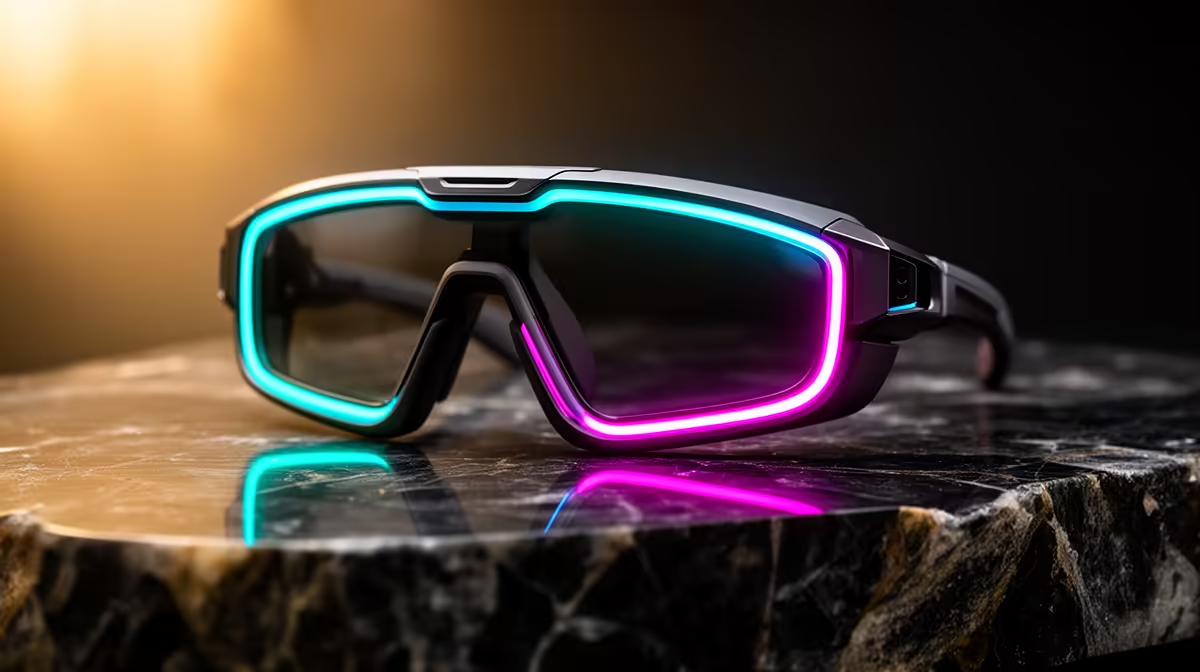
For a first-year student setup, AR glasses are a luxury, not a necessity; budget for the laptop and connectivity first. If you do buy a pair, choose display-only Micro-OLED glasses around R6,000-R8,000 for a private big-screen in a shared res room, and confirm they plug into your laptop's USB-C DisplayPort output.
The first-year checklist
Before AR glasses, a first-year needs a reliable laptop (note the cheapest at Evetech starts at R8,000) and solid connectivity in res. AR glasses then make sense as a private second screen: lectures, notes or a movie that nobody else in a shared koshuis room can see. Prioritise a display-only model so there is no camera or cloud account to manage on a student budget.
Check compatibility: the glasses need a USB-C port with DisplayPort Alt Mode, which many student laptops have, or a small adapter if not.
What to look for and skip
Look for a sharp 1080p-per-eye panel, light weight under 80g for long study sessions, and a built-in focus dial if you wear spectacles. Skip camera-equipped mixed-reality units; a first-year does not need them and they cost far more. A 600-nit panel also stays readable for notes in a bright res room.
FAQ
Do first-year students need AR glasses?
No, they are optional. Spend on a dependable laptop (from R8,000 at Evetech) and connectivity first. AR glasses are a nice private second screen once the essentials are covered.
Will AR glasses work with a student laptop?
If the laptop has a USB-C port with DisplayPort Alt Mode, yes. Otherwise a R250-R450 adapter bridges HDMI or DisplayPort to the glasses.
What is a sensible student budget?
Display-only AR glasses currently start around R6,000 at Evetech. That gets a private 1080p-per-eye screen without camera or subscription costs.
Sort the essentials first, then if AR glasses fit your budget, pick a camera-free display-only pair at Evetech and confirm your laptop supports USB-C DisplayPort output.