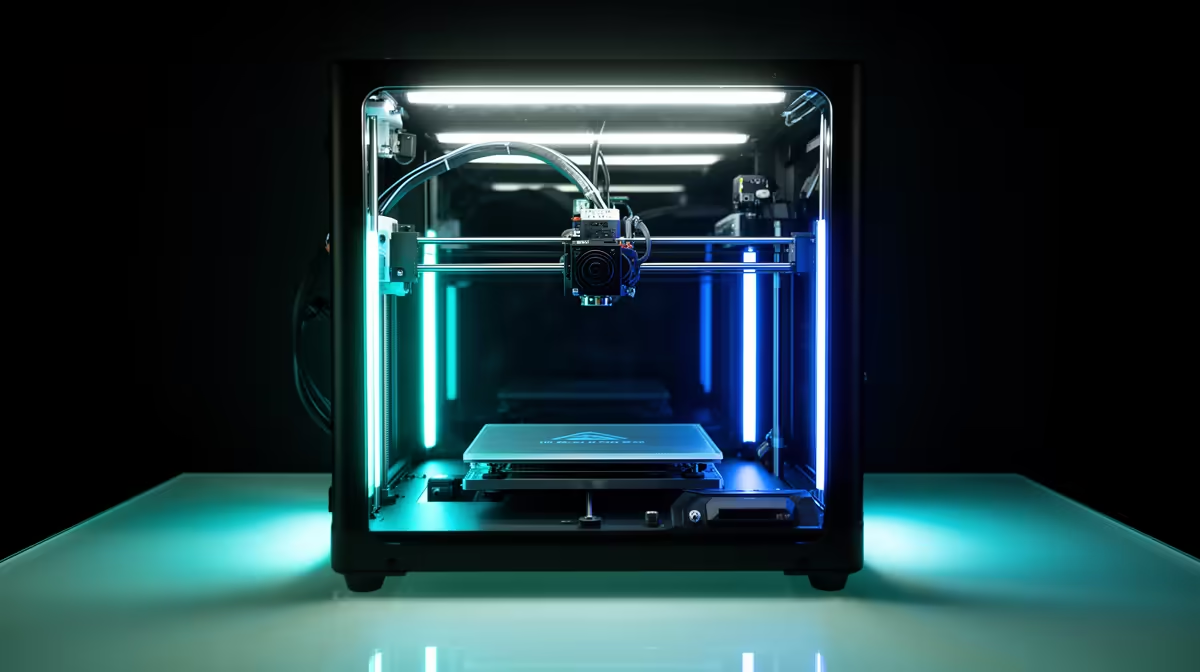
Tabletop gamers in South Africa who want crisp 28mm heroes, sharp bevel edges and clean chainmail are nearly always pointed at resin, and the three names that dominate the conversation are the Elegoo Saturn, the Anycubic Photon and the Halot-X1. All three are stocked locally with SA-friendly resin supply, so the real decision is the best 3D printer for miniatures for your bench size, your budget and how much detail you actually need at arm's length.
Quick Answer
For pure resolution the Halot-X1 leads at R15,499, thanks to a finer pixel pitch that resolves tiny sculpted detail. The Saturn class wins on build-plate size for batch printing a whole squad at once, while the Photon class sits in the friendly entry zone. All three are resin printers, all three are locally stocked, and all three run SA-available resin.
Why resin, not filament, for miniatures
Filament (FDM) printers lay down melted plastic in visible layers. They are superb for terrain, bases and bulky scenery, but at 32mm scale the layer lines and rounded nozzle limit fine facial detail. Resin printers cure liquid photopolymer with a UV LCD screen, so the smallest feature they can reproduce is tied to the screen's pixel size rather than a nozzle width. That is why a resin print of a single hero reads as smooth skin and sharp weapon edges where an FDM print of the same file shows stepping.
The trade-off is workflow. Resin needs washing in isopropyl alcohol and post-curing under UV, plus gloves and ventilation. None of that is a dealbreaker, but it is real bench time, and it is worth knowing before you spend.
The three contenders, head to head
Elegoo Saturn class: batch printing room
The Saturn line built its name on a larger build plate than most entry resin machines. For a tabletop player that translates directly into squads: you can lay out a full unit of infantry, or several character models, and cure them in one overnight run instead of three. If you paint armies rather than single display pieces, plate area is the spec that saves you the most evenings. Current Saturn-class machines have evolved to 12K LCD screens with 19 x 24-micron pixel pitch and build plates around 219 x 123mm, so the detail ceiling has risen substantially while the batch advantage remains the core proposition. Detail is strong, though at the very finest scales the Halot-X1's tighter pixels still lead.
Anycubic Photon class: the friendly entry point
The Photon family is where a lot of SA hobbyists start. It keeps the footprint compact for a desk or a corner of a flat, the slicer is approachable, and detail at standard 28mm to 32mm scale is more than good enough for crisp, paint-ready minis. Current Photon Mono models have pushed to 14K resolution with sub-20-micron pixel pitch, which is meaningfully sharper than the original Photon line and competitive with much more expensive machines from a few years ago. If this is your first resin printer and you are not yet printing whole armies in a night, the Photon class is the lowest-friction way in.
Halot-X1: the resolution leader at R15,499
The Halot-X1 is the detail champion of this trio. It runs a 16K mono LCD with a 14 x 19-micron pixel pitch, which is the finest of the three by a meaningful margin. That pixel size means sculpted fur, fine filigree and crisp eyes hold up under a magnifier and a brush in a way that entry machines simply cannot match. The build volume sits at around 211 x 118mm, compact but adequate for character models and small squads. At R15,499 you are paying for resolution and for intelligent features including auto levelling and an automated resin management system that reduces the manual handling between prints. For a painter who enters competitions, sells commissions, or photographs models for a portfolio, that extra sharpness earns back its cost.
What the resolution numbers actually mean at 28mm
At 28mm scale you are painting features measured in fractions of a millimetre: individual eyelashes, the weave of fabric, the ridge on a pauldron. Entry resin machines at 50-micron XY resolution resolve those features better than any FDM machine, but a 14 to 19-micron machine pushes into territory where the sculptor's original intent comes through without softening. The difference is most visible under a magnifier or a close-up photograph. At gaming distance, even a 50-micron print looks clean after a good paint job. Where you feel the gap is in close-up photography, competition judging, and detailed faces on character heroes where every micron saved on pixel size shows up as sharper definition.
Matching the printer to the player
A weekend skirmish player who paints a handful of characters a month is well served by a Photon-class machine: low cost of entry, easy to live with, and detailed enough that nobody at the table will fault the print. An army painter who fields 40 to 60 models a campaign should weigh the Saturn's larger plate, because the time saved batching prints compounds fast. The Halot-X1 is for the detail-obsessed: display pieces, commission work and anything you will photograph close up.
Whichever you pick, budget for the supporting kit too. A wash-and-cure station, spare FEP film, a bottle of isopropyl and good gloves are part of the real cost. You can see the broader line-up on the dedicated 3D printer range at Evetech, and the consumables and finishing tools that tend to ship alongside a printer turn up in the accessories that move fastest with hobbyists.
Running costs and resin in South Africa
Resin is the ongoing expense. A standard 28mm hero uses only a few millilitres, so a 1kg bottle goes a long way for single minis, and faster for full units printed on a big plate. Standard grey resin is the workhorse; tougher ABS-like blends help with thin spears and antennae that snap on the sprue. Keep resin out of direct sunlight, store it sealed, and a single bottle will see you through plenty of game nights.
Frequently Asked Questions
Which of the three gives the sharpest miniatures?
The Halot-X1 at R15,499. Its finer pixel pitch resolves smaller details than the Saturn or Photon classes, which is why it suits display pieces and commission work where close-up sharpness matters most.
Is resin printing safe to do at home in a flat?
Yes, with sensible precautions. Work in a ventilated space, wear nitrile gloves when handling liquid resin, and post-cure prints before handling them bare-handed. Cured resin is inert and safe to keep on a shelf.
How many miniatures can I print at once?
That depends on plate size. A Saturn-class machine's larger plate lets you batch a full squad in one run, while a compact Photon-class printer suits smaller batches or single characters per cycle.
Do I need extra equipment beyond the printer?
You will want a wash station or a tub of isopropyl alcohol, a UV curing source, gloves and spare FEP film. Many hobbyists buy these together with the printer so the first print is ready to go.
Is the Halot-X1 worth the premium over the entry machines?
For competition painters, photographers and anyone selling minis, the resolution justifies the price. For a casual player printing a few models a month, a Photon-class printer prints paint-ready detail for less.
Ready to print your own army? Compare the Saturn, Photon and Halot-X1 specs side by side on the 3D printer range at Evetech and grab the resin and finishing kit you need to print clean from day one.