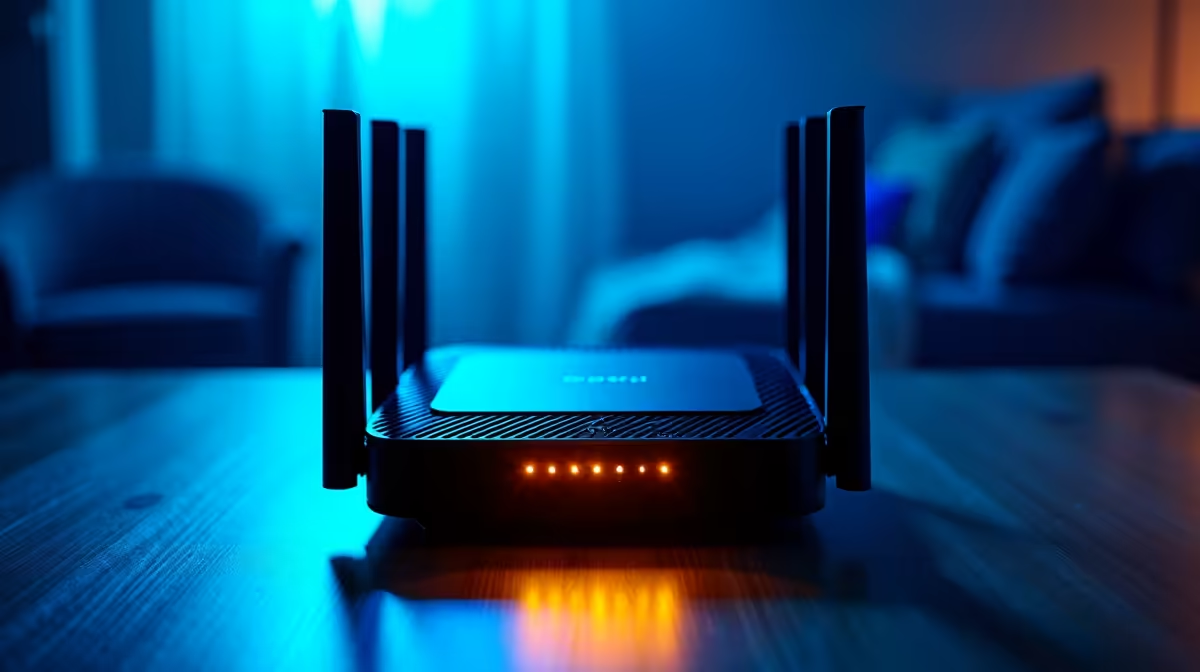
Moving into a rented flat or a short-term place used to mean a frustrating wait: book a technician, get a line installed, ask the landlord for permission to drill, and sign a long contract you cannot easily exit when you move again. 5G home internet sidesteps all of that. The router arrives, you plug it in, and you have broadband, with nothing fixed to the walls and no commitment that outlasts your lease.
Quick Answer
5G fixed wireless needs no installation, no landlord approval, and no fixed contract on month-to-month plans, and the router simply moves with you to any address with coverage. That makes it the most practical home internet for renters and short stays. You can compare routers and related kit in the Evetech networking range.
No installation, no waiting, no drilling
The defining advantage for renters is that 5G fixed wireless is plug-and-play. There is no physical line to run into the property, no technician visit to schedule, and nothing to mount or drill into a wall you do not own. You power on the router, it connects to the nearest 5G tower over the air, and your home network is live. Setup is measured in minutes, not weeks.
That matters most for people whose housing situation changes. A line installation ties internet to a specific address and a specific lease, which is exactly the wrong shape for someone renting or staying somewhere temporarily. Fixed wireless treats the connection as something you own and carry, not something bolted to the building. When the lease ends, the internet leaves with you.
No landlord approval required
Installing a fixed line often means asking the property owner for permission to alter the building, run cabling, or commit the address to a service. For a renter that is an awkward conversation, and for a short-term stay it is rarely worth it. Because 5G fixed wireless needs no physical changes to the property, the landlord is simply not part of the equation. You are using a wireless signal that arrives over the air, the same way mobile data does, so there is nothing to approve.
This independence is genuinely freeing. You do not need to negotiate, wait for sign-off, or worry about restoring the property when you leave. The service is entirely yours to arrange, which suits the autonomy renters usually want over their own connectivity.
Month-to-month plans that move with you
The third pillar is contract flexibility. Fixed wireless is widely offered on month-to-month terms with no long lock-in, so you can cancel or change your plan when your living situation shifts. For someone who might move in six months, or who is in a place only for a season, that flexibility is the whole point. You are not paying out a long contract on a connection at an address you have left.
When you do move, the router comes too. As long as your new address has 5G coverage, you set up again in minutes at the new place, with no new installation and no fresh contract penalty. That portability turns home internet from a fixed cost tied to a building into a service that follows you, which is exactly what a mobile lifestyle needs.
Checking coverage before you commit
The one thing to verify upfront is signal. Fixed wireless depends on a decent 5G signal at your address, so confirm coverage for the specific place before relying on it. Where you stand the unit makes a real difference too: a spot near a window, particularly one that looks out toward the closest mast, gives the modem the cleanest path to lock onto. If the signal is marginal, an external antenna can meaningfully improve it, which is worth knowing before you decide. A quick coverage check turns a good idea into a reliable one.
Understanding the trade-offs honestly
Fixed wireless is the right answer for renters, but it is fair to know where it sits against a fixed line so your expectations match reality. Because the signal travels over the air to a shared tower, performance can vary with how many people in your area are using the network and with the weather, in a way a dedicated fixed line does not. In most homes with a solid signal this is barely noticeable, but it is the inherent nature of a wireless connection and worth understanding upfront.
What you gain in exchange is exactly the flexibility a renter values: speed of setup, freedom from installation and landlord involvement, and a contract you can leave. For a permanent home you own, a fixed line might edge it on raw consistency, but that is not the situation here. For a rented or temporary place, the small loss in consistency is more than repaid by a connection that arrives in minutes and leaves with you, which is why it suits this audience so well. Knowing both sides lets you choose with confidence rather than discovering the character of the connection later.
Who this suits best
This is the natural choice for students in residence or shared digs, young professionals renting flats, anyone between homes, and people in genuinely short-term stays. The common thread is a living situation that is not permanent, where the cost and commitment of a fixed line do not fit. For all of them, a connection with no installation, no landlord involvement, and no binding contract is simply the better-shaped product.
Choosing the right router rounds it out. A capable unit with good Wi-Fi coverage spreads the connection across a flat or house, and you can match one to your space from the wider lineup, including options shown in the best-selling accessories. With the right gear and confirmed coverage, a renter can have solid home internet up and running the same day they move in.
Frequently Asked Questions
Do I need a technician to install 5G home internet?
No. It is plug-and-play. The router connects to the nearest 5G tower over the air, so there is no line to install and no technician visit. You power it on and the network is live within minutes.
Do I need my landlord's permission?
No. Because there is nothing to drill, mount, or cable into the property, the landlord is not involved. You are simply using a wireless signal that arrives over the air, so no approval is required.
Can I cancel if I move out soon?
Yes, on month-to-month plans with no long contract. You can cancel or change your plan when your situation changes, and when you move the router comes with you to any address that has coverage.
What should I check before signing up?
Coverage at your specific address. Fixed wireless needs a decent 5G signal, so confirm the location has it. Setting the unit by a window that faces the closest mast, or fitting an external antenna, lifts a weak signal.
Will it work at my next place too?
As long as the new address has 5G coverage, yes. You set up again in minutes with no new installation and no fresh contract penalty, which is what makes it ideal for people who move often.
Renting and need internet today, not next month? Browse plug-and-play routers in the Evetech networking range and get a connection that moves out when you do.