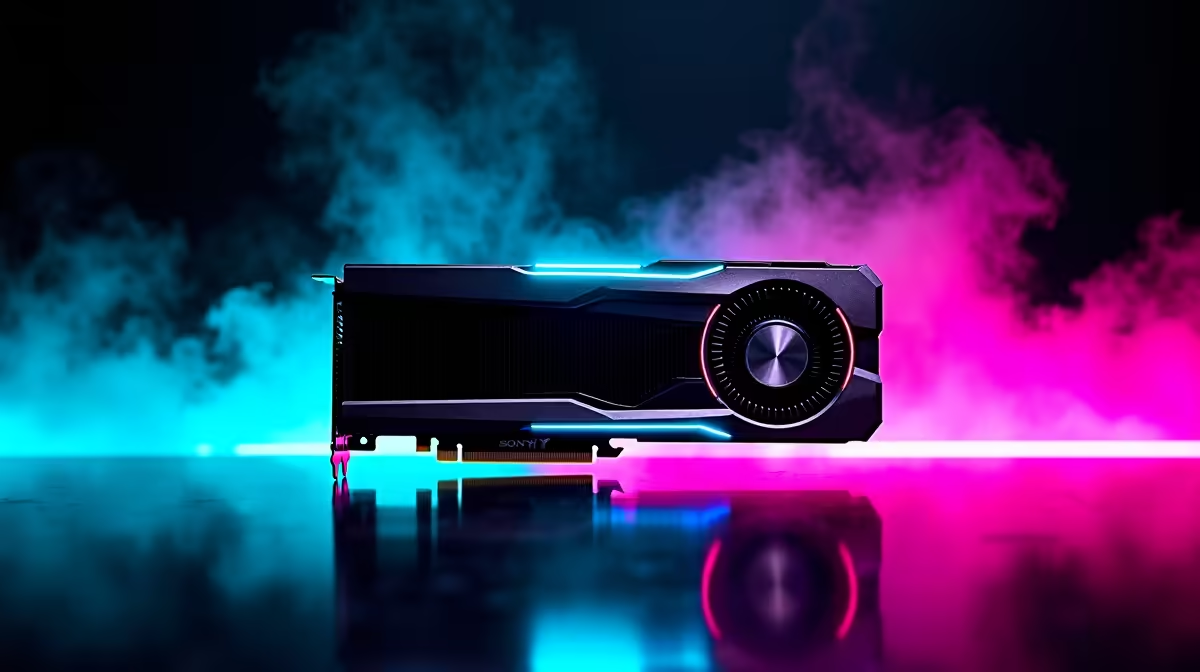
External graphics boxes used to force an awkward choice between a card too weak to bother with and one so expensive it made a desktop look sensible. The RTX 5060 Ti 16GB lands precisely in the gap, which is exactly why Morefine reached for it when building the compact G2 eGPU rather than a pricier or weaker chip. For a budget external GPU setup in 2026, it is the card that makes the most sense.
Quick Answer
The RTX 5060 Ti 16GB is built on NVIDIA's Blackwell architecture with 4608 CUDA cores and 16GB of GDDR7, and that combination of a generous frame buffer and fast memory is what keeps it comfortable at 1440p. Morefine chose this exact GPU for its pocket-sized G2 eGPU dock, which signals its standing as the budget-eGPU sweet spot. It pairs over Thunderbolt 5 or OCuLink.
Why This Card Suits an eGPU
An external GPU lives or dies on the balance between capability and the bandwidth squeeze of running over a cable. Push too high-end a card and the external link starves it, leaving expensive silicon underused. The 5060 Ti 16GB sits in the band where its performance is realistic for the connection, so you are not paying for headroom the dock cannot feed. That alone makes it a smarter eGPU choice than simply buying the most powerful card you can afford.
The Specs That Matter Here
16GB of GDDR7 Is the Headline
The frame buffer is the single most important number for this use. With 16GB of GDDR7, the card holds large textures and higher-resolution assets in memory rather than constantly shuffling data across the eGPU link, which is precisely where a thinner connection would otherwise bottleneck. GDDR7 is the newer, faster memory standard, and that bandwidth is what keeps the card relevant at 1440p rather than confining it to 1080p. For an external setup specifically, generous fast memory matters more than raw core count.
4608 CUDA Cores on Blackwell
The 4608 CUDA cores sit on NVIDIA's current Blackwell generation, bringing the latest ray tracing and tensor hardware along with them. That means modern upscaling and frame-generation features are on the table, which stretch real-world performance well beyond what the core count alone suggests. For a budget tier, having current-generation features rather than last-generation silicon is a meaningful part of the value.
180W Board Power: PSU-Friendly by Design
At a rated 180W, the 5060 Ti 16GB is unusually easy on eGPU enclosure power supplies. A 450W unit comfortably handles the card's draw plus the host-charging allocation, which means most mid-range enclosures work without needing an expensive high-wattage PSU upgrade. That power efficiency is a practical advantage in portable all-in-one docks, where heat and size constrain the supply rating. The card reaches its rated clocks without stressing the enclosure, which is not true of every GPU that gets shoehorned into an eGPU box.
The Morefine G2 as Proof of Concept
The clearest endorsement of this card for eGPU duty is that Morefine built an entire product around it. The G2 packs the desktop RTX 5060 Ti 16GB into a remarkably small dock, roughly 140 by 100 by 54mm and around 700g, with active cooling that offers silent, automatic, and performance fan modes. Critically, it connects over both Thunderbolt 5 for modern laptops and OCuLink for systems that support a direct PCIe-style link, covering the two interfaces that matter for external graphics today. That a manufacturer chose this exact GPU for a compact, portable design tells you it hits the right blend of power, heat, and size.
Who This Build Is For
The eGPU-plus-5060-Ti combination is aimed at a specific person: someone with a capable but graphically weak laptop or mini PC who wants real gaming or creative power at the desk without owning a separate tower. Plug in at home for 1440p gaming and accelerated creative work, unplug and carry a thin, quiet machine when you leave. It is also the right pick for anyone whose case cannot take a full desktop card but whose system has Thunderbolt 5 or OCuLink to spare.
Where It Is Not the Answer
If you only ever sit at one desk and your case can house a desktop card, a conventional internal build gives you more performance per Rand, because you skip the cost and the bandwidth tax of the external enclosure entirely. The eGPU route earns its premium through portability and compatibility, not raw value, so be honest about whether you need to move between machines before paying for the dock.
SA buyers should factor rand pricing into this calculation. When the eGPU enclosure and GPU combined cost significantly more than an equivalent desktop card in a budget case, the mobility angle needs to genuinely apply to your situation for the spend to make sense.
Putting the Setup Together
A working eGPU build needs three things that agree with each other: the GPU, the enclosure or dock, and a host with the right port. Confirm your laptop or mini PC has Thunderbolt 5 or OCuLink before committing, since that connection is the whole foundation. The dock side is where you start, and it is worth comparing options in the docking station range at Evetech to match the right enclosure to your host. To see where the 5060 Ti sits against the rest of the current lineup, the GPU best sellers list gives a quick read on what South African buyers are choosing right now.
Frequently Asked Questions
Why the 5060 Ti 16GB and not a stronger card for an eGPU?
The external link limits how much bandwidth reaches the card, so an extremely powerful GPU gets starved and underused. The 5060 Ti 16GB sits in the band where its performance matches what the connection can feed, which is why Morefine chose it for the G2.
Does the 16GB really make a difference externally?
Yes. A larger frame buffer keeps textures and assets in GPU memory instead of pushing data back and forth across the cable, which is exactly where a thin eGPU link would otherwise choke. It is the spec that matters most for this use.
What connection do I need on my laptop?
Either Thunderbolt 5 or OCuLink. The G2 supports both, but your host must have one of them, so confirm the port before buying since the link is the foundation of the whole setup.
Can it really game at 1440p?
The GDDR7 bandwidth and Blackwell feature set, including modern upscaling, keep it comfortable at 1440p rather than limiting it to 1080p. It targets that resolution as its sweet spot for the budget tier.
Is an eGPU worth it over a desktop?
Only if you value portability or your system cannot take a desktop card. A tower gives more performance per Rand by skipping the enclosure cost, so the eGPU earns its premium through flexibility, not raw value.
Want desktop-class graphics from a thin laptop? Start your external build with the right enclosure from the docking station range at Evetech and pair it with a 1440p-ready GPU.