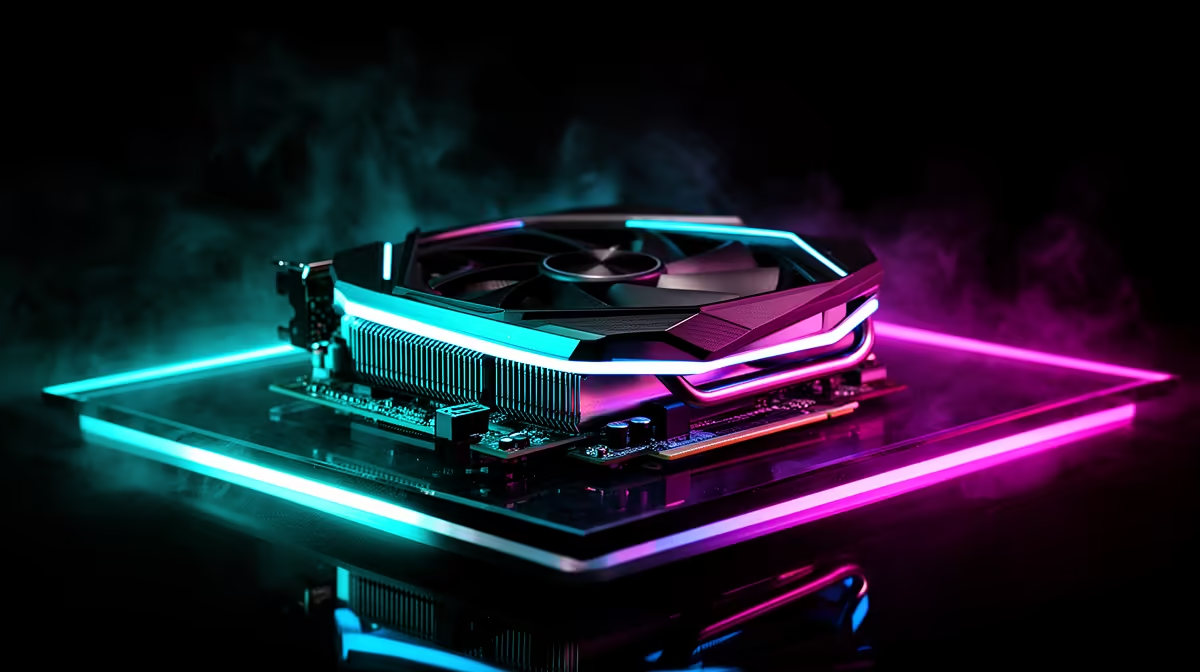
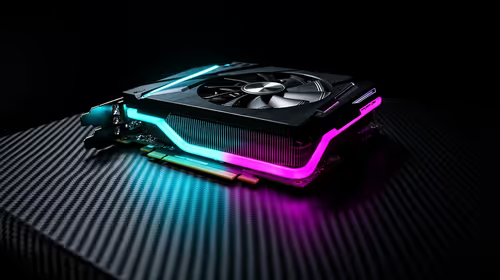
Tired of your rig stuttering while exploring the vast, unpredictable landscapes of No Man's Sky or Starfield? You're not alone. Procedurally generated worlds are incredible, offering endless replayability, but they push hardware hard. Finding the best GPU for procedural games is the key to unlocking a smooth, immersive experience. It’s the difference between a breathtaking cosmic journey and a choppy, frustrating slideshow. Let's build you a powerhouse rig that won't break a sweat.
Why Procedural Worlds Demand a Top-Tier GPU
Unlike traditional games with hand-crafted levels that developers can meticulously optimise, procedural games create the world on the fly. Your PC is constantly running complex algorithms to generate terrain, textures, and objects. This relentless creation process places unique demands on your graphics card.
Here’s what’s happening under the hood:
- Massive Draw Distances: Infinite vistas in games like Starfield mean your GPU has to render an enormous amount of detail at once.
- Unpredictable Assets: The game engine can't pre-load everything because it doesn't know what it's going to create next. This requires a GPU with plenty of fast VRAM to hold all the newly generated assets.
- Complex Geometry: From intricate cave systems in Minecraft with shaders to the detailed flora of a new planet, the geometric complexity can spike without warning, demanding raw rendering horsepower.
Essentially, a powerful graphics card for procedural games needs a solid combination of raw performance, ample VRAM, and modern features to keep up.
Our Picks: The Best GPUs for Procedural Games in 2024
Building a powerhouse rig doesn't have to break the bank. We’ve broken down our top picks based on the most popular gaming resolutions in South Africa. 🔧
The 1080p Sweet Spot: Excellent Performance, Smart Value
Full HD is still the king for a reason, and you can get incredible performance without spending a fortune. The best GPUs for procedural games at this resolution deliver a smooth 60+ FPS experience in most titles.
- NVIDIA GeForce RTX 4060: A brilliant choice for 1080p. Its secret weapon is DLSS 3 with Frame Generation, which uses AI to boost frame rates significantly—a massive advantage in CPU-heavy procedural scenarios.
- AMD Radeon RX 7600 XT: Offering a hefty 16GB of VRAM, this card is a fantastic value proposition. That extra memory gives it breathing room in texture-heavy titles, ensuring smoother gameplay as you explore vast open worlds.
The 1440p Powerhouse: The New Gaming Standard ✨
Ready for a serious visual upgrade? 1440p (QHD) offers a sharper, more detailed picture that truly lets procedural worlds shine. For this tier, you need a graphics card with more grunt and, crucially, more VRAM.
- NVIDIA GeForce RTX 4070 SUPER: This is arguably the perfect 1440p card. It balances price, performance, and features beautifully. With 12GB of GDDR6X VRAM and stellar ray tracing capabilities, it makes games like Alan Wake 2 and Starfield look absolutely stunning.
- AMD Radeon RX 7800 XT: A performance monster with 16GB of VRAM, the RX 7800 XT often trades blows with more expensive cards in raw rasterization. If you prioritise pure FPS over ray tracing, this is an exceptional choice for building a future-proof rig.
VRAM: Your GPU's Workbench
Think of VRAM as a workbench for your GPU. A bigger bench (more VRAM) lets it hold more game assets (textures, models) at once. For procedural games at 1440p or 4K, 12GB is a great start, but 16GB provides excellent future-proofing against stuttering.
The 4K Beast: For Ultimate Immersion 🚀
If you accept no compromises and want to explore infinite universes in breathtaking 4K, you'll need one of the most powerful graphics cards for procedural games on the market. These GPUs are for enthusiasts who demand the absolute best.
- NVIDIA GeForce RTX 4080 SUPER: A phenomenal 4K gaming GPU. It chews through demanding titles and its ray tracing performance is second to none. It has the power and VRAM (16GB) to handle procedurally generated chaos at the highest resolution without breaking a sweat.
- NVIDIA GeForce RTX 4090: The undisputed champion. If your budget allows, the RTX 4090 is in a league of its own. It’s the only card that can consistently deliver high-refresh-rate 4K gaming in the most demanding titles, making it the ultimate choice for a true powerhouse rig.
Don't Forget the Rest of Your Powerhouse Rig
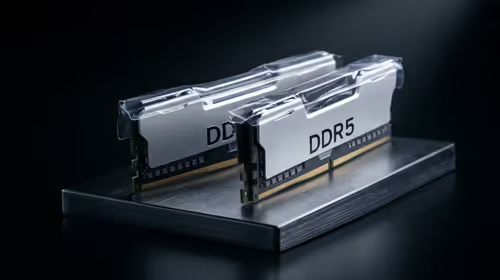
While this guide focuses on finding the best GPU for procedural games, remember that your graphics card is part of a team. Procedural generation is also very CPU-intensive. To avoid bottlenecks and ensure your new GPU can stretch its legs, pair it with a capable modern processor (like an AMD Ryzen 7 or Intel Core i7) and at least 16GB of fast DDR5 RAM.
A balanced system is a happy system, ensuring every component works together to deliver the smoothest possible gaming experience.
Ready to Build Your Procedural Powerhouse?
Stop letting lag dictate your adventures. A powerful GPU is your ticket to exploring infinite, stutter-free worlds, and we have the perfect one for your rig and budget. Find the heart of your next build and explore our full range of PC components to start your upgrade today.