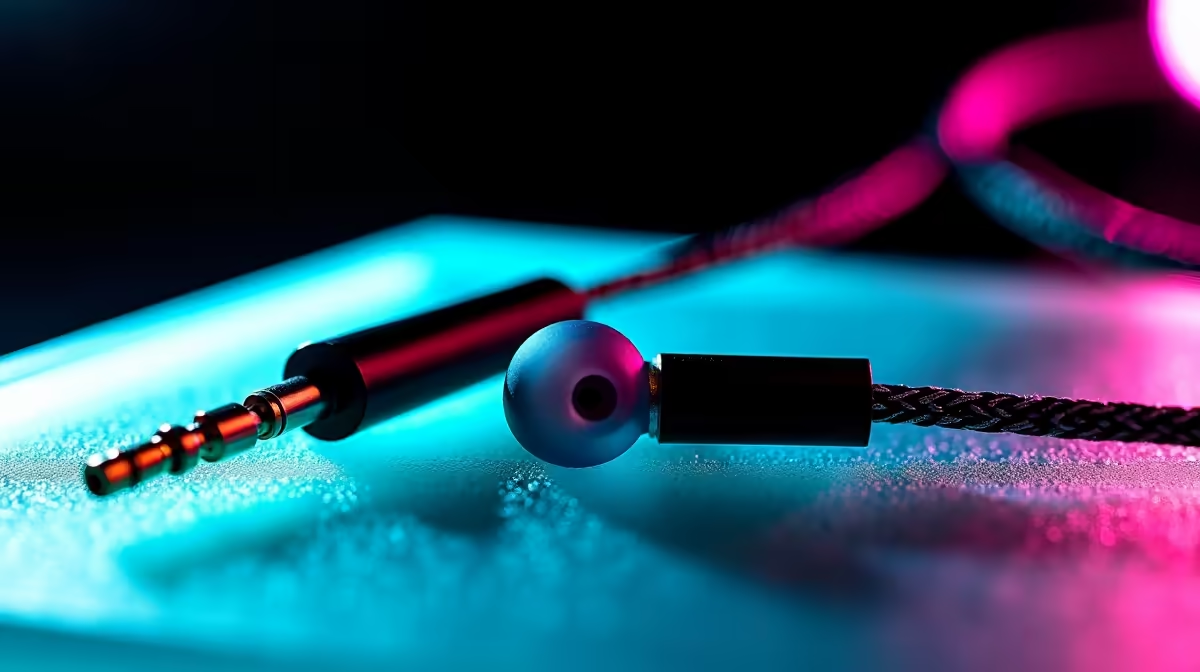
Two upgrades get bundled together for in-ear monitors, and only one of them reliably does what people expect. IEM ear tips change the seal between the nozzle and your ear canal, and that seal directly reshapes the sound. A swap can move bass response by several decibels and shift the whole tonal balance. Upgrade cables are the other half of the conversation, and their honest role is narrower than the marketing suggests: fit, comfort, durability and connector type, not a magical lift in sound quality.
Quick Answer
Ear tips are the single most effective IEM tweak: foam tips boost bass and isolation, silicone keeps the tuning neutral with a wider stage, and a poor seal can cost you up to roughly 6dB of bass. A 4.4mm balanced cable mainly buys you access to a balanced source output and connector convenience, not a guaranteed sound improvement. Start with tips, treat cables as secondary.
Ear tips: the upgrade that actually moves the needle
The seal is everything with IEMs. A wrong-sized or leaky tip drops bass and skews the entire frequency balance, so before judging an earphone's sound you have to nail the seal first. Get it right and tips become the most reliable way to tune what you hear, with swaps capable of changing bass response by several decibels in either direction. The headphones and headsets range at Evetech is a useful place to see the kinds of in-ears these tips pair with.
Foam versus silicone
The material choice is a genuine sound decision, not cosmetics.
Foam tips expand to fill the canal, so they seal deeply and isolate better, often around 5dB more passive isolation than silicone. The trade-off is a warmer character: a touch more mid-bass, slightly softened treble. They are the pick for noisy commutes and bass-forward listening. The catch is lifespan, foam loses its expansion and usually wants replacing every one to three months of daily use.
Silicone tips are what most IEMs ship with for a reason. They hold their shape, clean easily, and reflect the earphone's intended tuning most accurately, with slightly more present treble and typically a wider soundstage. They last longer too, roughly six to twelve months before the seal degrades. If you want to hear an IEM as it was measured and tuned, silicone is the neutral reference.
Hybrid tips: the middle ground
A third option sits between the two. Hybrid tips use a silicone outer shell with a softer, more compliant inner bore, borrowing the durability and cleanability of silicone while giving a slightly more forgiving fit for difficult ear canal shapes. They do not isolate as deeply as foam, but they last far longer and suit people who find pure foam either too warm-sounding or too prone to collapsing during a commute. If neither foam nor standard silicone seals well for you, trying a hybrid set is the sensible next step before assuming the IEM is the problem.
Getting the size right
Size matters more than material for most people. Too small and the bass leaks away, too large and it is uncomfortable and still seals poorly. Work through the fit kit that came with the IEMs methodically, one size at a time per ear, since ears are rarely symmetrical. The correct tip is the one that seals cleanly with no pressure discomfort and no bass loss.
Nozzle diameter matters too
Before buying a third-party tip set, check the nozzle diameter of your IEM. Most fall into a narrow range between roughly 4mm and 6mm, but mismatch a wide-bore tip on a narrow nozzle and the tip either falls off or seals poorly. Most aftermarket tip listings quote which nozzle sizes they fit, so a quick measurement with a ruler removes any guesswork and prevents a wasted purchase.
Upgrade cables: useful, but be clear-eyed
Here is the honest version most cable marketing skips. In controlled listening, swapping to a balanced, silver or boutique cable does not reliably change the sound of an IEM, blind tests do not support the claims. So buy a cable for the reasons that genuinely hold up: a better build that survives daily flexing, a more comfortable ergonomic shape, the right connector for your gear, or to physically reach a balanced output on your source. The fast-moving picks on the best-selling headsets list are a quick gauge of what local listeners actually buy.
What a 4.4mm balanced cable really does
A 4.4mm balanced cable lets your IEMs plug into the balanced output of a DAC or dongle that has one. That output can offer more available power and, on some sources, a slightly lower noise floor at high gain, which can matter for hard-to-drive or very sensitive IEMs. What it does not do is transform the tonal signature the way a tip swap will. Treat it as unlocking your source's balanced port and improving build, not as a tone control.
How to spend your money in order
Sort tips first, because that is where the audible gains are and it costs the least. If, after a perfect seal, you still hear hiss or run out of volume, that is the signal to look at a better source or a balanced output and the matching cable, fixing a real problem rather than chasing one that is not there. Everything beyond that is connector convenience and durability, worth paying for on those grounds alone.
Frequently Asked Questions
Do ear tips really change the sound?
Yes, significantly. A tip swap can move bass response by several decibels and shift the whole frequency balance, mainly through how well it seals. It is the most reliable and cheapest way to tune an IEM.
Are foam or silicone tips better?
Neither is universally better. Foam seals deeper and isolates more with a warmer tone, silicone keeps the tuning neutral with a wider stage and lasts longer. Pick by whether you want isolation and bass or accuracy.
Will a balanced cable improve my sound quality?
Not reliably. Blind testing does not support the idea that cables change tone. A 4.4mm balanced cable mainly lets you use a source's balanced output, which can add power and headroom for demanding IEMs, and improves build quality.
How often should I replace ear tips?
Foam tips typically last one to three months of daily use before losing their expansion, while silicone tips last roughly six to twelve months before the seal degrades. Replace them once the seal quality drops.
What should I upgrade first?
Ear tips, every time. They are cheap, audible and fix seal problems directly. Only look at cables or a DAC afterwards, and only to solve a specific issue like hiss or insufficient volume.