Is your Wi-Fi signal weaker than a stage 1 an unexpected outage announcement? You’re not alone. In a modern South African home, the single router from your ISP often struggles to cover every room, leaving you with frustrating dead spots. From the smart TV in the lounge to the gaming PC in the spare room, getting consistent, fast internet everywhere feels impossible. But what if you could blanket your entire home in a flawless Wi-Fi signal? ✨
Why Your Standard Router Creates Digital "No-Go" Zones
The humble router has served us well, but its design is from a simpler time. It broadcasts a signal from one central point, and like shouting across a big house, the message gets weaker with every wall and floor it passes through. Add a dozen smart devices, a 4K stream, and a competitive online match into the mix, and that single point of failure starts to buckle.
While a powerful, modern wireless router is a great foundation, it can't defy physics. This is why you experience buffering in the bedroom or lag spikes in the kitchen… classic symptoms of a network stretched too thin.
Unlocking Seamless Connectivity with a Mesh System
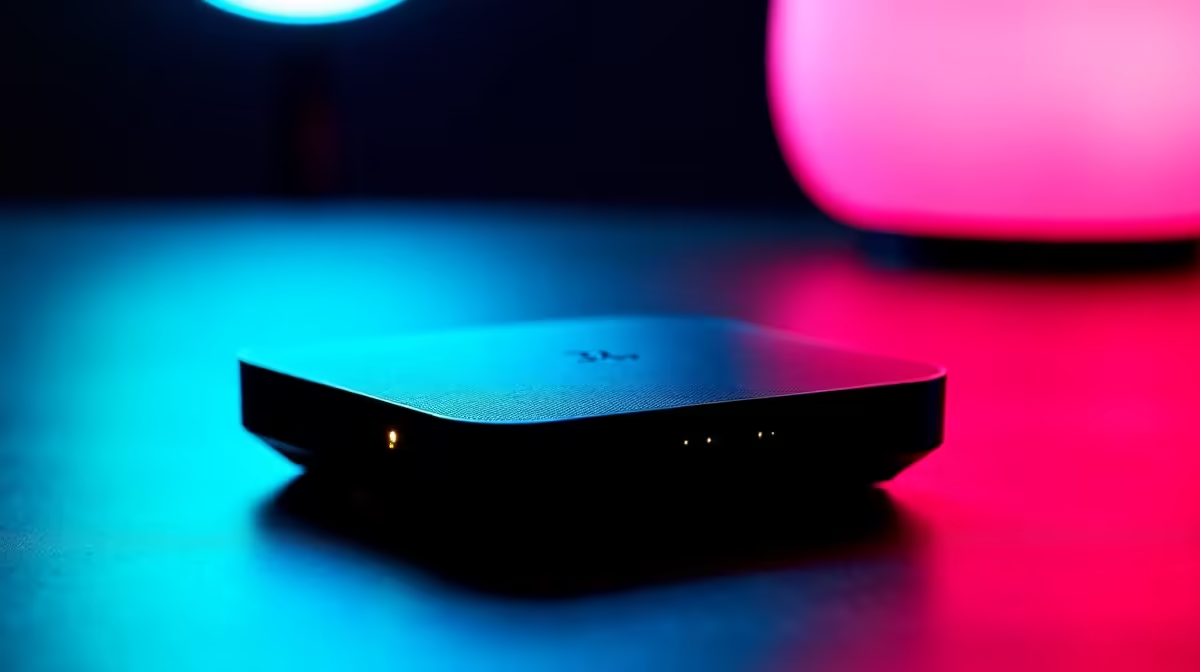
This is where the best mesh boosters come in. Instead of one device trying to do everything, a mesh system uses multiple "nodes" or "points" placed around your home. They work together as a single, intelligent team, creating one unified network with the same name and password. As you move through your house, your device seamlessly connects to the strongest node automatically, without any dropouts. 🚀
Unlike older wireless range extenders that simply repeat a weakened signal and create a separate, clunky network, a mesh system is smarter. It actively manages traffic, ensuring every device gets the fastest possible path to the internet. This is the secret to achieving true, seamless smart home connectivity.
Pro Tip: Strategic Node Placement
For optimal coverage, place your mesh nodes in a 'chain' back to the main router. Position them in open spaces, roughly halfway between the main router and a dead zone, not in the dead zone itself. This ensures each node gets a strong signal to pass on.
Choosing the Right Mesh Boosters for Your Setup
Finding the ideal mesh solution depends on your home's size and your internet needs. For most South African homes, a two or three-node system is perfect. Look for systems supporting Wi-Fi 6 (also called 802.11ax) for future-proofing and better performance with many devices. The setup is usually a breeze, often handled through a simple mobile app.
Exploring a complete range of wireless networking solutions will give you a clear idea of the options available, from entry-level kits to high-performance systems for demanding users.
Don't Forget Your PC 🔧
Even with the best mesh boosters blanketing your home in a glorious signal, your desktop PC needs the right gear to catch it. If your rig is far from a node and running a cable isn't an option, a high-quality PCIe or USB wireless adapter is essential. A modern adapter will ensure your gaming PC can fully tap into the speed and stability your new mesh network provides.
Ready to Banish Buffering for Good?
Stop fighting over bandwidth and eliminate dead zones forever. Explore our curated selection of mesh systems and networking gear to build the fast, reliable smart home you deserve. Shop now at Evetech for performance that leaves lag in the dust.