The fear that stops most people building their first home server is that it will turn into a weekend lost to command lines and forum threads. The right beginner NAS removes that fear entirely: a guided wizard walks you through drives, storage and apps, and you have photo backup and file sharing running before the afternoon is over. The hardware matters, but the software is what makes or breaks a first build.
Quick Answer
For a first home server, Synology DSM remains the most polished, hands-off NAS experience in 2026, with a guided setup wizard and one-click apps that get a beginner from unboxing to working file sharing in under two hours. UGREEN's NASync range is the strong value challenger, offering similar ease at a lower entry price.
Why the operating system matters more than the box
It is tempting to compare NAS units on processor and bays, but for a beginner the operating system is the deciding factor. A NAS is only as approachable as the software you stare at every day, and this is where the platforms genuinely differ. Synology's DSM has spent years refining its setup wizard, error handling and app store into something that feels like a finished appliance rather than a project, which is exactly what a first-time builder wants.
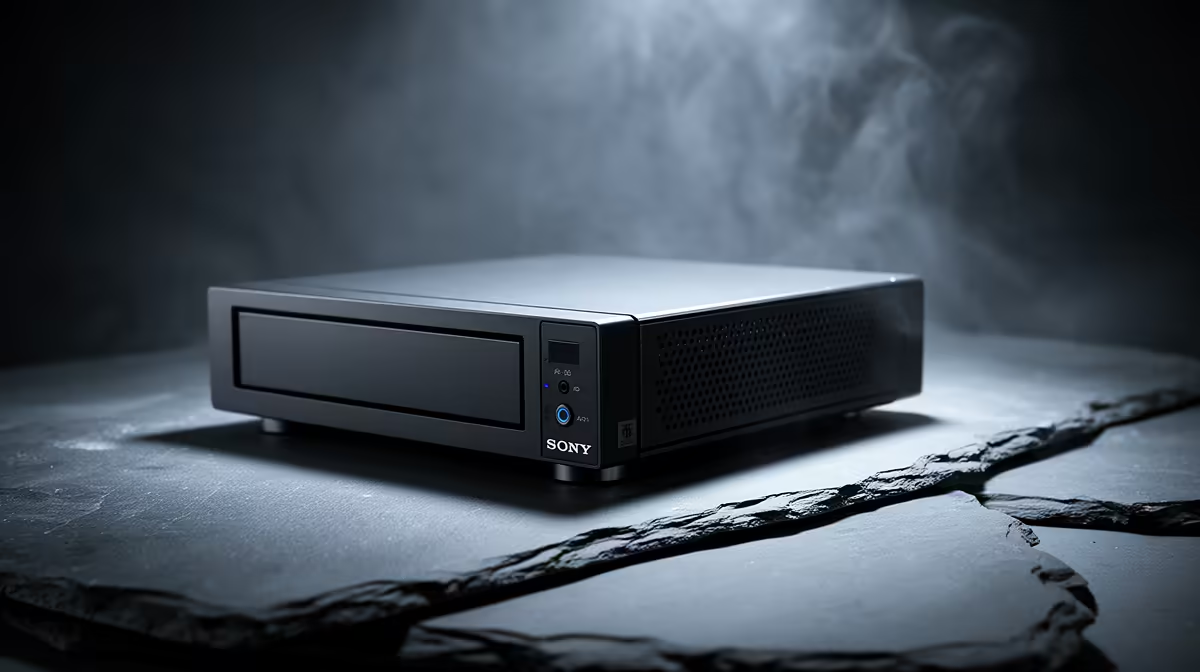
That polish shows up in the small moments: a wizard that explains what a storage pool is before asking you to make one, clear prompts when a drive needs initialising, and one-click installation for photo backup, file sync and media serving. You spend your time using the server, not troubleshooting it. Browse the diskless NAS options at Evetech to find an enclosure that runs these systems, then choose the drives separately to match your capacity needs.
What a beginner build looks like
Choose the enclosure and the bays
Most first-timers are well served by a two-bay NAS. Two drives let you mirror your data so that if one disk fails the other still holds everything, which is the single most important reason to run a NAS at home rather than a loose external drive. A two-bay unit keeps cost and complexity down while still giving you that protection. Four-bay units exist for larger libraries, but two bays is the sensible starting point.
Add the drives
NAS enclosures usually ship diskless, so you buy the drives separately and size them to your needs. For mixed photo, document and media storage, NAS-rated hard drives give the best capacity per Rand and are built for the always-on duty cycle a home server runs. If your library is smaller and you want silence and speed, SSDs are an option too. The SSD best sellers at Evetech give you a useful starting point if solid-state storage appeals for a quieter, faster build.
Run the setup wizard
This is the part beginners dread and the part a good NAS makes painless. You power on, the software finds the unit on your network, and a wizard takes you through installing the operating system, choosing a storage layout, creating your user account, and installing the apps you want. On a polished platform the whole process is a series of clear next-step screens.
The two hours from box to working server
A realistic first-build timeline looks like this. Unbox and seat the drives, a few minutes. Power on and find the NAS on your network, a few more. Run the guided setup to install the OS and create your storage pool, perhaps half an hour including the initial pool preparation. Install the photo backup, file sharing and sync apps from the one-click store, another short stretch. Point your phone's photo backup at it and copy your important files over, and you are done. Most beginners genuinely finish drives, pools, photo backup and file sharing in under two hours on a guided platform.
What you end up with is your own private cloud: phone photos backing up automatically, documents synced across devices, and files shared on your home network, all on hardware you own with no monthly subscription. That ownership is the whole appeal, and a beginner-friendly NAS makes reaching it genuinely straightforward.
Common first-build mistakes to sidestep
A few avoidable errors trip up almost every first-timer, and knowing them in advance saves frustration. The first is buying a single-bay unit to save money, which gives you no redundancy at all; if that one drive dies, everything is gone. Two bays with a mirror is the sensible floor precisely because it protects against the most common failure.
The second is treating the NAS as a backup in itself. A NAS guards against one disk dying, yet it offers no defence against theft, fire, accidental deletion, or a catastrophic failure that takes the whole unit out. The healthy habit is to keep a separate copy of anything truly irreplaceable, even just on an external drive kept elsewhere, so the NAS is your everyday store rather than your only copy.
The third is over-buying on day one. Beginners often spec a powerful four-bay unit with maximum drives for a use case that two bays would cover for years. Start with what your current library and household need, since most platforms let you expand later. Growing into a NAS is far cheaper than buying for a future that may never arrive.
Keeping it running without becoming a sysadmin
The reassuring part is that a modern beginner NAS asks very little of you after setup. Enable the automatic system updates the platform offers, let it email you if a drive reports trouble, and check in occasionally rather than constantly. The whole design goal of a polished NAS operating system is that it behaves like an appliance, so once your photos are backing up and your files are syncing, it largely looks after itself. That low-maintenance reality is exactly why a guided, beginner-friendly platform is worth choosing over a more technical one for a first build.
Frequently Asked Questions
Do I need to be technical to set up a NAS?
No. A beginner-friendly platform like Synology DSM uses a guided wizard that explains each step, from initialising drives to installing apps. If you can follow a series of next-step screens, you can set up a modern NAS without any command-line work.
How many drive bays should a first NAS have?
Two bays is the sweet spot for beginners. Two drives in a mirror layout means one disk dying leaves your data intact, while the cost and complexity stay low. Four-bay units suit larger libraries but are more than most first builds need.
Do NAS units come with drives included?
Usually not. Most enclosures ship diskless, so you choose and buy the drives separately. NAS-rated hard drives are built for continuous operation and offer the best capacity per Rand, while SSDs give a quieter, faster but pricier build.
What can I actually do with a home NAS?
Automatic phone photo backup, syncing documents across your devices, sharing files on your home network, and serving media are the common first uses. It effectively becomes your own private cloud, replacing subscription storage services with hardware you own.
Your first home server does not have to be a weekend-eating project. Pick an enclosure from the NAS units at Evetech, pair it with reliable drives, and have your own private cloud backing up photos and sharing files before the day is out.