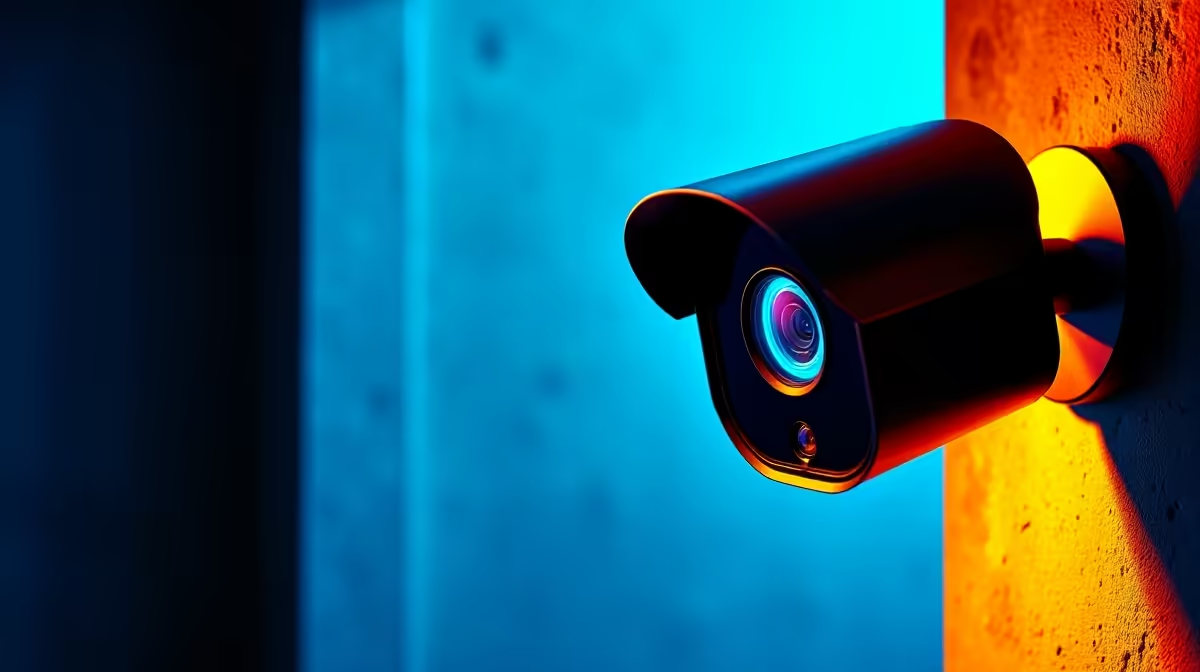
A standard security camera switches to black-and-white infrared the moment the sun goes down, and that grey footage strips out the one detail that matters most after a break-in: colour. The clothing, the car, the bag. Full-colour night vision security cameras keep that information by using either a large light-gathering starlight sensor or a built-in white spotlight, so your footage stays in colour through the dark hours. Choosing between the two comes down to how much ambient light your property already has.
Quick Answer
Full-colour night vision cameras hold colour after dark in one of two ways: a starlight sensor with a wide f/1.0 aperture that gathers faint ambient light, or a spotlight that floods the scene with white LED light on motion. Starlight suits homes with some street lighting; spotlight models suit dark rural plots. Expect to look at a 4MP to 8MP camera for genuinely useful colour detail.
How colour night vision actually works
Traditional cameras rely on infrared LEDs, which the sensor reads as a monochrome image. You get a usable picture of shapes and movement, but no colour. Full-colour cameras solve the problem from two directions, and understanding both is the key to buying the right one.
Starlight sensors
A starlight camera uses a large, sensitive image sensor paired with a very wide aperture, often f/1.0, to soak up whatever faint light is already in the scene. Modern starlight sensors deliver usable colour footage down to extremely low light levels, around 0.001 lux, which is roughly a moonlit night. The catch is that they need some ambient light to work with. In a yard with a streetlight, distant security lighting, or even a bright moon, a starlight camera produces clean, natural colour without lighting up the property.
Spotlight cameras
A spotlight camera takes the opposite approach. It carries bright white LEDs that switch on when motion is detected, lighting the scene so the sensor can capture full colour even in total darkness. This works on a rural plot with no ambient light at all, where a starlight sensor would have nothing to amplify. The trade-off is the obvious light: useful as a deterrent, but a brighter presence than some neighbours appreciate. Many models let you set the spotlight to come on only when motion triggers, rather than burning all night. Both camera types live in the smart home and appliances range at Evetech.
Resolution and sensor size matter more than the label
Colour at night is only as useful as the detail it captures. A 2MP camera in colour still struggles to render a number plate or a face at distance, so aim higher.
Why 4MP to 8MP is the sweet spot
An 8MP (4K) camera gives you the pixels to crop into a scene and still read meaningful detail, which is the whole point of footage you might one day hand to police or an insurer. A 4MP camera is a sensible step down that still captures usable detail at typical home distances. Below that, you are buying colour for its own sake without the resolution to use it.
Sensor size is the quiet hero
Two cameras with the same megapixel count can perform very differently in the dark. A physically larger sensor gathers more light per pixel, which is why high-end low-light cameras advertise large sensor formats. If two models match on resolution and price, the one with the bigger sensor will almost always give the cleaner night image.
Picking the right camera for your property
Match the technology to your environment rather than to the spec sheet.
Suburban homes with ambient light
If you have street lighting, a security light, or neighbouring glow, a starlight-sensor camera is usually the better choice. It produces natural colour without adding light pollution to your property, and it runs continuously without announcing itself. For a typical SA suburban home with a streetlight near the boundary, this is the most discreet option.
Rural plots and dark driveways
On a property with genuinely no ambient light, a starlight sensor has nothing to amplify, so a spotlight model earns its place. The white LED both enables colour capture and acts as a visible deterrent. If you would rather not have a light burning, look for a camera that combines a decent starlight sensor with an on-demand spotlight that only fires on motion.
Wired versus wireless
Wired PoE cameras pull power and data over a single cable and suit a permanent install with a recorder. Battery and wireless models are easier to place where running a cable is impractical, at the cost of recharging or solar top-ups. Decide this early, because it shapes which cameras are even candidates. The accessories best sellers cover the cabling, cards, and power bits a clean install needs.
What to check before you buy
Run through a short list so the camera matches your site. Confirm the resolution is 4MP or higher for usable detail. Check whether it is a true starlight sensor, a spotlight model, or a hybrid, and match that to your ambient light. Look at the rated low-light figure in lux, where a lower number means better performance in the dark. Confirm the weatherproof rating for outdoor mounting. And decide on storage up front, whether that is a local card, a network recorder, or both, so you are not scrambling after the camera arrives.
Frequently Asked Questions
What is the difference between starlight and spotlight night vision?
A starlight camera uses a large sensor and wide aperture to amplify existing ambient light into colour footage, working best where there is some light already. A spotlight camera adds its own white LED light on motion, so it captures colour even in total darkness, at the cost of a visible light.
Do I need a spotlight camera if my yard has a streetlight?
Usually not. With a streetlight or other ambient light, a starlight-sensor camera produces clean colour discreetly, without adding more light to your property. Reserve spotlight models for dark rural plots where there is no light for a starlight sensor to amplify.
What resolution should a colour night camera be?
Aim for 4MP at minimum and 8MP (4K) for the best detail. Higher resolution lets you crop into footage and still read faces, clothing, or number plates, which is the practical value of colour over plain infrared.
Does sensor size affect night performance?
Significantly. A larger sensor gathers more light per pixel, so between two cameras with the same megapixels, the one with the bigger sensor produces a cleaner, brighter night image. It is one of the most important specs and one of the least advertised.
Can a camera do both colour and infrared at night?
Many can. Hybrid models run full colour while there is enough light, or while a spotlight is active, and fall back to infrared black-and-white when light drops too low. That flexibility makes them a safe choice if your lighting conditions vary.