Quick Answer
For Medicine, a R12,000 laptop is workable only if the workload is light and the spec is chosen carefully. Prioritise 8-16 GB RAM, a 256-512 GB SSD, and a modern Core i3, Core i5, Ryzen 3, or Ryzen 5 CPU before cosmetic extras. For NSFAS-aware buying, remember that the R5,200 device allowance does not automatically cover the full price of a new laptop, so the shortfall must be planned before choosing a course machine.
Minimum Spec That Makes Sense
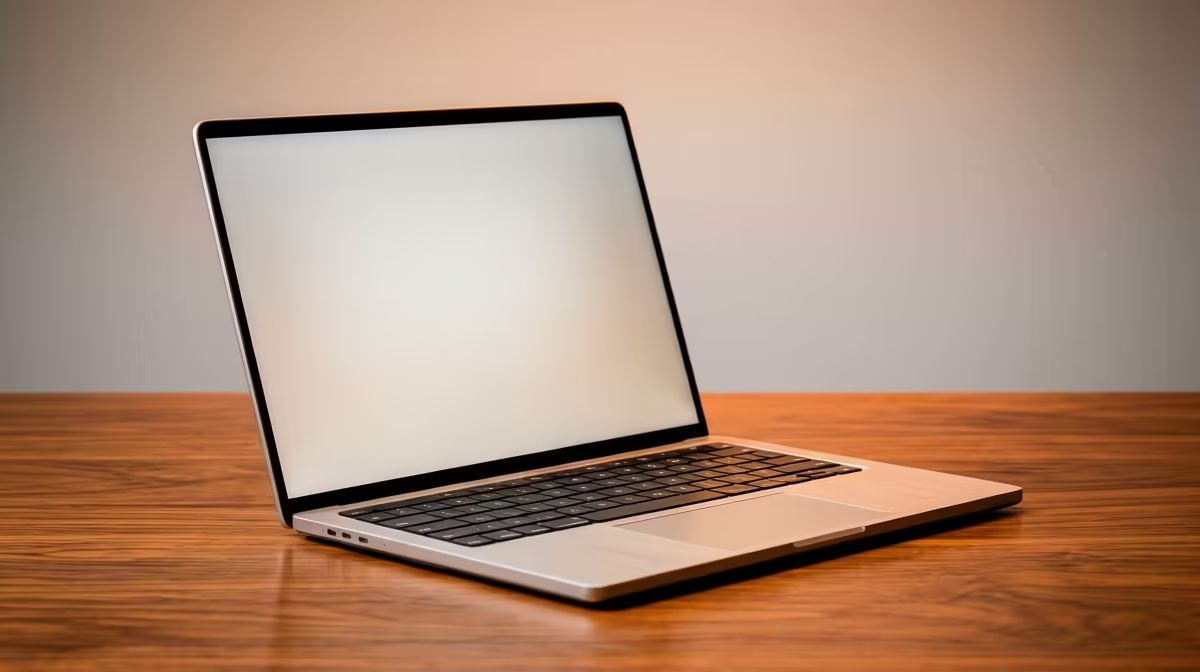
Start with the parts that affect daily work: CPU, RAM, SSD, screen, keyboard, and warranty. For Medicine, 8 GB RAM is the floor, 16 GB is the safer target, and a 512 GB SSD avoids constant file cleanup. A 14-inch or 15.6-inch screen works for most students, while a 16-inch model is better for timelines, drawings, and split-screen notes.
Course And App Fit
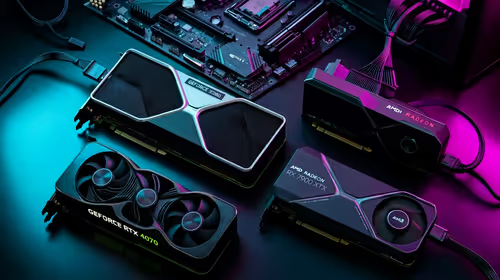
Match the laptop to the heaviest real app, not the nicest brochure spec. If gaming is casual, integrated graphics can handle lighter games, but 1080p 60 fps in modern titles needs a gaming GPU. For online lectures, Microsoft Office, Google Workspace, PDFs, and research tabs, a modern Core i3 or Ryzen 3 is enough; for CAD, coding, data work, editing, or streaming, a Core i5 or Ryzen 5 with 16 GB RAM is the smarter baseline.
SA Buying Checks Before Checkout
South African students should check local warranty support, keyboard layout, charger size, HDMI or USB-C needs, and whether the laptop can be upgraded later. UCT, Wits, UP, UJ, DUT, and Stellenbosch students often move between residence, labs, taxis, and home desks, so weight matters. A 1.4-1.8 kg laptop is easier to carry than a heavy gaming model.
Budget Trade-Offs To Avoid
Do not chase the cheapest label if it leaves you with 4 GB RAM, tiny storage, or a weak screen. It is usually better to buy a plain 8 GB or 16 GB laptop than a flashy model that struggles with lectures and assignments. For Medicine, spend first on RAM and SSD capacity, then screen quality, then GPU power only if the apps need it.
FAQ
Is 8 GB RAM enough for Medicine?
It is enough for notes, browsing, PDFs, and basic assignments. Choose 16 GB if you use CAD, coding tools, media editing, large spreadsheets, or many browser tabs at once.
Should I buy a gaming laptop for student work?
Only if the course or downtime gaming needs the GPU. A gaming laptop is faster, but it is also heavier and usually has a larger charger, so it must still fit campus life.
What storage size should students choose?
A 256 GB SSD is the minimum, but 512 GB is the better target for course files, apps, and media. Creative students should plan for external storage as project folders grow.