For SA 3D artists, the question of the best Blender rendering PC comes down almost entirely to one number on the graphics card: VRAM. Cycles loads your whole scene, every texture, every mesh, into the GPU's memory, and the moment a render exceeds that pool, performance collapses. Get the VRAM right and an NVIDIA card running OptiX renders 2 to 5 times faster than CPU-based CUDA fallback, turning overnight renders into coffee-break waits.
Quick Answer
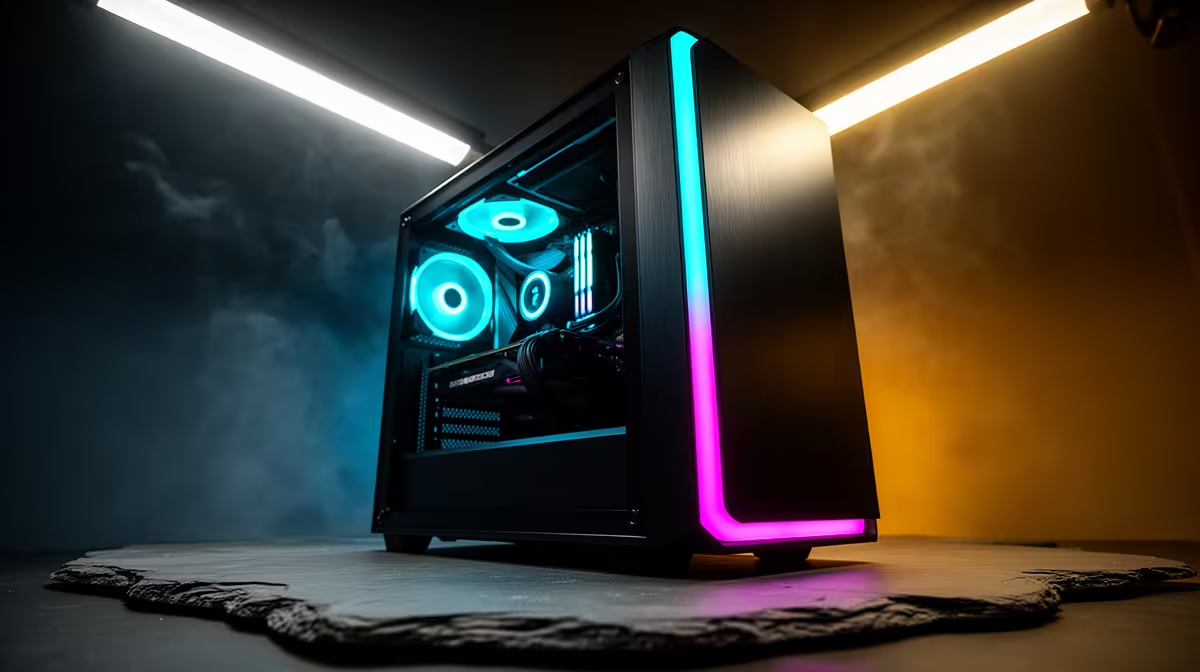
The strongest Blender and 3D render station in South Africa for 2026 is built around a high-VRAM NVIDIA GPU. The RTX 5090 with 32GB of VRAM handles most production scenes, and OptiX acceleration runs roughly 2 to 5 times faster than standard CUDA. Complete the build with 64GB of memory and an NVMe drive for cache and assets, and you have a render workstation that scales from mid-range to top end.
Why VRAM decides everything
Blender's Cycles engine is a GPU renderer that needs your entire scene resident in graphics memory. Geometry, textures, displacement maps and volumetrics all sit in VRAM during the render. Stay within the card's memory and the GPU tears through the work. Exceed it and the render either spills to slower system memory or fails outright, depending on settings.
This is why a card's VRAM figure matters more than almost any other spec for 3D work. A GPU with blistering raw speed but only 8GB of memory will choke on a heavy scene that a slower card with 24GB handles comfortably.
OptiX is the second multiplier
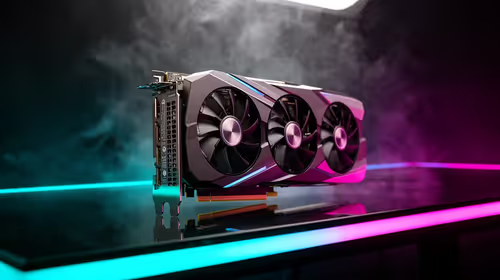
On NVIDIA cards, Blender can use OptiX, which taps the RT cores on the GPU to accelerate ray tracing. Compared with the standard CUDA path, OptiX commonly delivers a 2 to 5 times speed-up on the same hardware. That is free performance you unlock simply by selecting OptiX as the Cycles render device, and it is a major reason NVIDIA dominates serious Blender setups. Browse the workstation graphics cards at Evetech and you are looking at the exact cards that drive this acceleration.
Build tiers for SA 3D artists
Entry render station
For hobbyists and students stepping up from a laptop, target a current-generation NVIDIA card with 12GB of VRAM, back it with 32GB of memory and a fast SSD. This handles product renders, archviz of modest scenes and motion graphics without constant memory juggling. It is the sensible floor for paid work that is not yet enormous in scale.
Mid-range production
The middle tier steps up to a 16GB or 24GB card. This is the sweet spot for most freelance and small-studio artists: enough memory for detailed interiors, character work and texture-heavy scenes, with render times short enough to iterate several versions a day. Move system RAM to 64GB so Blender's viewport and simulations have headroom.
Top-end workstation
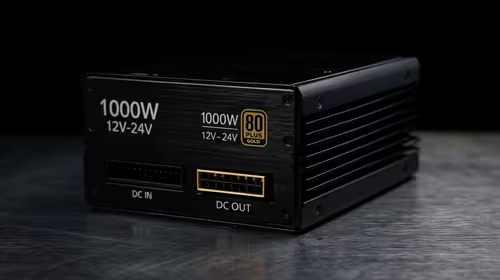
The flagship build centres on the RTX 5090 and its 32GB of VRAM, which absorbs most production scenes without compromise. Back it with 64GB or more of memory, a large NVMe drive for cache and assets, and a power supply and cooling sized for sustained full-load renders. This is the machine for artists whose render queue is their livelihood.
Choosing the Right VRAM Tier for SA Artists
Matching VRAM to the work you actually do prevents overspending on one part of the build while starving another.
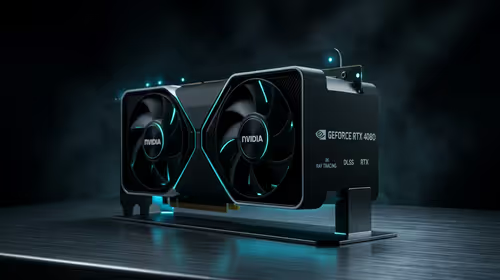
The RTX 3060 12GB remains a legitimate entry card for students and hobbyists in South Africa. It handles Blender Cycles via OptiX on product renders and moderate character work, and its 12GB pool covers most training scenes and architectural visualisations of modest complexity. In Rand terms it represents a lower buy-in than any card in the tier above, making it the card that brings OptiX acceleration within reach for the first time.
The 16GB class, represented by cards like the RTX 4070 Ti Super, is the sweet spot for freelancers and small studios. The extra memory is the difference between juggling assets to fit and simply loading the scene. A 16GB card handles detailed interiors, dense particle systems and texture-heavy product work without fallback to CPU rendering.
The 24GB class, including the RTX 4090, absorbs nearly all production scenes without compromise and has been the professional standard for the last two years. If your projects are consistently complex but not at the extreme scale of film-production geometry, a 24GB card is likely the last GPU upgrade you will need for several years.
The RTX 5090 at 32GB pushes the ceiling to the point where most scenes simply fit. At the top of the SA market in price, it makes most sense for studios with a busy render queue where hours saved per project translate directly into capacity or profit.
Beyond the GPU
The processor still matters for scene preparation, simulation baking and viewport responsiveness, so do not pair a top GPU with a weak CPU. RAM should comfortably exceed your largest scene's needs, and a fast NVMe drive keeps texture loading and cache writes from becoming the bottleneck. To see how complete render-capable systems are specified and priced in Rand, popular PCs at Evetech offer a practical baseline before you customise.
Frequently Asked Questions
How much VRAM do I need for Blender?
It depends on scene complexity. 12GB is a workable floor for lighter work, 16GB to 24GB suits most production scenes, and 32GB on a card like the RTX 5090 covers heavy professional renders with room to spare.
Does OptiX really speed up rendering that much?
Yes. On NVIDIA cards, switching Cycles to OptiX commonly gives a 2 to 5 times speed-up over the CUDA render path by using the GPU's dedicated ray-tracing cores.
Can I render Blender on an AMD GPU?
You can, via the HIP backend, but the NVIDIA plus OptiX combination remains the fastest and best-supported path for Cycles, which is why most serious Blender builds use NVIDIA cards.
How much system RAM should a render PC have?
64GB is the comfortable target for production work, giving Blender headroom for the viewport, simulations and large scenes. 32GB is acceptable for lighter, entry-level use.
Does the CPU matter if the GPU does the rendering?
Yes. The CPU handles scene setup, simulation baking and viewport interaction, so pair a strong GPU with a capable processor to avoid bottlenecks outside the render itself.