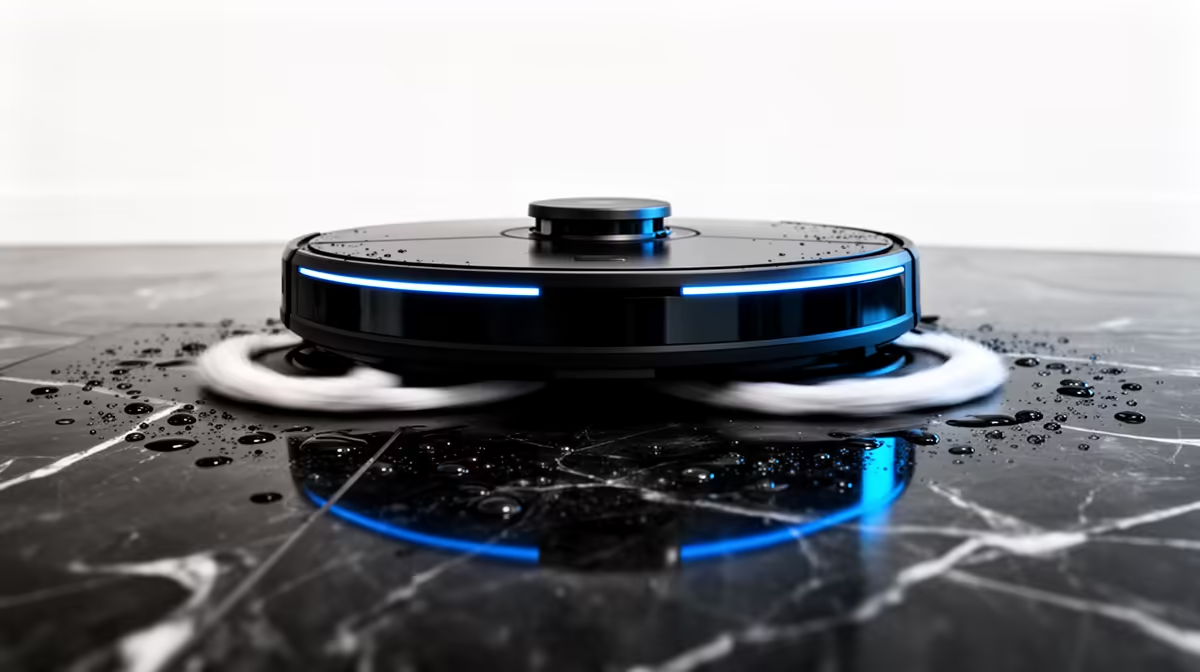
Plenty of robot vacuums claim to mop, but most just drag a damp cloth across the floor and call it done. On the large tiled areas common in South African homes, that leaves streaks and pushed-around grime rather than a clean surface. The best robot mop for hard floors scrubs instead of smears, and it cleans its own pads so the job stays hygienic from the first room to the last.
Quick Answer
The strongest robot mops use dual rotating pads or sonic vibration to actively scrub the floor, paired with an auto-wash dock that rinses the pads mid-run. For SA homes with big tiled or laminate areas, a high-rotation mop with a self-cleaning dock delivers the cleanest, most consistent result.
Scrubbing beats dragging
The single biggest divide between robot mops is whether the pad moves or just sits there. A static cloth wipes the surface and quickly loads up with dirt, so by the second room it is moving grime around rather than lifting it.
Dual rotating pads spin against the floor, applying downward pressure that breaks up dried spills and scuffs the way a hand-mop does. Sonic vibration mops achieve a similar effect by oscillating the pad thousands of times a minute. Either approach turns a passive wipe into genuine scrubbing, which is what hard floors actually need.
Why the dock matters as much as the robot
A mop is only as clean as its pad, and a pad that never gets rinsed turns into a dirt distributor halfway through a large floor. This is where the dock earns its place.
An auto-wash dock rinses and sometimes hot-washes the pads during and after a run, so the mop returns to the floor with a clean surface instead of a saturated one. For the wide tiled living areas and open-plan layouts common in SA homes, mid-run washing is the difference between a floor that ends up genuinely clean and one that just ends up evenly damp.
Features that matter for SA homes
Consider your floor type first. Tile, laminate and sealed concrete all reward a high-rotation mop, though laminate needs a model that controls water carefully to avoid over-wetting the boards.
Coverage and battery
Larger open homes need a robot with enough battery and smart mapping to cover the area in one charge, and the ability to resume after recharging if the floor plan is big. Mapping also lets you set no-go zones around rugs and pet bowls.
Water control and pad lift
Look for adjustable water flow so you can dial it down on laminate and up on stubborn tile. A mop-lift feature that raises the pads over carpet matters if you have mixed flooring, since it stops the robot soaking your rugs on the way past.
For a quick sense of what is available, the smart home cleaning range gathers robot mops and vacuums in one place, and you can compare docks and pad systems against the floors you actually have.
Current Mopping Technology Worth Knowing
In 2026, the gap between a budget mop and a flagship has widened. At the premium end, Roborock's Saros 20 Sonic delivers around 4,000 vibrations per minute with 14 newtons of downward pressure, a meaningfully different result than a static pad. The eufy X10 Pro Omni's dual rotating pads apply roughly 1 kilogram of pressure at 180 rpm. Both systems produce scrubbing action rather than a surface wipe.
Dock-wash capability has also matured. The best current docks rinse pads mid-run, not just at the end, so the mop returns to the floor with a clean surface throughout a large clean rather than only at the start. Some models use water heated to 80 or even 100 degrees Celsius in the wash cycle, which removes odour and bacteria from pads more thoroughly than a cold rinse. For a home where the robot mops daily, this keeps the pad hygienic over weeks without manual washing.
Water Control on Laminate and Sealed Wood
SA homes with laminate or sealed-wood flooring need a robot that controls water output precisely. Laminate boards swell and separate if they absorb too much moisture, so a mop that cannot dial down its water flow is a risk on these surfaces. Look for adjustable water-flow settings, a low or eco mode for laminate, and confirm the mop-lift feature raises the pad fully clear of any carpeted areas in your floor plan. High-rotation systems that apply strong downward pressure should be used on tile and sealed concrete only, not on surfaces that cannot handle sustained moisture.
Matching the Mop to Your Home
A small flat with a kitchen and bathroom can do well with a simpler vibration mop and a basic dock. A larger family home with extensive tiling justifies stepping up to dual rotating pads and a full auto-wash base, because the cleaning quality and the time saved both scale with floor area. The everyday refill pads, cleaning solution and spares that keep any unit running are worth grabbing alongside the robot from the home cleaning accessories.
Frequently Asked Questions
What makes a robot mop better at cleaning hard floors?
Active scrubbing. Dual rotating pads or sonic vibration apply pressure and motion that lift dried-on dirt, unlike a static cloth that simply drags moisture across the surface.
Do I really need an auto-wash dock?
For large floors, yes. Without one the pad gets dirty partway through and starts spreading grime. An auto-wash dock rinses the pads mid-run so cleaning stays effective across big areas.
Are robot mops safe for laminate floors?
Yes, if the model lets you reduce water flow. Laminate dislikes excess moisture, so choose a mop with adjustable water control and avoid soaking the boards.
Will a robot mop work on a home with rugs?
Choose one with a mop-lift feature that raises the pads over carpet, plus mapping for no-go zones. That keeps your rugs dry while the robot mops the hard floors around them.
How big a home can one robot mop cover?
It depends on battery and mapping. Models built for larger homes can recharge and resume, so check the rated coverage against your floor area before buying.