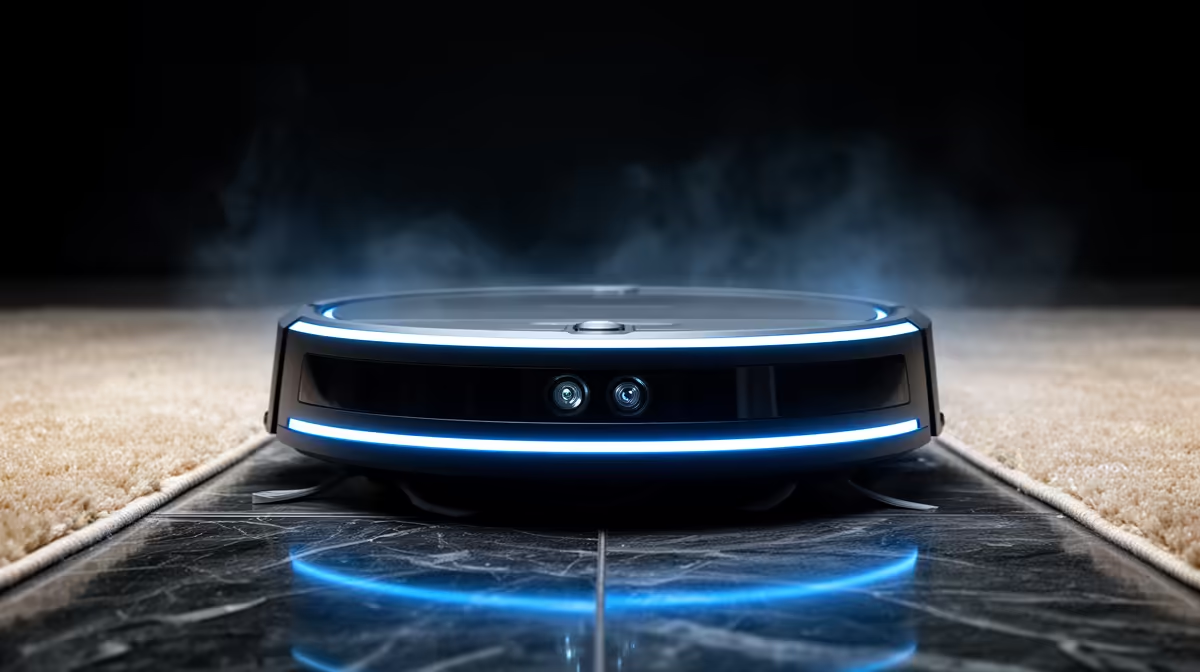
Tile in the kitchen, a rug under the couch, laminate down the passage: most SA homes are a patchwork of surfaces, and that mix is exactly what trips up a poorly chosen robot vacuum. The robot vacuum that glides over hardwood may bury itself in carpet pile, while a carpet champion can drag a wet mop straight onto your rug. Picking well means matching the machine to the floors you actually have.
Quick Answer
Carpet cleaning scales almost directly with suction, measured in Pa, so carpeted homes should prioritise high suction. Hard-floor homes benefit far more from strong mopping and an auto mop-lift that raises the pad when the robot crosses onto a rug. The right pick depends on whether your home is mostly hard surface, mostly carpet, or a genuine mix.
Carpet Performance Lives and Dies on Suction
Carpet hides dirt deep in the pile, and only real suction pressure pulls it out. This is why Pa, the unit of suction, is the number that matters most for carpeted rooms: higher figures lift embedded grit and pet hair that a weak motor skims straight over. Pair strong suction with a brush roll designed to agitate fibres, and a carpet-detection mode that ramps power up automatically when the robot rolls off tile onto a rug. If your home leans heavily on carpet, treat suction as the headline spec and everything else as secondary.
Hard Floors Want Mopping and a Mop-Lift
On tile, laminate and sealed wood, suction matters less because dirt sits on the surface rather than buried in fibres. What transforms the result here is mopping, and the smartest feature for a mixed home is auto mop-lift. As the robot moves from hard floor onto carpet, it raises the mop pad so it does not drag dampness across your rug. Without that lift, a mopping run leaves wet streaks on every carpeted edge. For homes that are mostly hard surface, a strong, well-managed mop turns a basic clean into a properly finished floor.
The Mixed-Home Balancing Act
Most South African homes are neither purely hard floor nor purely carpet, which is where the buying decision gets interesting. Look for a model that combines respectable suction with auto mop-lift and reliable surface detection, so it ramps power on carpet and protects rugs while mopping tile. Obstacle handling and a sensible navigation system matter too, since clutter and transitions between surfaces are where cheaper units get stuck. Comparing real specifications side by side is the best way to find that balance, and our smart home and appliances range lays out suction, mopping and detection features so you can match a unit to your floor plan.
Suction Numbers to Know
For carpeted rooms, suction is measured in Pascals (Pa). Entry-level budget models may quote 2,000 to 3,000 Pa, which covers hard floors and thin rugs. Mid-range models typically land in the 5,000 to 10,000 Pa range, handling most low-to-medium pile carpet reliably. The 2026 flagships from Dreame, Roborock and Ecovacs claim 20,000 Pa and above, with Dreame's X60 Max Ultra reaching 35,000 Pa and Roborock's Saros line quoting 22,000 Pa. Those headline numbers are not measured on a common standard, so a real-world carpet clean with a 10,000 Pa model often outperforms what the raw spec suggests. The key is pairing decent Pa with an agitating brush roll and a carpet-boost mode that lifts power automatically when the robot crosses from tile onto pile.
Hard-Floor Mopping: What Actually Makes a Difference
Pulling a damp cloth across tile and calling it mopping is the baseline, and most entry-level robots stop there. What upgrades the result on hard floors is the pad moving rather than sitting still. Dual rotating pads spin against the surface, applying downward pressure that breaks up dried footprints and light spills the way a hand-mop does. Sonic vibration models oscillate the pad thousands of times a minute for a similar effect. Either method turns a passive smear into genuine scrubbing, which is what the wide tiled living areas in many SA homes actually need.
Pair active mopping with an auto-wash dock, which rinses the pads mid-run, and the mop returns to the floor clean rather than redistributing the grime it just picked up. For large open-plan tiled areas this is particularly important, because a dirty pad spreading evenly across 60 square metres of tile is worse than no mopping at all.
Maintenance That Keeps Performance Up
A robot vacuum only cleans as well as its consumables allow. Tangled brush rolls, clogged filters and worn mop pads quietly drop performance over weeks until the machine seems to have lost suction. Keep spare filters, side brushes and mop pads on hand, and clear long hair off the roller regularly, especially in homes with pets or long-haired residents. Stocking replacement parts from our accessories best sellers keeps a good robot performing like new for years.
Frequently Asked Questions
How much suction do I need for carpet?
Carpet rewards high suction because dirt lodges deep in the pile, so look for higher Pa figures and a carpet-boost mode. Thicker, plusher carpets demand more power than low-pile rugs. If your home is carpet-heavy, make suction your top priority.
Will a mopping robot ruin my rugs?
Only if it lacks an auto mop-lift, which raises the wet pad when the robot crosses onto carpet. With that feature and good surface detection, the robot keeps mopping confined to hard floors. Without it, you risk damp streaks along every carpet edge.
Can one robot handle both tile and carpet well?
Yes, if it combines strong suction, auto mop-lift and reliable surface detection so it adapts as it moves between surfaces. This combination is what makes a single unit suit a mixed SA home. Check that all three features are present rather than just one headline spec.
Do robot vacuums work on deep-pile carpet?
They can, but very deep or shaggy pile is challenging even for high-suction models, and some robots struggle to drive across it. For homes with thick rugs, prioritise the strongest suction and check that the wheels and clearance suit deep pile. Lower-pile carpet is far easier for most units.
How often should I replace the consumables?
Filters, side brushes and mop pads wear over weeks to months depending on use and whether you have pets. Cleaning the roller of tangled hair regularly and swapping worn pads keeps suction and mopping consistent. Keeping spares on hand means performance never quietly degrades.