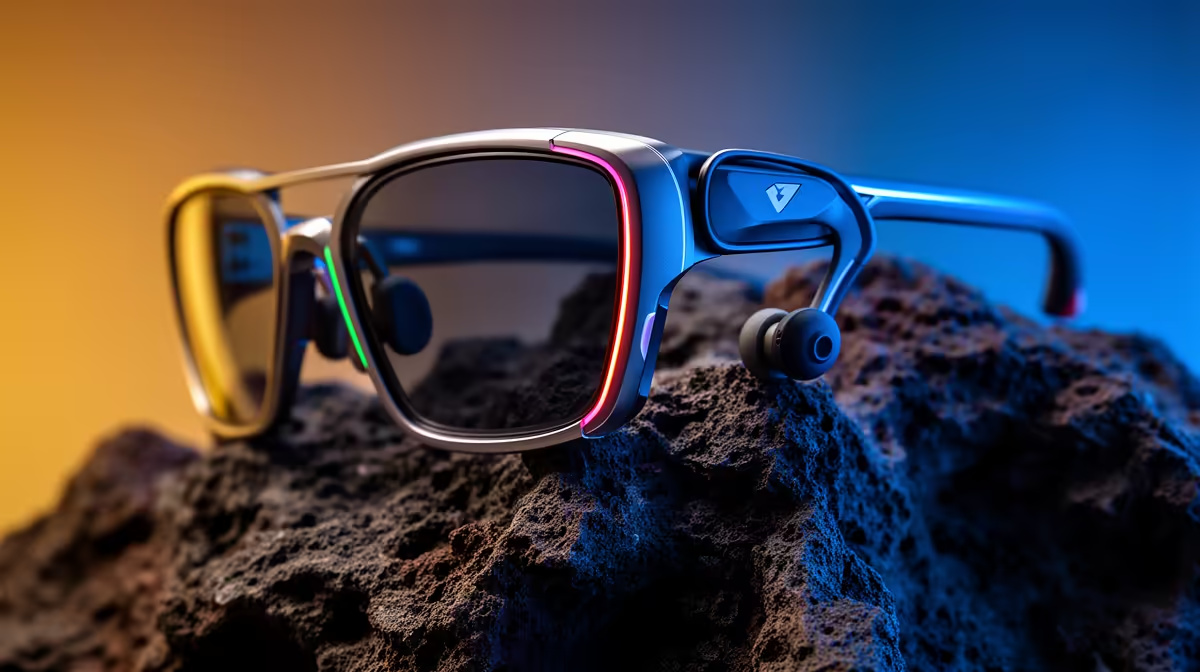
A cyclist on a fast descent cannot afford earbuds sealing off the sound of a taxi closing from behind. That single safety requirement, ears open and aware, is what separates sport smart glasses from the everyday kind. The Oakley Meta Vanguard is built squarely for that brief: a wraparound sport frame, open-ear speakers loud enough to cut wind, and a battery sized to outlast a long ride or run.
Quick Answer
For cyclists and runners who want open-ear audio without losing awareness of traffic, the Oakley Meta Vanguard is the standout. It delivers up to around 9 hours of battery on moderate use, IP67 sweat and weather resistance, and open-ear speakers that stay clear at pace, all in a frame that integrates with a helmet. No current sport smart glasses beat its combination of fit and endurance for awareness-first training.
Why open-ear beats earbuds on the road
Open-ear speakers sit just in front of your ears and fire sound toward them without plugging the canal. You hear your audio and the world at the same time, the approaching car, the cyclist calling a pass, the dog at the gate. For anyone training on open roads, that situational awareness is not a nice-to-have, it is the reason to choose glasses over earbuds in the first place. The Vanguard's speakers get loud enough to push through wind noise at speed, which is exactly where cheaper open-ear designs fall apart.
The trade-off is that open-ear audio leaks a little and lacks the bass thump of sealed earbuds. For sport, that is the right compromise. You are not chasing audiophile fidelity on a climb, you are staying alive and keeping your podcast going.
Battery that lasts the session
The Vanguard quotes up to around 9 hours on moderate, mixed use, with roughly 6 hours if you stream audio or take calls continuously. The charging case carries a large reserve on top, enough to top the glasses up several times across a multi-day trip. Real-world figures depend heavily on volume and how much you use the camera, and reviewers have drained a charge much faster at full tilt, so treat the headline number as a ceiling rather than a promise.
For most riders and runners, the practical takeaway is simple: a typical training session of one to three hours sits comfortably inside the battery, and the case handles the rest. That endurance is a genuine differentiator against everyday smart glasses that prioritise looks over runtime.
Built to survive sport
This is where the Oakley heritage shows. The frame uses Oakley's lightweight O Matter material with grippy temple tips that hold through sweat and bouncing, swappable nose pads for fit, and an IP67 rating that shrugs off sweat, rain, heat, and humidity. The wraparound shape is designed to sit under a cycling helmet cleanly rather than fighting the straps. A centred ultra-wide 12MP camera captures point-of-view clips and stills hands-free, and the microphones use adaptive filtering so your voice stays intelligible on a call even with wind across the frame.
Where the camera and AI fit in
For a sport user, the camera is mostly about grabbing a moment, a summit, a sprint finish, without stopping to fish out a phone. Meta AI handles voice queries and can tie into fitness platforms and Garmin devices, so you can ask for stats or trigger actions without breaking stride. None of this replaces a dedicated head unit, but it removes the constant phone-fumbling that breaks a ride's rhythm.
How it compares to everyday smart glasses
Everyday-focused models lean toward all-day comfort, longer total case runtime, and a discreet look. The Vanguard sacrifices some of that subtlety for sport-grade grip, weather sealing, and speakers tuned to beat wind. If you mainly want glasses for calls, music, and the occasional photo around town, an everyday model fits better. If your priority is training outdoors with your ears open, the Vanguard's sport fit and endurance are the deciding factors. The current smart glasses range at Evetech lets you weigh the sport and everyday options side by side.
For riders building out a kit, the small extras matter too, and a quick look through the accessories Evetech buyers reach for most covers the cases, mounts, and charging odds and ends that round out a setup.
Living with them on real training rides
Beyond the spec sheet, a few practical realities shape whether sport smart glasses suit how you actually train. Open-ear audio works brilliantly at moderate speeds but loses ground to wind at the very top end, so on a fast descent or into a strong headwind you will nudge the volume up, which is exactly why loud, clear speakers matter more here than on everyday glasses. The adaptive microphone filtering earns its keep on calls taken mid-ride, where a lesser design would hand the other person nothing but wind roar.
Fit is the other make-or-break. Sweat, vibration, and helmet straps all conspire to shift glasses around, so the grippy temple tips and swappable nose pads are not cosmetic, they are what keeps the frame planted through a rough section of road or trail. Try the fit with your actual helmet if you can, because the interaction between frame and helmet straps is personal and decides comfort over a long session.
Charging rhythm for longer outings
For day rides and back-to-back sessions, the charging case is central to how you use the glasses. The habit that works is to drop them into the case during any stop, a coffee break, a regroup, the drive between trailheads, so the glasses sip from the case's reserve and you start each segment topped up. Treat the headline battery figure as your continuous-use budget and the case as the buffer that stretches a single pair across a full day out. Plan a top-up before a known long effort rather than discovering a flat battery at the worst moment.
Who should buy the Vanguard
This is for serious cyclists and runners who train outdoors and refuse to seal their ears off. If you want one device that handles audio, calls, hands-free capture, and AI prompts while keeping you aware of traffic, it is purpose-built for you. Casual users who never train outdoors will find its sport bias unnecessary and should look at a softer everyday pair instead.
Frequently Asked Questions
Can I hear traffic clearly with the Vanguard?
Yes, that is the core design goal. The open-ear speakers leave your ear canals unblocked, so you hear approaching vehicles, other athletes, and your surroundings alongside your audio. This awareness is the main reason to choose open-ear glasses over earbuds for road sport.
How long does the battery really last on a ride?
Up to around 9 hours on moderate mixed use, dropping toward 6 hours with continuous audio or calls, and faster still at high volume or heavy camera use. A typical one-to-three-hour session fits comfortably, and the case provides several extra top-ups.
Will they fit under a cycling helmet?
Yes. The wraparound sport frame and temple design are made to sit under helmet straps cleanly, which is a deliberate advantage over everyday smart glasses that were not shaped with helmets in mind.
Are they waterproof for rainy rides?
They carry an IP67 rating, meaning strong resistance to sweat, rain, dust, and humidity. They are built to handle wet training conditions, though that rating covers splashes and rain rather than full submersion.
Do they replace a cycling computer?
No. They complement one. Meta AI can read out information and tie into fitness apps and Garmin devices, but a dedicated head unit still does navigation and detailed metrics better. The glasses remove phone-fumbling, not your bike computer.
Training outdoors and want your ears open? Compare the sport and everyday options in the smart glasses range at Evetech and pick the fit that matches how you ride or run.