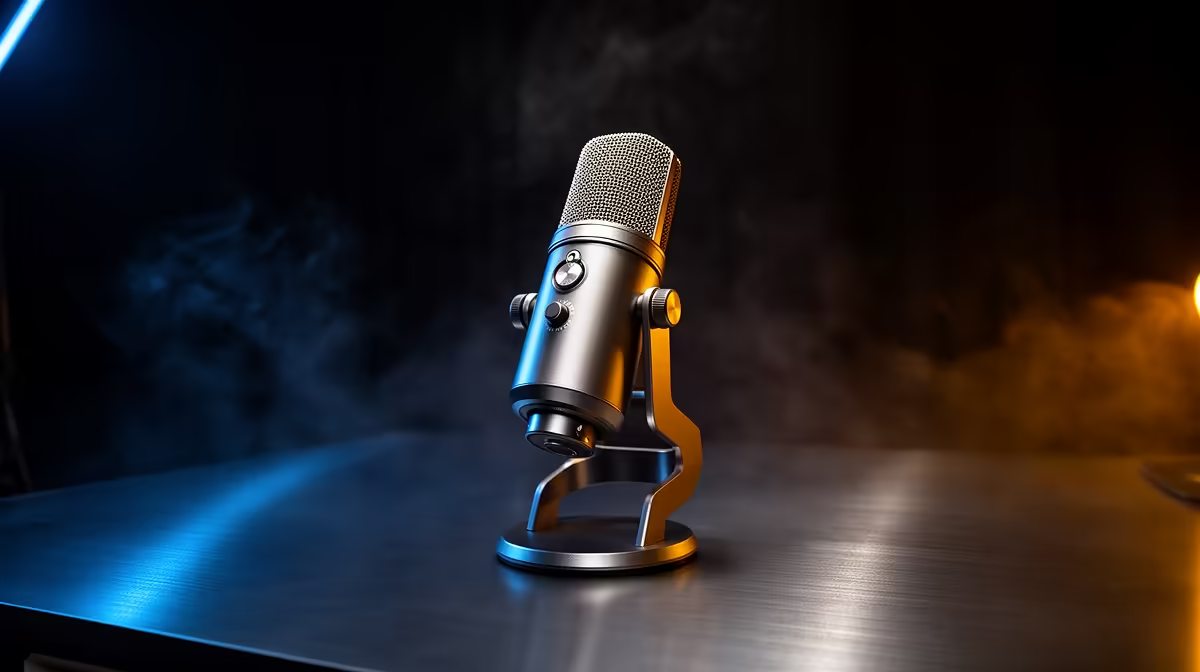
A USB mic gets you started, but the moment you want broadcast-grade voice that ignores keyboard clatter and room echo, the conversation moves to XLR microphones. The best XLR mic for a South African streamer or podcaster in 2026 is a dynamic, cardioid model that hears your voice and little else, paired with an interface that can feed it clean gain. Get that pairing right and your audio stops sounding like a bedroom and starts sounding like a studio.
Quick Answer
For most SA streamers and podcasters the smart pick is a dynamic cardioid XLR mic such as the Rode PodMic for value or the Shure SM7B as the broadcast benchmark. The catch with the SM7B is its low output near -59 dBV per pascal, which needs around 60 dB of clean gain, so budget for an interface with strong preamps or an inline gain booster.
Why Dynamic Beats Condenser For This Job
Condenser mics are sensitive and capture lovely detail, which is exactly the problem in an untreated room. They pick up the fan, the street, the partner in the next room. Dynamic mics use a moving coil that is far less sensitive to distant, quiet sound, so a tight cardioid dynamic focuses on the voice directly in front of it and turns down almost everything coming from off-axis. For a corner of a flat in Cape Town or a spare room in Joburg with no acoustic treatment, that rejection is worth more than any spec sheet detail.
The cardioid pattern is the key. It listens forward and turns down everything behind, which is why these mics dominate radio booths and podcast desks.
The Gain Trap Nobody Warns You About
This is where most first XLR setups go wrong. The Shure SM7B is famously quiet on output, so a cheap interface cranked to maximum gain produces a thin, hissy signal because the preamp is straining. The mic needs roughly 60 dB of clean gain to sit at a healthy level. You have two routes to solve it: buy an interface with genuinely powerful, low-noise preamps, or add an inline gain booster between mic and interface that supplies around 20 to 27 dB of clean lift. The Rode PodMic sidesteps much of this by running at a higher output, so it sits at a usable level on more modest interfaces, which is a real part of why it suits a tighter budget.
If you plan around the SM7B, plan for that gain from the start rather than discovering the hiss after the first recording.
Comparing the Two Main Picks
Shure SM7B
The SM7B has been the broadcast voice standard for decades. Its frequency response is flat and wide, producing a natural, authoritative sound that needs minimal EQ in post-production. The trade-off is the gain requirement: at roughly -59 dBV per pascal it is one of the quietest dynamic mics in its class, which means your interface or gain booster is not optional, it is structural. Total setup cost in South Africa climbs once you factor in a capable interface or a cloudlifter-type booster alongside the mic.
Rode PodMic
The PodMic is a purpose-built podcast and streaming mic with internal pop filter shielding, a voiced presence peak that adds clarity to speech, and an output level that runs cleanly on affordable interfaces without extra hardware. It delivers a warm, broadcast-quality voice, and because it imposes far fewer demands on your signal chain, the total entry cost is substantially lower. Rode designed it specifically so that creators building their first chain do not need to solve the gain problem before they can use the mic.
Matching Mic, Interface and Stand
A dynamic XLR mic is one piece of a small chain. You also need an audio interface to convert the signal and supply gain, an XLR cable, and ideally a boom arm so the mic sits at mouth height without a desk stand soaking up keyboard thumps. Closed-back headphones plugged into the interface let you monitor yourself as you record, which is how you catch problems in seconds rather than after the session. For the headphone side of that setup, the headsets and headphones range at Evetech covers closed-back options that seal out bleed while you talk.
Spend on the mic and the gain stage first. A great mic starved of clean gain will always lose to a modest mic fed properly.
Who Should Buy Which
The Rode PodMic is the answer for a creator starting out or watching the budget, since it delivers a warm, present, broadcast-style voice and runs happily on affordable interfaces. The Shure SM7B is the upgrade for someone who wants the flattest, most natural voice with minimal post-processing and is willing to solve the gain question to get it. Both are dynamic and both reject room noise well, so neither is a wrong choice, only a different fit. To see what audio gear other SA creators are currently reaching for, the headset best sellers at Evetech offer a useful snapshot of what is moving in the local market right now.
Frequently Asked Questions
Do I need an audio interface for an XLR mic?
Yes. Unlike a USB mic that plugs straight into a PC, an XLR mic needs an interface to convert the analogue signal and supply gain. The interface quality, especially its preamp gain and noise floor, directly shapes how clean your voice sounds.
Why is my Shure SM7B so quiet?
Because it outputs a low signal near -59 dBV per pascal and needs about 60 dB of clean gain. A weak interface preamp cannot supply that cleanly, so either choose a higher-gain interface or add an inline gain booster between the mic and interface.
Is the Rode PodMic good enough for serious podcasting?
It is. The PodMic delivers a present, articulate broadcast sound and is widely used on professional podcasts. Its higher output also makes it far more forgiving on affordable interfaces than the SM7B.
Will a dynamic XLR mic stop my keyboard noise?
It greatly reduces it. A cardioid dynamic mic is far less sensitive to distant and off-axis sound, so positioned close to your mouth it captures voice strongly while turning down keyboard clatter and room reflections coming from around you.
Should I buy the most expensive mic I can afford?
Not at the cost of the gain stage. A premium mic fed by a straining preamp sounds worse than a mid-range mic fed cleanly. Balance your spend across the mic and a capable interface or gain booster.