A GPU upgrade usually creates the bigger visual change when your PC already has enough system memory. More RAM cannot raise frame rate when 16GB or 32GB has healthy headroom. A faster graphics card can. If the current session is paging, fix capacity first because the new GPU will inherit the same stutter.
Quick Answer
Measure the full game session before saving for Black Friday. Put RAM first when Available memory collapses and page-file activity arrives with frame spikes. Put the GPU first when memory has room and graphics utilisation, settings or VRAM limits hold back your target. Buy neither merely because it has a sale badge. Set exact part targets and compare the dated checkout total.
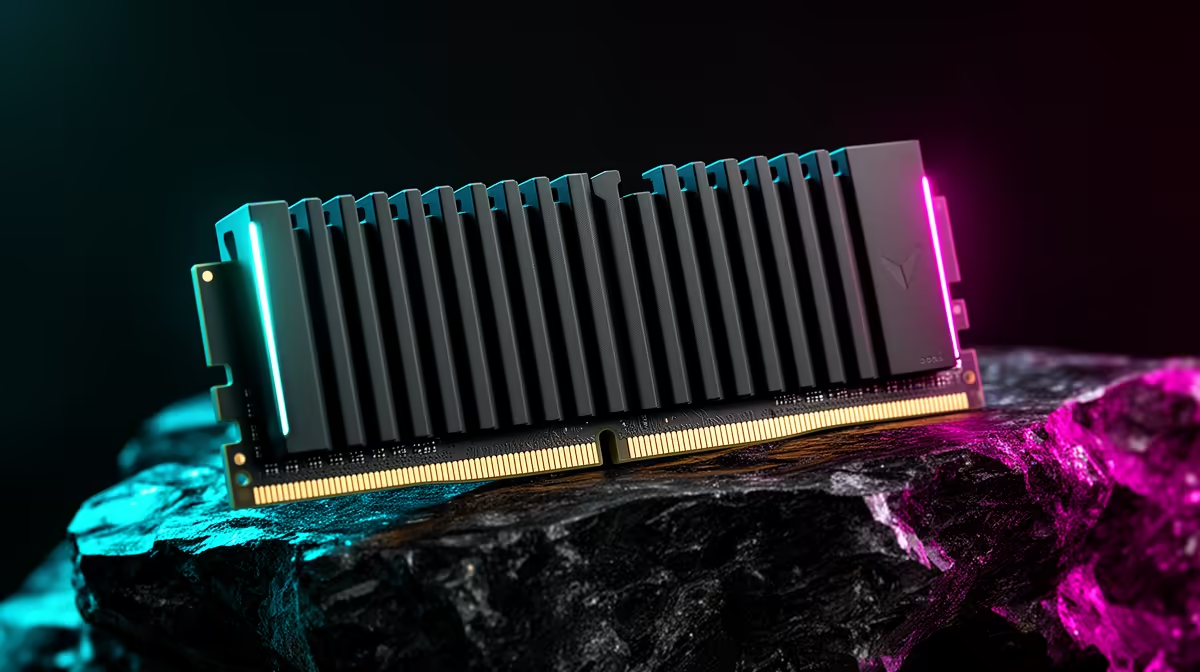
Use Evetech's DDR5 memory catalogue to cost the capacity fix, then check the memory best sellers for suitable matched-kit layouts.
Prove Whether RAM Is the Limit
Open the game with voice chat, browser, launcher, capture and mods. Play a repeatable busy area for twenty minutes.
Watch Available and Committed memory, storage activity and frame time. Paging that rises with stutter points towards capacity. A memory graph that stays comfortable clears RAM as the first target.
Do not judge by used memory alone. Windows caches data and can release some of it.
Prove Whether the GPU Is the Limit
Watch graphics utilisation, clock, power, temperature and VRAM behaviour. Reduce resolution or graphics settings and repeat the same scene.
If frame rate rises sharply when the GPU workload drops, a stronger card can help. If performance barely changes, the CPU, game engine or another limit may be in front.
Check independent results for the exact graphics card in your games and resolution.
Check for a CPU Ceiling
A low GPU utilisation figure does not prove you need more RAM. One busy CPU thread can cap the frame rate while overall CPU use looks moderate.
Lower the resolution and graphics quality. If the frame rate stays close, inspect per-core load and compare the processor with the game target. A GPU purchase will not remove a CPU ceiling.
Memory speed can influence a CPU-limited result, but capacity beyond healthy headroom will not. Return CPU and memory tuning to stable settings before diagnosing.
Give RAM a Baseline
Below 16GB, a current gaming session can run out of room quickly. Sixteen gigabytes can still serve controlled use. Thirty-two gigabytes is the roomier new-build target for games beside background tools.
Capacity needs vary. Heavy mods, simulation, creation and local servers can justify more.
Choose one matched kit. Four mixed DDR5 modules can need lower settings than two.
Choose the GPU for the Monitor
A 1080p high-refresh display and a 4K quality target need different balances. Set the resolution, games and acceptable settings first.
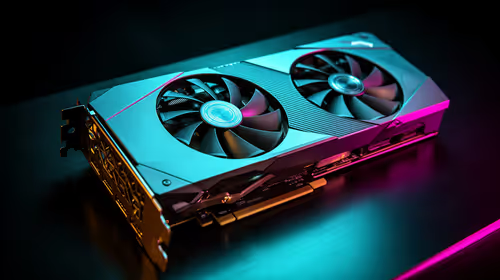
Check GPU performance, VRAM capacity, power draw, case clearance and power connectors. A Black Friday price cannot add missing clearance or a safe power supply.
Include any required PSU or case change in the graphics-card total.
Separate VRAM From System RAM
The graphics card's VRAM holds render assets. System RAM serves Windows, the game and background applications. One pool cannot be upgraded to replace the other.
A card running out of VRAM may show texture problems or traversal stutter at high settings even while system memory has room. Check model-level testing and reduce texture quality for a repeat run.
VRAM is fixed on a normal graphics card. Choose enough for the intended resolution, while remembering that a large memory badge cannot rescue a slow graphics processor.
Do Not Split the Budget Blindly
A small RAM step and small GPU step can leave both limits in place. One complete upgrade often gives the clearer result.
If the PC has 8GB and a weak GPU, bring memory to a usable matched baseline, then save the rest for a meaningful card tier. If it has 32GB and a slow GPU, leave the memory alone.
Write the staged plan so the first purchase still fits the second.
Keep a reserve for the parts that make the GPU usable. A safe power supply, correct connectors and airflow belong in the same stage. If those push the card beyond budget, save longer for the finished upgrade.
Compare Deals With a Baseline
Record the exact RAM kit and graphics card prices before Black Friday. For any published rand figure, use a named product from the approved dated price pack.
Compare the checkout total, warranty and delivery with your record. A large claimed percentage on the wrong part is not a saving.
Accept that the best-matched part may not be promoted. Keep the money rather than substituting a poor fit.
Account for Installation and Testing
RAM installation needs generation and slot compatibility. Boot at standard settings, run full tests, then enable XMP or EXPO and repeat.
A GPU change needs driver cleanup only when the platform change or fault justifies it. Fit the correct connectors, support a heavy card and test temperature and stability under load.
Keep the original parts until the new configuration has passed.
Verify the Result You Bought
Capture average FPS, frame time, temperature and noise before the change. Use the same game scene and settings after installation.
For RAM, repeat the memory-pressure test and confirm paging has dropped. For a GPU, confirm the expected link width, driver state and sustained clock without thermal throttling.
If the result misses the target, diagnose before buying the other component. A loose cooler, wrong slot or background task can hide the gain.
When Waiting Makes Sense
Wait when the current PC plays your library and the upgrade has no deadline. A promotion may improve the choice, though none is guaranteed.
Buy earlier when a failed component or work requirement cannot wait. The cost of delay can exceed a possible markdown.
Set a maximum wait date and a performance target.
FAQ
Should I prioritise a GPU over RAM?
Yes when RAM has headroom and graphics performance limits the target. Fix RAM first when the full session pages.
Does resolution change the choice?
Yes. Higher resolution places more work on the GPU and can raise VRAM needs, while system RAM depends on the whole session.
What if neither part gets a real discount?
Keep the budget or buy the proven bottleneck at a fair normal price when the deadline arrives.
Log memory pressure and graphics limits in the same game scene, then save for the one complete upgrade that removes the measured bottleneck.