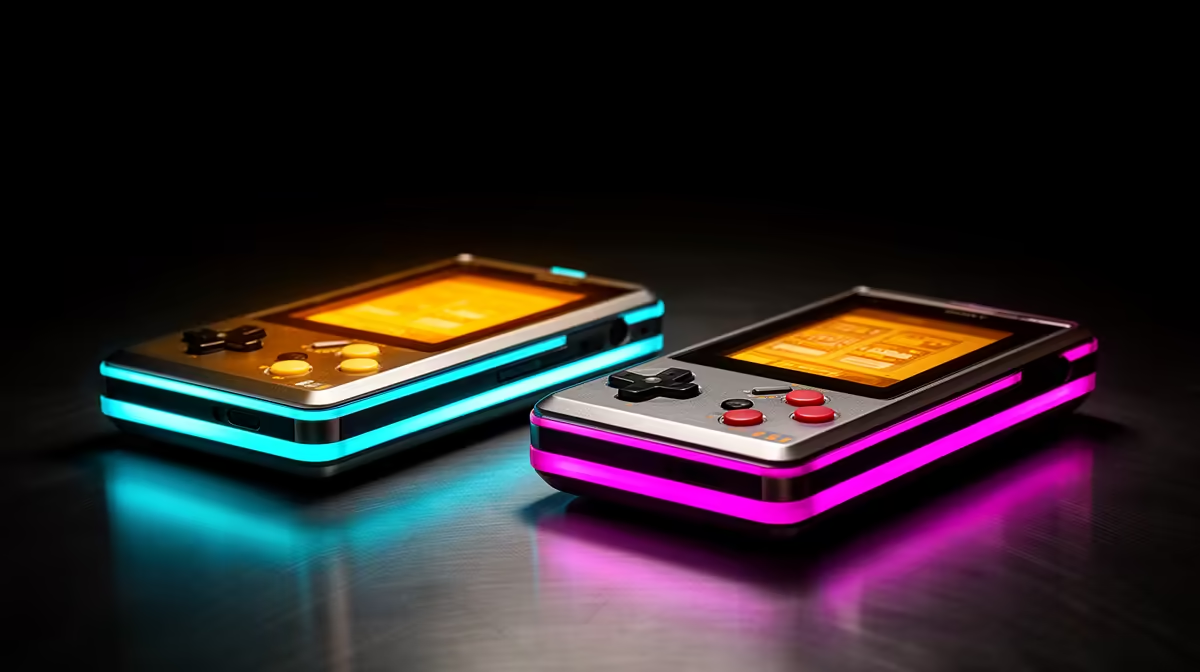
The gap between a pocket emulator that plays Game Boy classics and a slab that runs full Android with PlayStation-era 3D is wider than the spec sheets suggest, and import duties stretch that gap further in rand than the dollar prices imply. Picking a tier is really about which era of games you actually want to play, not which device scores highest. Budget vs premium retro handhelds comes down to a clean question: 2D and 16-bit nostalgia, or modern 3D emulation with screen and performance to match?
Quick Answer
Buy budget if you mostly want 2D and up to PlayStation-era games: a Linux unit like the Miyoo Mini Plus runs those beautifully for around 50 US dollars before shipping and duties. Buy premium if you want smooth Android emulation of heavier 3D systems on a large high-refresh OLED: the Ayn Odin 2 Portal starts near 334 US dollars and climbs past 500 for the top configuration. There is very little worth buying in between.
What the budget tier really gives you
Entry retro handhelds run a lightweight Linux frontend rather than full Android. The Miyoo Mini Plus is the standard-bearer here, sitting consistently under 50 US dollars and punching far above that. It handles 8-bit and 16-bit libraries, Game Boy Advance, and most PlayStation 1 titles without breaking a sweat, all on a small but sharp screen that fits in a jacket pocket.
The trade-offs are honest ones. The chip will not cope with Nintendo 64, Dreamcast or PSP at full speed in any reliable way, the build is plastic and light, and you are working inside a curated emulation menu rather than a full app ecosystem. For a huge slice of buyers, that is not a compromise at all. If your nostalgia lives in the 16-bit and PS1 era, the budget tier is not a stepping stone, it is the correct destination.
What the premium tier unlocks
Premium Android handhelds are a different class of device. The Ayn Odin 2 Portal is the clearest example: a Snapdragon 8 Gen 2 chip, 7-inch 1080p OLED running at 120Hz, and enough memory to drive heavier emulators smoothly. That hardware opens up Nintendo 64, Dreamcast, PSP, GameCube and a good deal of PlayStation 2, plus native Android games and streaming if you want them.
Pricing tiers by configuration. The Portal starts around 334 US dollars for the base 8GB/128GB model, rises to roughly 398 for the 12GB/512GB Pro, and reaches about 501 for the 16GB/1TB Max. The Odin 2 Mini, a more pocketable take on the same silicon, sits in the 329 to 369 range. The screen alone justifies a lot of the premium: a large 1080p OLED at 120Hz makes both retro and modern content look far better than any budget LCD.
Where duties widen the rand gap
This is the part dollar comparisons hide. A 50-dollar Miyoo and a 334-dollar Odin are not just separated by their sticker prices once you bring them into South Africa. Import duties and shipping are applied proportionally, so the absolute rand difference between the tiers ends up larger than the dollar figures suggest, and the premium device carries more landed cost on top of its already higher base. Factor that in before you assume the jump is "only" a few thousand rand. Buying a unit already landed and stocked locally, like those in the handheld gaming consoles range at Evetech, removes the import-cost guesswork entirely.
Matching the tier to how you play
Be honest about your library and your habits. If you play in short bursts, on a commute or in bed, and your games are 2D and PS1-era, a budget unit gives you the best comfort-to-cost ratio on the market and you will not miss the horsepower. If you want one device that plays everything up to PS2 and GameCube, doubles as an Android games machine, and has a screen worth staring at for hours, the premium tier earns its price.
The mistake to avoid is buying premium for a 16-bit library you will never push past, or buying budget and then resenting it the moment you try to run a GameCube game. There is also a thermal and battery angle: premium chips run hotter and drain faster under heavy 3D loads, while budget units sip power and stay cool because they are doing lighter work. Browsing what people actually buy in the best-selling gaming gear is a useful gut check before you commit either way.
The middle-ground problem
There is almost nothing worth buying between a 50-dollar Miyoo and a 330-dollar Odin 2. That mid-range dead zone exists because emulation difficulty jumps unevenly. A chip strong enough to smooth out PS2 and GameCube costs significantly more than one that tops out at PS1, so there is no device that does both equally well at a middling price. Devices that try end up overpriced for the classic library and underpowered for the heavy one.
The 2026 advice from most of the emulation community reflects this. The TrimUI Brick at around 80 US dollars sits just above the Miyoo at the very top of the Linux tier, still within the PS1-and-under ceiling. The next honest step up is a Retroid Pocket 5 at roughly 249 US dollars or the Odin 2 Portal starting at 334 US dollars, both full Android with Snapdragon silicon. The gap between those two bands is not a missed opportunity, it is where the value genuinely runs out.
Frequently Asked Questions
Can a budget handheld run PSP or GameCube games?
Not reliably. Budget Linux units like the Miyoo Mini Plus top out around PlayStation 1. PSP, Nintendo 64, Dreamcast and GameCube need the stronger chips found in premium Android handhelds such as the Ayn Odin 2 Portal.
Is the premium tier worth it just for the screen?
For many buyers, yes. The Odin 2 Portal's 7-inch 1080p 120Hz OLED is a large step up from any budget LCD, and it improves both retro and modern games. If you play for long sessions, the display quality alone is a major part of the value.
Why is the rand price gap bigger than the dollar gap?
Import duties and shipping scale with the device value, so a more expensive premium unit accumulates more landed cost on top of its higher base price. The absolute rand difference between tiers ends up wider than the raw dollar prices suggest.
Which tier has better battery life?
Budget units generally last longer and stay cooler because they run lighter emulators on efficient chips. Premium handhelds drain faster and run warmer under heavy 3D emulation, which is the cost of the extra performance.
What is the single best reason to choose budget?
Value for a focused library. If your games are 2D, 16-bit and PlayStation 1, a sub-50-dollar device plays them superbly, fits in a pocket and costs a fraction of a premium unit. You are not losing anything you would actually use.
Still weighing pocket nostalgia against a do-everything 3D machine? Check the locally stocked options in the handheld gaming consoles range at Evetech so you see the real rand price, duties included, before you decide on a tier.