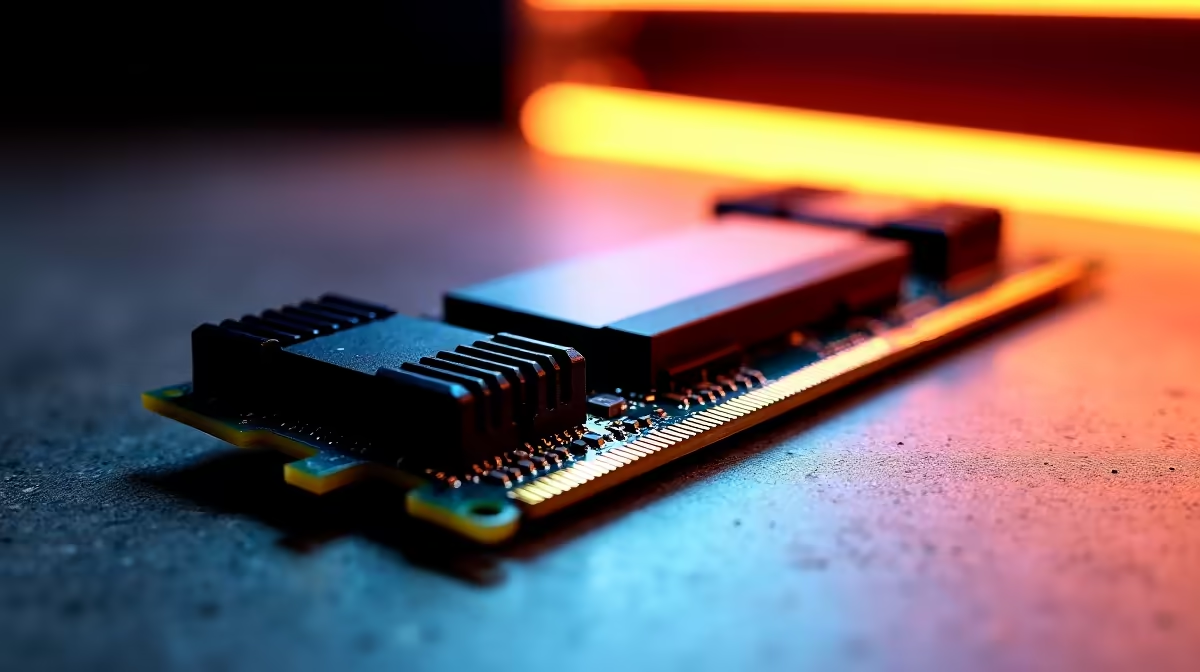
Memory used to be the easy line item on a build sheet, the part you barely thought about. The 2025 to 2026 shortage changed that. Buying RAM on a tight budget now demands real thought, because DDR5 prices have climbed well above their 2024 lows and the rand stretches every increase further for South African buyers. The good news is that smart capacity choices, rather than overspending, get you through the shortage with a system that runs everything it needs to.
Quick Answer
Buy a right-sized 16GB or 32GB DDR5 kit now rather than overbuying or waiting for DDR6. The 2025 to 2026 shortage pushed DDR5 prices above their 2024 lows, and rand-amplified costs make capacity the most budget-critical decision. Match the kit to what you actually do, and skip the premium tiers.
Why memory got expensive
Memory prices move in cycles, and this one swung hard. Manufacturers shifted production capacity toward higher-margin chips for data centres and AI hardware, which tightened the supply of mainstream DDR5 for desktops. Less supply against steady demand pushed prices up across the board.
For local buyers the squeeze lands twice. The global price rise is bad enough, then the rand exchange rate amplifies every increase by the time the kit reaches a shelf in South Africa. That double effect is why a DDR5 kit feels noticeably pricier now than the same capacity did a year ago.
Capacity is the decision that matters most
In a tight market, how much RAM you buy outweighs almost every other spec. Getting capacity right means you neither overspend on memory you will not use nor cripple your system by buying too little.
16GB: the new practical floor
For everyday work, browsing, and mainstream gaming, 16GB remains a workable baseline. Most current games and general tasks fit comfortably, and during a shortage it keeps the build affordable. The catch is headroom: heavy multitasking or a stack of browser tabs alongside a game can fill it, so this is the floor, not the comfortable middle.
32GB: the sweet spot if you can stretch
If your budget allows one upgrade, make it the jump to 32GB. It is the comfortable target for serious gaming, content creation, and keeping many applications open at once, and it gives years of breathing room. In a normal market this is an easy call; in this one it is worth prioritising over flashier upgrades elsewhere.
Skip 64GB unless you truly need it
Large 64GB kits make sense for heavy video editing, 3D rendering, or virtual machines, but for gaming and general use they are money tied up in unused capacity. During a shortage that premium is better spent on a faster GPU or a larger SSD.
Where to save without regret
A few sensible compromises soften the price without hurting performance.
Buy a balanced speed grade rather than chasing the fastest, most expensive kit, since the real-world difference between a mid-speed and a top-tier DDR5 kit is small for most users. Stick to a reputable two-stick kit at a sensible speed and good timings, and put the saved rand toward parts that move the needle more. The DDR5 memory selection makes it easy to compare capacity and speed at a glance so you can spot the sweet spot.
It also pays to watch what other buyers are choosing, because popular kits tend to sit at the best value points. Scanning the memory best sellers is a quick sanity check on which capacities and speeds offer the strongest value right now.
How Severe Is the Shortage in 2026
The scale of the current price movement is worth spelling out, because it changes how you should approach buying. A 32GB DDR5-6000 kit that cost around R1,500 equivalent at mid-2025 lows had climbed to more than four times that price by early 2026, driven primarily by memory makers shifting wafer capacity toward high-bandwidth memory for AI accelerators. Those chips consume roughly four times the silicon area per gigabyte of standard DRAM, so every GB of HBM produced squeezes mainstream supply.
The dominant analyst view heading through 2026 is that prices will not return to their 2024 lows before late 2027 at the earliest. That is a long wait for someone who needs memory now. The correct response for a budget buyer is to spend wisely on what is available today rather than holding out for a price correction that is not imminent.
Should you wait for DDR6?
It is tempting to hold out for the next standard, but for a tight budget, waiting is the wrong move. DDR6 will arrive at a premium on brand-new platforms, meaning a new motherboard and CPU as well, which is far more expensive than a sensible DDR5 kit today. Buy the memory you need now on a mature, affordable platform, and let DDR6 become a value option years down the line.
One More Option: Buy Inside a Product
An often-overlooked route during a shortage is to buy memory as part of a prebuilt or mini PC rather than as a bare kit. Manufacturers buying on long-term component contracts can source memory at pre-squeeze prices and pass the benefit on in the finished product price. If you are building a new system and the RAM cost is the sticking point, comparing a prebuilt against a self-build with current bare-kit prices can be a genuine saving. The DDR5 memory selection is the place to check current local pricing before committing either way.
Frequently Asked Questions
Is 16GB still enough for gaming in 2026?
For most mainstream gaming, yes, though it is the floor rather than the ideal. Heavy multitasking alongside a game can fill it, so move to 32GB if the budget allows for comfortable headroom.
Why is DDR5 more expensive than it was?
Manufacturers shifted capacity toward data-centre and AI memory, tightening desktop DDR5 supply against steady demand. For South African buyers, the rand exchange rate amplifies the global price rise even further.
Should I wait for DDR6 to drop?
No, not on a tight budget. DDR6 will launch at a premium on new platforms requiring a new motherboard and CPU, making it far costlier than a sensible DDR5 kit bought now.
Is faster RAM worth the extra cost right now?
For most users, a balanced mid-speed kit gives nearly all the real-world benefit at a lower price. Save the premium you would spend chasing top speeds for a stronger GPU or SSD.
Can I buy 16GB now and add more later?
You can, but matching a second kit later is not guaranteed, and mismatched modules can cause instability. If you expect to need 32GB, buying a matched 32GB kit upfront is the safer choice.