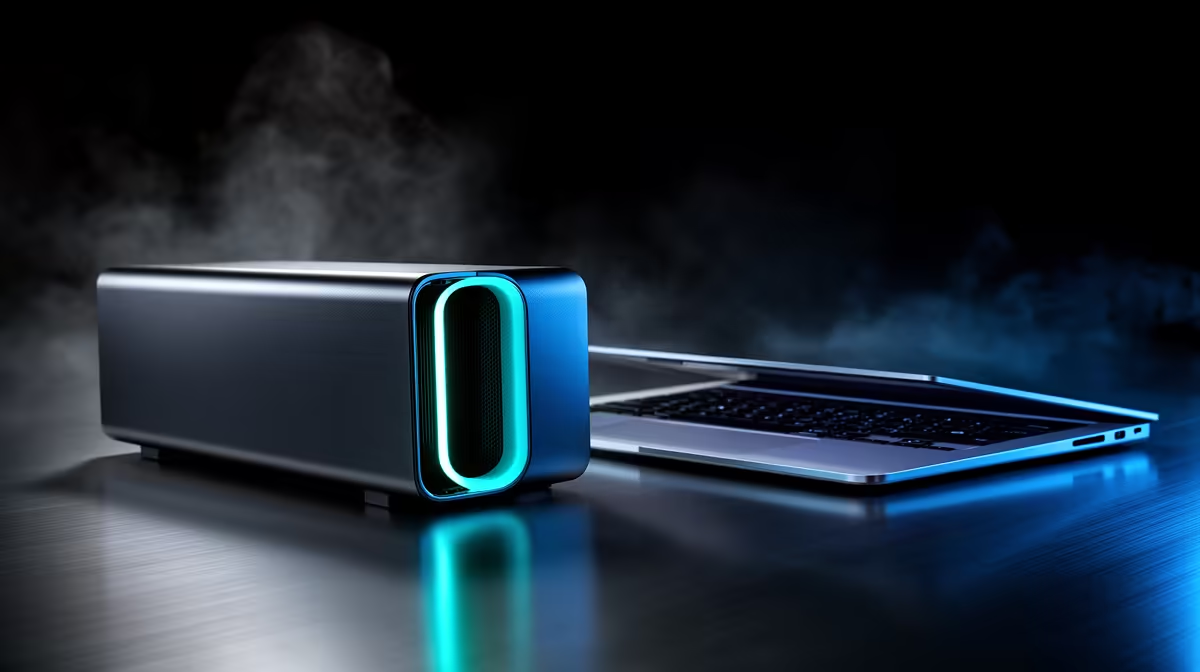
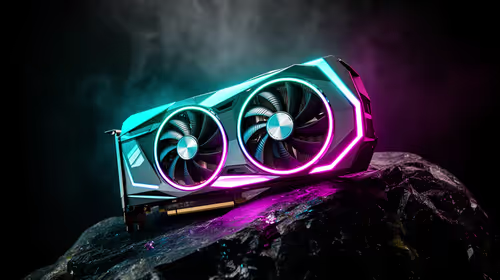
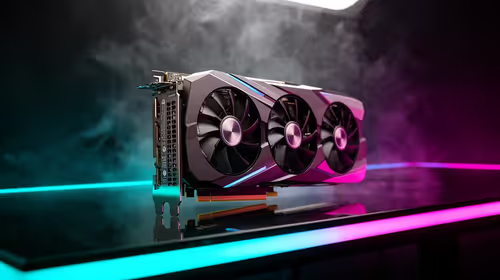
Strap a desktop graphics card to a thin laptop through a single cable and suddenly that laptop has a serious VRAM pool for generating images. The catch is the cable itself. An eGPU can run local AI art on a laptop, but whether it runs well depends on which models you generate and how much data has to cross that link.
Quick Answer
Yes, an eGPU gives a laptop a desktop-class VRAM pool that makes local AI art viable. The bandwidth gap is the limit: Thunderbolt 4 peaks near 40Gb/s while an internal PCIe 4.0 x16 slot moves data at roughly 256GB/s. For image models like SDXL that mostly live in VRAM, the gap is tolerable. For heavier Flux video work it becomes a real bottleneck.
Why VRAM matters more than the cable
This is the part most people get backwards. AI art generation is not like gaming, where the GPU streams gigabytes of textures back and forth every frame. With diffusion models, you load the model into the card's VRAM once, then each generation only sends a tiny amount of data across the link, often just kilobytes of prompt and result. Once the model is resident in VRAM, the narrow Thunderbolt pipe barely sees traffic.
That is why the headline bandwidth number frightens people more than it should. The real question is whether the card has enough VRAM to hold the model at all. A 16GB desktop card in an enclosure will run models a laptop's soldered-in mobile GPU simply cannot fit, and the eGPU typically delivers something close to its native speed for inference, far better than the gaming figures suggest.
Where the bandwidth gap actually bites
The cable still matters at two moments: loading the model into VRAM at the start, and any workload that has to keep moving data during generation.
Static image models
For Stable Diffusion and SDXL, the model loads once and then generation is largely self-contained on the card. The initial load over Thunderbolt is slower than a desktop slot, costing you a few seconds, but per-image speed afterwards is close to native. For someone making single images and batches, an eGPU is a sound setup.
Flux and video workloads
Flux is heavier, and video generation heavier still. These push larger models and, for video, more frame data through the chain. When a workload exceeds the card's VRAM and starts spilling, every spill crosses the slow link and the Thunderbolt ceiling shows itself plainly. This is where the eGPU stops feeling like a desktop and starts feeling throttled.
The honest trade-off for SA buyers
An eGPU enclosure plus a capable card is not cheap, and you are paying for portability rather than peak speed. If you already own a Thunderbolt 4 laptop and want occasional local image generation without buying a whole tower, the value is real. If AI art is your main workload, especially Flux or video, a desktop with the card in a proper x16 slot gives you the full bandwidth and usually costs less than a laptop-plus-enclosure combination. The AI-ready PC range at Evetech covers those built-for-the-job machines, and you can compare card VRAM directly through the best-selling GPUs list.
The model-load penalty, and how to live with it
The one place you will consistently feel the cable is at the start of a session. Loading a multi-gigabyte diffusion model into the card's VRAM means pushing all of it across the Thunderbolt link, which is slower than an internal slot would manage. In practice that adds a handful of seconds before your first generation, once per session or per model switch. It is mildly annoying rather than a dealbreaker.
The way to live with it is to load once and stay loaded. Keep your tool of choice open, generate in batches, and avoid hopping between large models mid-session. Done that way, you pay the load cost once and then enjoy near-native per-image speed for the rest of your sitting. Where the penalty turns painful is when a workload keeps spilling out of VRAM during generation, because then the slow link is in the hot path of every step, not just the warm-up.
Power, enclosures and the total cost
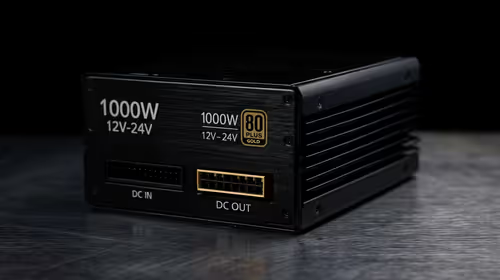
It is easy to budget for the graphics card and forget the rest. An eGPU needs an enclosure with a power supply sized for the card, and a higher-wattage card demands a beefier, pricier box. Add the cost of the enclosure to the card and the total can approach or exceed a capable desktop, which is the calculation that catches people out.
There is also the practical side: the enclosure is not pocket-sized. It sits on your desk, draws mains power, and turns your portable laptop into a semi-fixed workstation whenever it is attached. If you genuinely move between locations and want occasional local generation at each, that trade is worth it. If the rig lives permanently on one desk, you are paying a portability premium you never use, and a tower makes more sense.
What to check before you buy
Three things decide whether an eGPU setup works for you. Confirm the laptop has a true Thunderbolt 4 or USB4 port, not a plain USB-C that only carries display and power. Pick a card with enough VRAM for the models you target, 16GB being the comfortable floor for current image work. And accept that the enclosure adds cost and bulk, so weigh it honestly against a desktop if you rarely move the rig.
Who the eGPU route genuinely suits
The setup makes the most sense for a specific person: someone who already owns a capable Thunderbolt 4 laptop, wants to keep using that one machine, and generates AI art occasionally rather than all day. For them, an enclosure and a 16GB card unlock real local generation without buying or maintaining a second computer, and the bandwidth limits barely register on static image work.
It suits far less the person whose main workload is heavy. If you generate constantly, lean on Flux video, or want the fastest possible iteration, the enclosure premium and the load penalty add up while delivering less than a desktop would for the same money. For that user, putting the card in a proper x16 slot is both faster and cheaper, and the portability you paid for in an eGPU goes unused.
Frequently Asked Questions
Does Thunderbolt bandwidth ruin AI art performance?
No, not for most image generation. Once a diffusion model loads into the card's VRAM, only tiny amounts of data cross the cable per image, so per-generation speed stays close to native despite the narrow link.
How much VRAM does an eGPU card need for AI art?
Aim for at least 16GB. That comfortably holds current image models like SDXL and quantised Flux, whereas 8GB cards force aggressive compression that softens detail and can stall on bigger models.
When is an eGPU a bad choice?
When your main work is Flux video or any workload that overflows the card's VRAM. The constant spilling crosses the slow Thunderbolt link and the bandwidth ceiling becomes a genuine drag.
Is a desktop better value than an eGPU for AI art?
Usually, if portability is not essential. A card in a desktop x16 slot gets full bandwidth, and a tower often costs less than a laptop plus a Thunderbolt enclosure and the same card.
Will any USB-C port work for an eGPU?
No. You need true Thunderbolt 4 or USB4 with the full 40Gb/s data path. A plain USB-C port that only handles display and charging will not run an external GPU enclosure.
Weighing an eGPU against a purpose-built machine for local AI art? Compare VRAM and value in the AI-ready PC range at Evetech and choose the path that fits how you actually work.