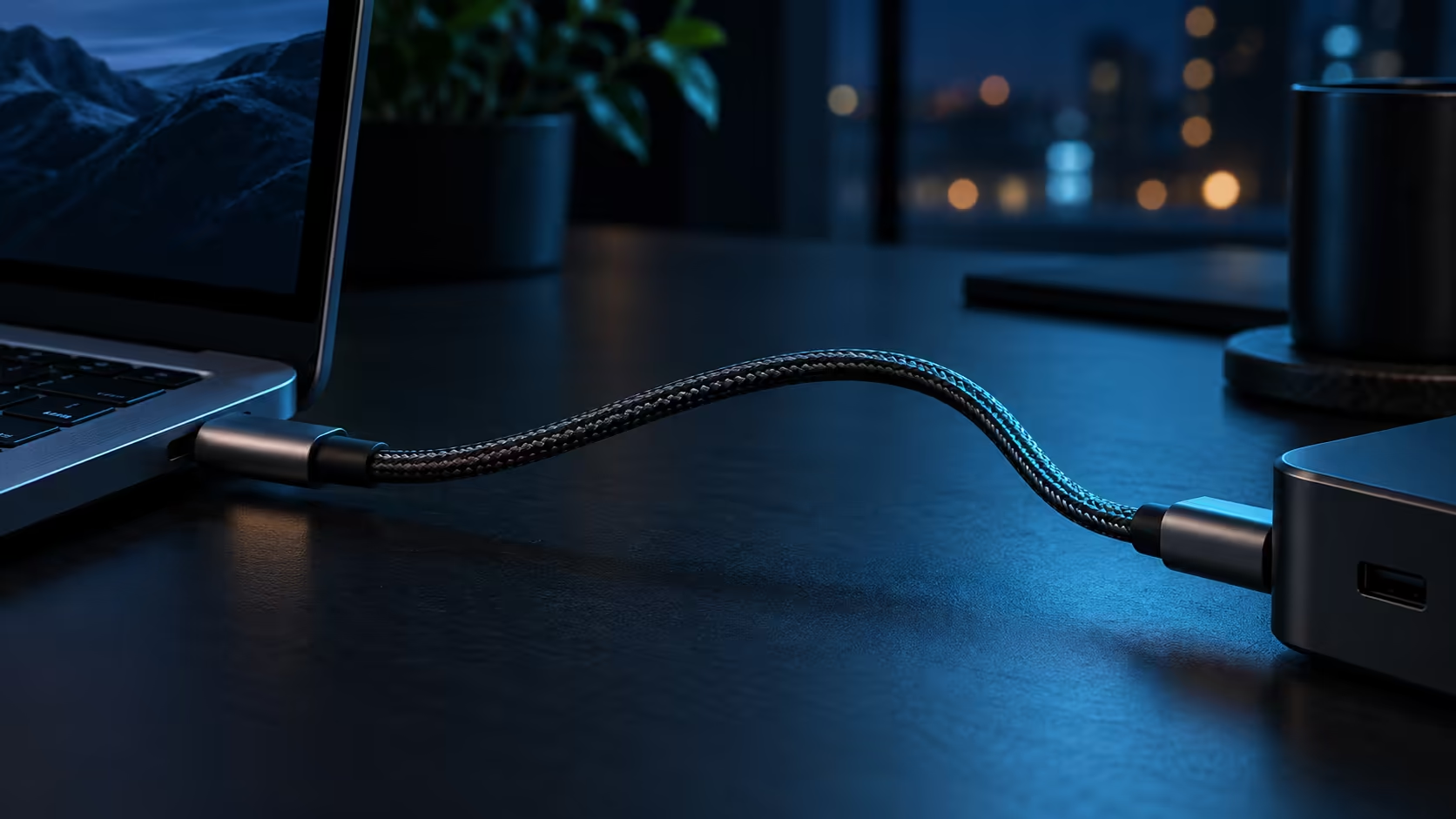
Choosing a durable USB-C cable in South Africa means weighing three things together carefully, rather than simply picking whichever one happens to be printed largest on the packaging, since charging speed, length and certification each answer a completely different question about the same purchase.
Quick Answer
Certification decides the speed, length decides the reach, and the bend rating decides the lifespan. In South Africa 1.8m usually matches a low wall socket and a daily commute is what tests the braid, so the R399 Anker 544 covers all three with local warranty cover.
🧭 Why these three factors deserve equal weight
On a USB-C cable, it is tempting to fixate on one factor and treat the other two as afterthoughts, usually price or wattage grabbing all the attention while length and certification get assumed rather than checked. A cable that is fast and certified but genuinely too short to reach a socket is no more useful than one that reaches perfectly but cannot carry the wattage a laptop demands, which is exactly why all three questions deserve a proper answer before any purchase, not just the one that happens to be printed largest on the box.
⚡ Charging speed: matching the cable to what you actually own
A cable's current rating, either 3A or 5A, decides its charging speed ceiling, and it needs to be sized against whichever device in the house draws the most, never the one that draws the least. A household with a laptop drawing above 60W needs the 5A class specifically, since anything less pins the whole connection down to that same ceiling, however generous the charger sitting upstream of it might otherwise be. Phones and tablets sit comfortably within either class, so buying to the laptop's requirement covers everything else in the house automatically.
📏 Length: matching South African room layouts
Most South African homes place wall sockets at skirting-board height, well below where a desk or bedside table actually sits, which means the real reach needed is often greater than it first appears. A 1.8m cable covers this typical distance comfortably, reaching from a low socket up to a desk or bed with slack to spare, while a shorter 0.9m option suits a bag or a dock positioned close to the device it feeds.
🏷️ Certification: the trust check that actually matters
USB-IF certification is the step where an outside test house actually checks a USB-C cable's declared current rating against what it can physically carry, which is exactly what tells a genuinely capable product apart from one printing a wattage figure its wiring cannot back up. This matters more the higher the claimed wattage, since the gap between a declared and an actual rating grows more dangerous as more current is asked to flow through the connection.
🧵 Durability: what a South African daily routine actually tests
A cable carried daily between a bag and a desk, common for commuters and students across the country, accumulates flex cycles far faster than one left permanently plugged in at a single fixed spot. This is exactly what a published bend rating, such as 30,000 cycles, is meant to predict, and it becomes the deciding factor for anyone whose cable genuinely moves rather than sits still.
🏘️ Why these three questions rarely get asked together
Most buying advice covers a USB-C cable's speed, length or certification in isolation, treating each as its own separate article rather than three parts of the same purchase decision. In practice, a South African buyer needs all three answered at once, since a cable that nails speed and certification but arrives too short for the actual socket is just as much a wasted purchase as one that fits perfectly but cannot carry the wattage a laptop demands.
🛒 Putting all three together in one purchase
The Anker 544, in the comprehensive cable range, answers all three questions at once: 140W+ charging for a demanding laptop, a 1.8m length suited to typical local room layouts, and USB-IF certification backing up the declared rating, all for R399, with any warranty claim staying a local matter instead of a parcel booked abroad. If a cable is part of a wider laptop bag refresh, our gaming accessories range covers the rest of that list in the same order.
Frequently Asked Questions
Out of the three factors, speed, length or certification, which one matters most overall?
Certification and speed together settle whether the cable actually works for your device at all, while length is purely a matter of physical fit, so certification and speed both take clear priority over length whenever you can genuinely only find time to check one of the three properly.
Is 1.8m always the right length for a South African home?
It suits most typical layouts, but measuring the actual distance from socket to desk or bed remains worth doing before assuming the standard length fits every single room in the house equally.
Does a durable cable ever compromise on charging speed to achieve its bend rating?
No, bend rating and current rating are entirely independent specifications, so a cable can genuinely carry both a high bend cycle count and a full 5A rating together without any real trade-off between the two of them.
Should I prioritise a South African seller over an international one for this purchase?
Yes, given how often charging cables develop intermittent faults, a local seller turns a warranty claim into a simple exchange rather than an overseas shipment and delay.
Does climate or humidity in South Africa affect how long a cable's jacket lasts?
Not meaningfully for a well-built braid, since the bend rating and connector build matter far more to a cable's lifespan than ordinary local weather conditions ever do.
Is there a single figure that captures all three factors, speed, length and certification, at once?
No single number covers all three, which is exactly why checking them as separate items on a short list works better than looking for one headline spec to summarise a cable's overall quality.
Should the checklist order change for someone buying their very first USB-C cable?
Not really, the same three checks apply regardless of experience, though a first-time buyer benefits most from writing the laptop's own wattage down on paper before comparing any candidate cables against it directly, one at a time.
Ready to choose a cable that gets speed, length and certification all right?
Check all three together, since each one answers a different question about your setup.