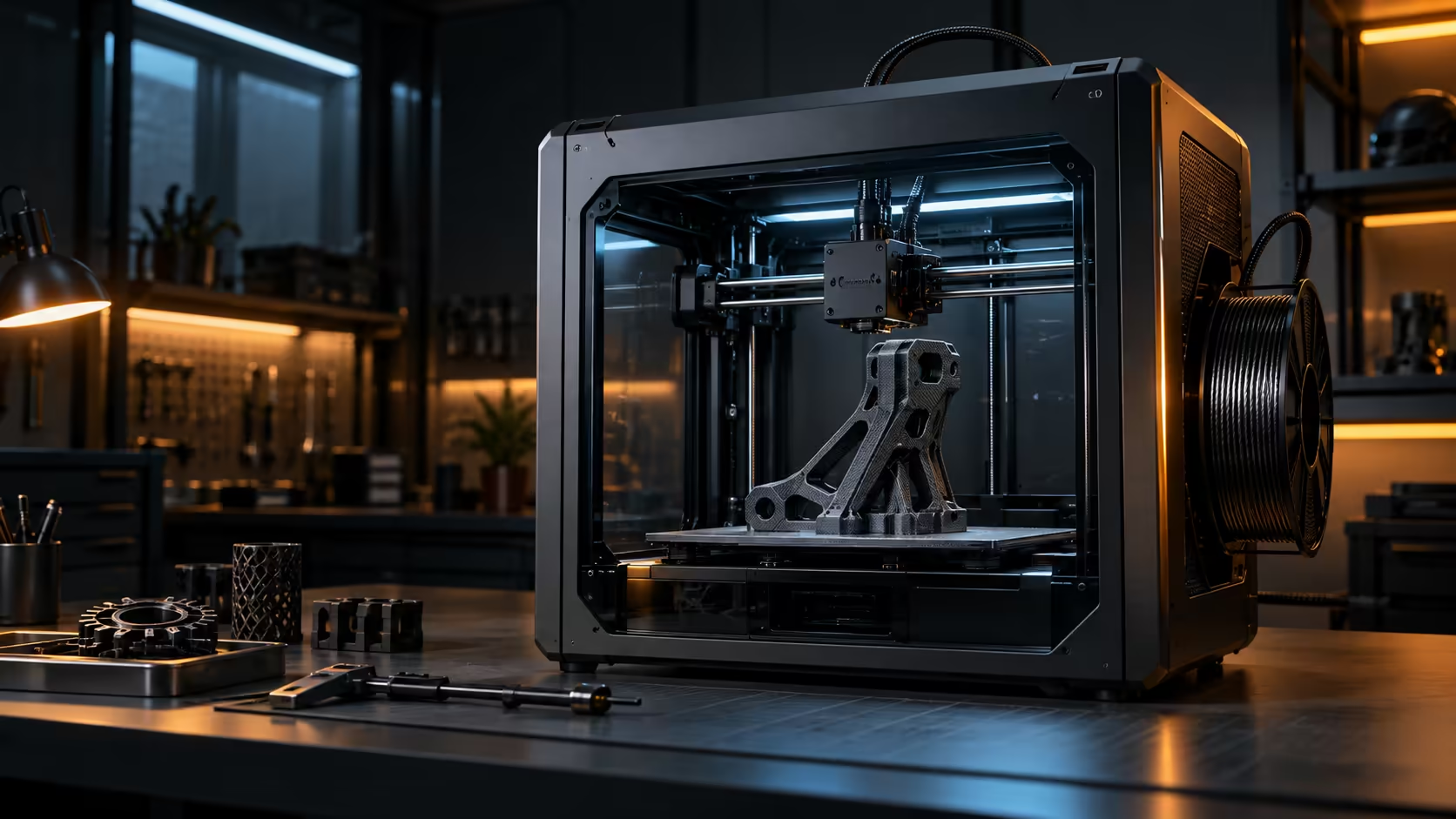
A maker, a designer and a small business all walk into the very same printer aisle wanting genuinely different things, even though the spec sheets sitting in front of them all look basically identical at first glance. Choosing a high-speed 3D printer for South African makers, designers and small businesses starts with naming what each one actually needs before comparing prices.
Quick Answer
Pick for materials and turnaround time first, then for the actual conditions the machine will genuinely live in day to day, week after week. Here that specifically means humid air spoiling an open spool, inland dust working into moving parts, a warranty claimed by courier rather than an international parcel, and spare parts that cost more in customs duties than the part itself once ordered from overseas. The Creality K1C covers these at R12,599.
🎨 What separates the three buyer types
A maker generally cares about a nozzle reaching 280C or higher for material range and reliability for personal projects, prioritising a machine that handles whatever the next idea needs without constant fiddling. A designer working with clients cares more about turnaround, since revisions on a deadline are the norm rather than the exception. A small business cares most about repeatability and uptime, since a machine offline is directly costing money rather than just delaying a hobby project.
All three benefit from the same underlying capability, hotend range, reliable monitoring, decent speed, but weigh those factors differently depending on which category actually describes their work.
🌊 Humidity and dust: the two environmental factors nobody advertises
Filament absorbs moisture readily, and coastal humidity accelerates that far faster than an inland climate does, showing up as popping, stringing and poor surface finish on a spool that looked fine just 4 weeks earlier. Inland dust is the opposite problem: dry, fine particles working into moving parts and settling on a plate between prints, which an enclosed machine handles considerably better than an open-frame one.
🛃 Warranty and spares: why local sourcing changes the maths
A courier-based local warranty claim typically resolves within days; that same claim run through a private import adds customs duties and lengthy international shipping delays on both the outbound fault report and the returned repair itself. Spare parts follow the same logic, since ordering a replacement nozzle or belt from overseas often costs more in duties and shipping than the part itself, once you add the wait.
Match your buying decision to which of these factors actually affects your situation most, and browse filament with your local storage conditions in mind. A workstation alongside the printer is worth considering if design work and slicing happen on the same desk as the machine itself.
📅 Building a maintenance rhythm suited to South African conditions
Coastal makers benefit noticeably from checking filament storage weekly rather than monthly, particularly once ambient humidity climbs past roughly 60% relative humidity, since damage compounds faster than most other maintenance issues and catches people off guard specifically because it happens quietly to material sitting untouched on a shelf rather than to the machine itself directly. Inland makers get considerably more warning from dust specifically, since it builds up visibly on external surfaces well before it ever reaches anywhere that actually affects a print, giving a routine monthly clean-down a genuinely realistic enough margin to work with.
Either way, tie maintenance firmly to a fixed calendar reminder rather than waiting around for a print to fail first, since by the time a coastal spool or an inland belt actually causes a visible defect, the underlying problem has usually already been quietly building for several weeks beforehand. A shared household calendar entry or a simple phone reminder costs absolutely nothing to set up and removes the reliance on memory entirely and permanently, which matters considerably more the busier a workshop or home office actually happens to get over time.
🧾 What this means for a first-year budget
Beyond the printer's own purchase price, budget separately and specifically for sealed filament storage if coastal, or more frequent cleaning supplies if inland, and treat local warranty support as a real, quantifiable saving in the budget rather than a soft, hard-to-measure nice-to-have that gets left off the sheet entirely. A claim resolved in days rather than weeks is worth real money to anyone actually relying on the machine for regular work. Check the 3D printer range for local warranty terms specifically before ever assuming every single retailer's process looks exactly the same as the next.
Frequently Asked Questions
Does coastal humidity really matter more than dust for South African buyers?
It depends on location; coastal buyers deal with humidity affecting filament, while inland buyers deal more with dust affecting the machine's moving parts.
Is local warranty support worth paying more for?
Generally yes, since a courier-resolved claim is far faster than an international one, especially for a business or maker relying on the machine regularly.
Should a small business prioritise speed or reliability first?
Reliability first, since downtime costs more than a slightly longer print time; speed becomes more valuable once uptime is already solid.
Do spare parts really cost more to import than to buy locally?
Often yes, once customs duties and international shipping are added to a small part's price, buying locally frequently works out cheaper overall.
How often should coastal makers check their filament storage?
A weekly rhythm is a sensible, cautious choice, since humidity damage compounds surprisingly quickly and catches people off guard precisely because it silently affects material sitting untouched rather than the machine itself directly.
How often should inland makers check for dust buildup?
A monthly check is usually more than enough, since dust builds up visibly on external surfaces well before it ever reaches anywhere that genuinely affects a print, giving noticeably more advance warning than humidity damage ever does.
Does local warranty support translate into a real cost saving?
Yes, a claim resolved in days rather than weeks saves genuine time and real money for anyone actually relying on the printer for regular ongoing work, not just a theoretical convenience on paper.
Should maintenance be scheduled or reactive?
Scheduled firmly, tied to a fixed calendar reminder rather than left to memory, since by the time a defect actually shows up clearly in a print, the underlying problem has usually already been building quietly for weeks beforehand.
Buying your first high-speed printer for real South African conditions?
Match the machine to your climate, your workload and your need for local support.