You’ve just dropped into your favourite game, the room is quiet, and you’re ready to clutch the win… but what’s that sound? A faint, high-pitched electronic buzz coming from your screen. If you’ve ever experienced this, you’ve met the infamous coil whine. This frustrating noise is common in monitors with built-in PSUs, but don't despair. We’re here to help you understand and hopefully solve the coil whine from your monitor for good. 🎧
Understanding Monitor Coil Whine
So, what is this maddening hum? Coil whine is a high-frequency noise produced by an electronic component vibrating as electricity passes through it. In monitors with internal power supply units (PSUs), components like inductors and transformers are working hard to manage power. Sometimes, the frequency of the electrical current causes them to resonate, creating an audible buzz.
It’s not dangerous for your hardware, but it can be seriously distracting, especially during quiet moments in a game or while you're trying to focus on work. The problem of coil whine in monitors with built-in PSUs is often a lottery… some units have it, others don't, even within the same model.
Simple Fixes for Solving Coil Whine 🔧
Before you consider replacing your screen, let's try a few practical steps. Many times, you can reduce or even eliminate the noise with a few tweaks.
Tweak Your Monitor's Settings
The amount of power your monitor draws directly affects its internal components. By changing certain settings, you can alter the electrical load and potentially stop the vibrations causing the coil whine.
- Adjust Brightness & Contrast: Try moving your brightness up or down in small increments. Often, the whine is most prominent at specific brightness levels (like 50% or 100%). Finding a sweet spot just outside that range can work wonders.
- Change the Refresh Rate: If you have a high-refresh-rate monitor, try switching between its available modes (e.g., from 144Hz to 120Hz). This changes the operational frequency of the internal electronics.
Cap Your FPS to Reduce Whine
A classic trick for solving coil whine is to cap your game's frame rate. Use your graphics card's control panel (NVIDIA Control Panel or AMD Radeon Software) or an in-game setting to limit the FPS to match your monitor's refresh rate. An uncapped frame rate can cause wild fluctuations in power draw, making coil whine much worse.
Check Your Power Connection & Environment
Sometimes the problem isn't the monitor itself, but the power it's receiving.
- Try a Different Outlet: A "dirty" power line with fluctuations can contribute to coil whine. Plug your monitor directly into a different wall socket, preferably one on a different circuit, to see if it helps.
- Isolate the Power Strip: If you're using a multi-plug or power strip, try plugging the monitor directly into the wall. A low-quality power strip can introduce electrical noise. Investing in high-quality monitor accessories like a proper surge protector can provide cleaner, more stable power.
When It’s Time for a Quieter Upgrade ✨
If you’ve tried everything and the buzz persists, the coil whine might just be a manufacturing quirk you can't fix. The good news is that monitor technology is always improving. Newer models often feature higher-quality power components designed specifically to minimise noise.
If silence is golden, exploring an upgrade might be your best bet.
- The latest best PC monitor deals often feature panels with excellent power regulation.
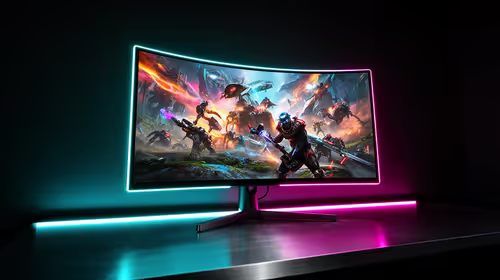
- For an immersive experience without the buzz, modern curved monitors are built with stability in mind.
- Many high-performance gaming monitors now use external power bricks, which moves the noisy components away from your desk completely.
- Even stunning 5K & 4K monitors are engineered for quiet, professional use.
- Interestingly, portable monitors which run off low-power USB-C rarely, if ever, suffer from PSU-related coil whine.
Ultimately, solving coil whine in monitors sometimes means choosing a new screen known for its silent, reliable performance.
Ready for a Silent Gaming Experience?
Stop letting a distracting buzz ruin your focus. Explore our massive range of modern, quiet, and powerful screens. Browse our full selection of PC monitors and find the perfect silent upgrade today.