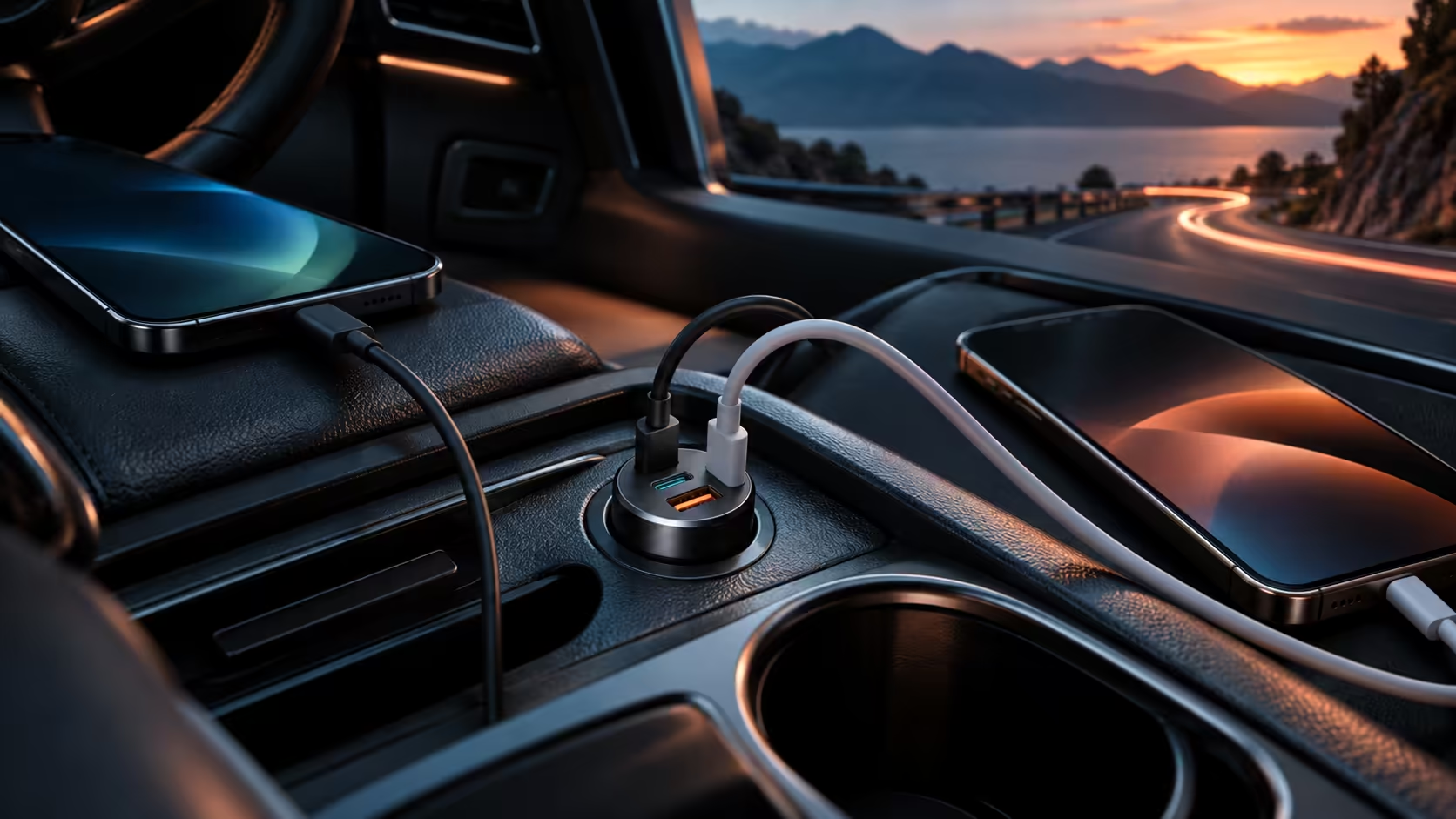
The word flush-fit gets used loosely enough on car chargers that it is worth pinning down what it actually promises before buying on the strength of it. It describes how far a plug protrudes once seated, and that depends on two separate things: how the charger is shaped, and how deep the socket sits in a particular car, which no charger can control.
Quick Answer
A flush-fit charger sits close to level with the socket's rim rather than standing proud of it, which matters mainly for clearance around a console lid, an armrest or a knee. How flush any given plug actually sits depends on the recess depth of your specific socket, which varies between vehicles, so the same charger can look flush in one car and stick out noticeably in another. Grip is a separate matter entirely, handled by the socket's own spring contacts rather than by the plug's outer shape. Anker's two-port charger, built to the same standard barrel as the socket it plugs into, sells for R349.
📏 What "flush" is actually measuring
A car's 12V accessory socket sits inside a recess, and how deep that recess is varies by where the socket is mounted: a centre console box, a dashboard face, a rear-seat armrest or a boot-mounted outlet all use different housing depths, even though the socket opening itself follows a barrel diameter of roughly 21.5mm across nearly every vehicle on the road.
A charger's own length, measured from the tip that enters the barrel to the back edge that stays outside it, is fixed regardless of which car it goes into. Whether that fixed length ends up flush, slightly proud, or noticeably sticking out therefore depends entirely on how deep the specific socket's recess is, not on any single property of the charger alone. The identical plug can look flush in a deep centre-console socket and protrude by a visible margin in a shallow dashboard one.
🔍 Where flush-fit actually matters
The practical reason to care is clearance, not appearance. A plug that protrudes 20mm or 30mm into the path of a closing console lid, an armrest that folds down, or a driver's knee on a tight dashboard placement is the scenario flush-fit designs are aimed at solving.
For a socket in open space, on a rear seatback outlet or an exposed boot socket with nothing folding over it, how far the plug sticks out barely matters, since there is nothing for it to catch or press against. Checking your own car's specific socket location, and what sits near it, is a more useful step than assuming a low-profile plug automatically solves a clearance problem that might not exist in your vehicle to begin with.
🔌 Grip is a completely separate question
Whether a plug protrudes and whether it stays firmly seated are governed by different parts of the system entirely. Retention comes from the socket's internal spring contacts pressing against the plug's metal barrel, a mechanism built into the car and largely unrelated to how much of the charger sits outside the recess.
A charger that sits nearly flush is not automatically better held in place than one that protrudes further, since both rely on the same spring-contact mechanism to stay seated. Age on the contacts, grit built up inside the barrel and the seating force used the day it was first pushed home all matter far more to grip than the charger's outer profile ever does. A cable pulling at an angle near the plug can also work a marginal connection loose regardless of how the charger itself is shaped. Other small gaming accessories that share the same socket day to day face identical grip considerations.
🚙 How the same question looks across different vehicle types
A small hatchback's centre console tends to place the socket in a shallow recess as little as 10mm to 15mm deep, close to other controls, where even a small amount of protruding plug is more likely to brush against a gear lever or a driver's knee. A larger SUV or double-cab bakkie often gives that same socket a recess closer to 30mm or 40mm, so the identical charger that felt tight in the hatchback barely registers as an issue in the bigger cabin.
Rear-seat and boot sockets, common in family cars and larger SUVs sold locally, are usually mounted in open trim panels with nothing folding over them, which is precisely the case where flush-fit stops being a meaningful consideration at all. Checking the specific socket a charger will actually live in, rather than assuming one vehicle's clearance applies to every car, is a five-second look that settles the question far more reliably than a spec sheet ever could.
🧰 A word on multi-socket cars
Some newer South African vehicles ship with more than one 12V outlet, front and rear, or front and boot, at genuinely different recess depths from the factory. Where that is the case, matching the shallower socket with a shorter charger and reserving a longer one for the deeper outlet avoids the clearance question entirely, rather than hunting for one charger that has to suit both.
Frequently Asked Questions
Does a flush-fit charger automatically stay in the socket better?
No. Retention depends on the socket's spring contacts, not on how much of the plug protrudes. A flush-fitting plug and a longer one rely on the same mechanism to stay seated.
Why does the same charger look flush in one car and stick out in another?
Socket recess depth varies by vehicle and by where the socket is mounted, console, dashboard, rear seat or boot, while a given charger's physical length stays fixed regardless of which car it goes into.
Where does flush-fit actually matter most?
Anywhere something folds, closes or presses near the socket, an armrest, a console lid or a tight dashboard layout, rather than an open rear-seat or boot outlet with nothing nearby to obstruct.
Is a longer charger less reliable than a shorter one?
No. Length affects clearance, not electrical reliability. A well-built longer charger and a shorter one both depend on the same socket contacts and internal protections for how they perform.
Can I measure my own socket's recess before buying?
Yes, and it takes under a minute. A tape measure or even a folded piece of paper against the socket rim, compared with the charger's stated length on its listing, tells you more about fit in your specific car than any general flush-fit description on a box ever will, and it costs nothing to check before you buy.
Ready to find a charger that suits how your socket is positioned?
Take a look at the car charger range and check your own socket's clearance before you buy.