A render queue that crawls through the night or a 4K export that ties up your machine for an hour is the daily reality for South African content creators chasing core count. Intel's Nova Lake is rumoured to push as high as 52 cores with up to 288MB of bLLC cache, a tempting figure for anyone whose timeline is bottlenecked by raw threads. The catch is that these numbers are unconfirmed and the silicon is not expected until late 2026.
Quick Answer
Nova Lake-S is rumoured at up to 52 cores and 288MB of bLLC cache, but it is unconfirmed and not expected until late 2026. If your rendering and encoding work is suffering now, a high-core Ryzen, Threadripper, or current Core chip is the better buy than waiting.
What Nova Lake is rumoured to bring
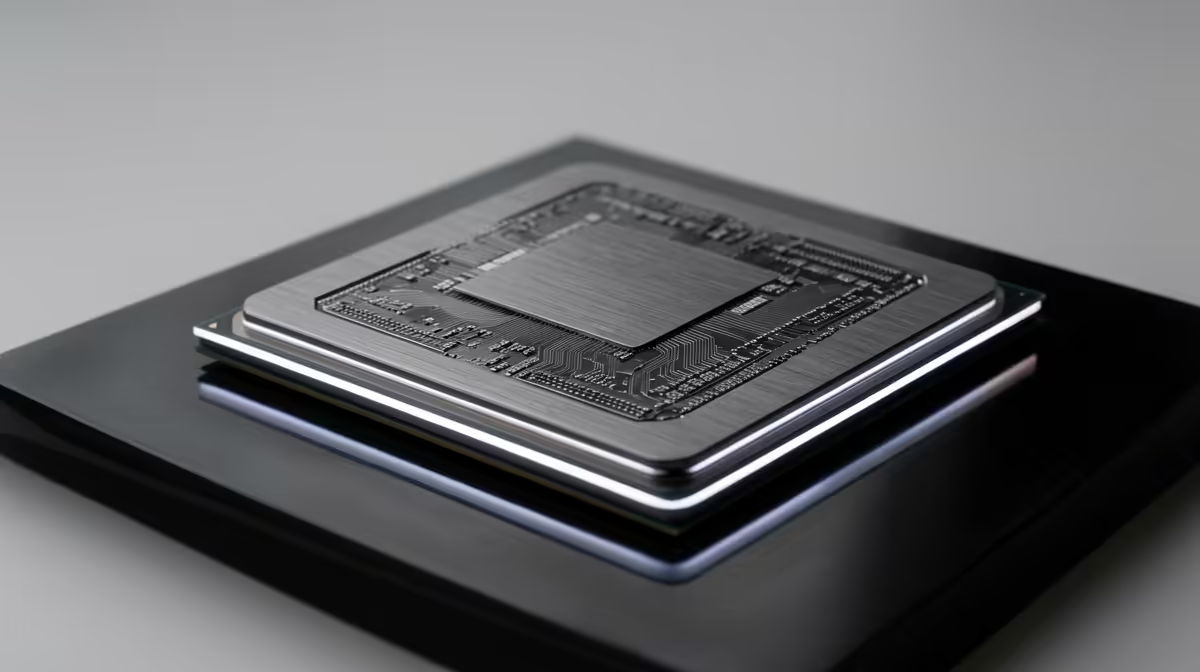
The leaks point to a hybrid design that stacks performance and efficiency cores far higher than current desktop parts, reaching toward 52 cores in the top configuration. The headline alongside core count is bLLC, a large last-level cache that, if the rumours hold, could reach 288MB and feed those cores with data more efficiently.
For multi-threaded creative work, more cores translate fairly directly into faster renders and encodes. A 52-core part would be a serious jump over today's mainstream desktop ceiling.
The "rumoured" caveat is doing heavy lifting
None of this is confirmed by Intel. Core counts, cache sizes, and launch windows from leaks routinely shift before release, and a flagship configuration rarely lands at a mainstream price. Treat the 52-core figure as a ceiling and a possibility, not a promise you can plan a purchase around.
Which creative workloads actually scale with cores
Not every task benefits equally, so it pays to know where extra cores earn their keep.
Workloads that love core count
3D rendering in Blender, Cinema 4D, or V-Ray scales almost linearly with cores, since each core can chew through a separate tile or sample. CPU-based video encoding, heavy compositing, and simulation work all reward high thread counts in the same way. If your work is dominated by these, core count is the spec that moves your deadlines.
Workloads where cores matter less
Timeline scrubbing, many Photoshop operations, and single-threaded plugins lean on per-core speed and a strong GPU rather than sheer core count. A creator who lives in these tools gains little from a 52-core chip and would feel a fast 8 to 16-core part just as keenly.
What you can buy today instead
If your work is core-bound now, several current options deliver serious threads without a wait. AMD's Threadripper line is the closest match to the Nova Lake rumour, offering very high core counts aimed squarely at rendering and simulation, and it ships with the memory bandwidth and PCIe lanes those workloads demand.
For most creators, though, a mainstream high-core part is the smarter buy. A Ryzen 9 or a current Intel Core flagship offers 16 or more cores that handle video encoding, compositing, and moderate 3D work comfortably, at a price far below the workstation tiers. These chips also clock higher than the workstation parts, so they feel snappier in the single-threaded tasks that fill most of an editing day.
Don't forget the GPU side of creative work
Core count is not the only lever. Modern creative apps lean heavily on the GPU for timeline playback, GPU rendering in tools like Blender's Cycles, and AI-assisted features. A balanced creator machine pairs a capable CPU with a strong graphics card, and in many cases adding GPU power moves your render times more than chasing the absolute highest core count on the processor.
The cost of waiting for a creator who earns now
Time is the real currency. A render farm that finishes overnight instead of by lunch means more client jobs delivered and more revenue, and waiting most of a year for unconfirmed hardware has a genuine opportunity cost. If your current machine is the bottleneck on paid work, the maths usually favours buying capable cores today.
The market already offers strong high-core options. AMD's Threadripper line delivers extreme core counts for rendering, mainstream Ryzen 9 parts handle most creative work superbly, and Intel's current Core flagships are no slouch. You can compare what is in stock now in the Intel CPU range at Evetech rather than betting on a launch window.
Building around the CPU
A high-core processor needs the rest of the system to keep up: fast DDR5 memory, a capable cooler to sustain boost clocks, and enough power headroom. Buying a balanced complete machine often makes more sense than a piecemeal upgrade for working creators. The best-selling prebuilt PCs give a sense of which balanced configurations creators are choosing.
Why memory and cooling decide real performance
Cores only deliver their potential when fed properly. A 52-core chip starved of memory bandwidth or throttling under a weak cooler will fall short of its on-paper figures, which is part of why large caches like the rumoured bLLC matter. In a real build, pairing the CPU with fast, ample DDR5 and a cooler rated to keep boost clocks stable is what turns core count into finished renders.
Power and platform cost climb sharply at the top tiers as well. A workstation-class chip needs a board with strong power delivery and a sizeable power supply, so the true cost of a high-core build is more than the processor alone. For many SA creators, a balanced mainstream platform delivers most of the performance for a far gentler total spend, which strengthens the case for buying sensibly now rather than holding out for an unconfirmed flagship.
Planning a sensible upgrade path
If you do buy today, choose a platform with room to grow. A motherboard and memory kit that can take a future CPU upgrade lets you slot in a faster chip later without rebuilding the whole machine. That hedges against the uncertainty around Nova Lake: you get capable cores now, and an upgrade option if the rumoured part eventually lands and proves worthwhile.
Frequently Asked Questions
How many cores will Nova Lake have?
Leaks suggest the top Nova Lake-S desktop part could reach 52 cores, but this is unconfirmed. Intel has not announced final specifications, so treat the figure as a rumour.
When is Nova Lake expected to launch?
Current rumours point to a late 2026 release for desktop Nova Lake. As with all unannounced hardware, that timeline can shift.
Should I wait for Nova Lake or buy now?
If your rendering or encoding work is bottlenecked today, buying a capable high-core CPU now usually pays off, since waiting most of a year for unconfirmed hardware carries a real opportunity cost.
What is bLLC cache?
bLLC refers to a large last-level cache rumoured for Nova Lake, reportedly up to 288MB. A bigger cache can feed many cores more efficiently, but the exact benefit depends on the workload.
Do all creative apps benefit from more cores?
No. Rendering, encoding, and simulation scale well with cores, while timeline editing and many single-threaded tasks lean more on per-core speed and the GPU.
Do not let a slow render queue cost you jobs. Compare high-core processors in the Intel CPU range at Evetech and put the cores you need to work today.