A content creator should choose a set of case fans from measured component temperatures, noise and available mounting positions. More fans do not automatically improve cooling; poor direction, blocked filters or an aggressive control curve can add noise without helping long renders.
Map airflow around the actual workload
Run a representative export while logging CPU and GPU temperatures, clock behaviour and fan noise. Inspect current intake and exhaust paths, case clearances, radiator placement and dust buildup. Add only the positions needed to move cool air across hot components and remove it without recirculation.
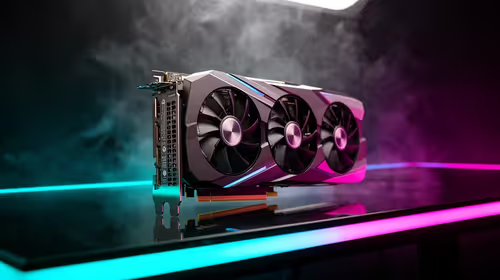
No case-fan set with a confirmed selling price is present in the evidence. The Palit RTX 5060 8GB at R4,800 is a verified graphics-card reference, while the DeepCool PF750 750W PSU at R550 is a separate power reference. Neither establishes fan size, connector support or cooling requirements. Check current dimensions, airflow direction, bearing type, speed range, control method, splitter limits and warranty.
Connect fans only to supported headers or a correctly powered controller. Keep cables clear of blades, clean filters on a schedule and tune curves under a sustained creative load. Compare temperatures before and after each change instead of installing every fan at maximum speed.
Buy a matched set only when the case has useful positions and measurements show a need. Stable, quiet rendering matters more than visual uniformity or an inflated fan count.
Cooling a creator desktop? > Compare Evetech PCs and components after measuring sustained render temperatures.