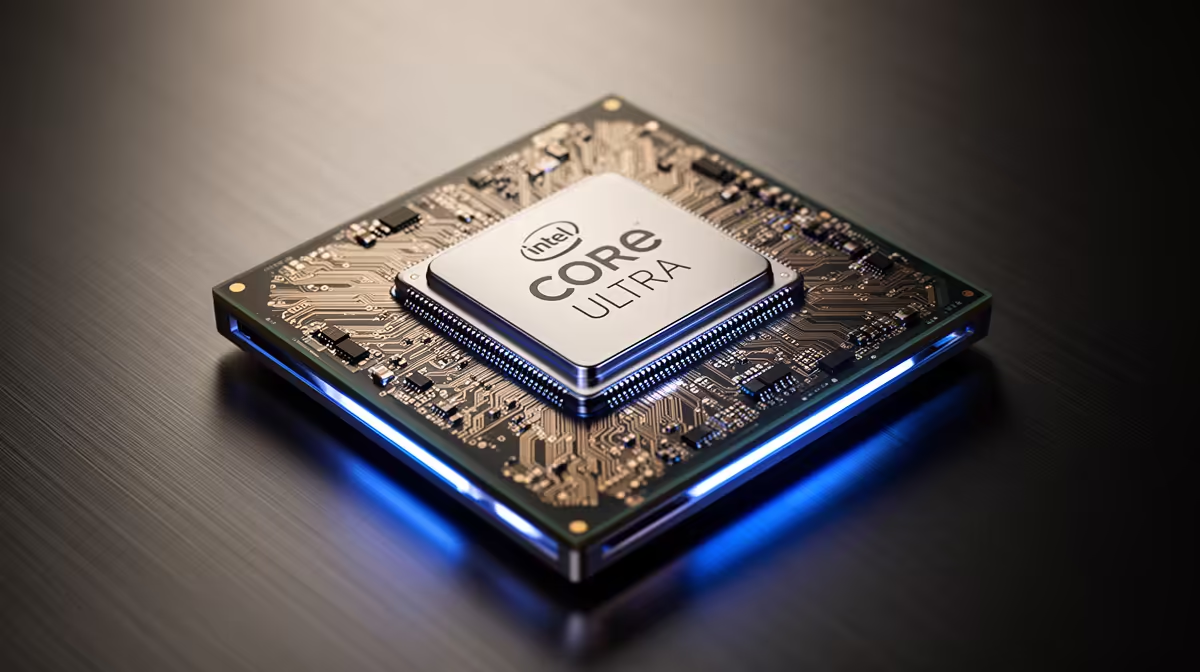
Let's keep this grounded: SA builders chasing 1080p value should treat the Core Ultra 7 265K as the anchor and build outward. The plan here protects your budget while squeezing real frames out of every component.
Quick Answer
For longevity, favour the tier with better components over the cheapest option. A complete Core Ultra 7 265K 1080p build lands around R26,000, with entry rigs near R9,800 and no-compromise versions near R36,000. Target a 1000W-class platform and 32GB of DDR5 so the CPU sustains 240 fps in well-optimised titles without throttling.
Cooling and power for sustained frames
The Core Ultra 7 265K rewards a 280mm or 360mm AIO when you want stable clocks under load. A quality 850W-1000W unit keeps transients in check, which matters more at 1080p than a few extra MHz on paper.
Where the next Rand actually pays off
Once the core hits 240 fps targets, the smartest spend shifts to the display and storage, not a pricier chip. A faster panel or a second NVMe usually feels better than the jump from R26,000 to R36,000 on silicon alone for 1080p gamers.
Matching the GPU to 1080p targets
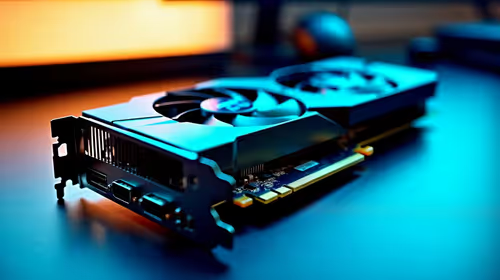
At 1080p the GPU does most of the heavy lifting, so size it to the resolution rather than overspending on the CPU. For 1920x1080 aim for a card that already clears 240 fps in your main titles; pushing past that with a pricier Core Ultra 7 265K pairing rarely returns frames you can feel.
FAQ
How much DDR5 does a Core Ultra 7 265K 1080p build need?
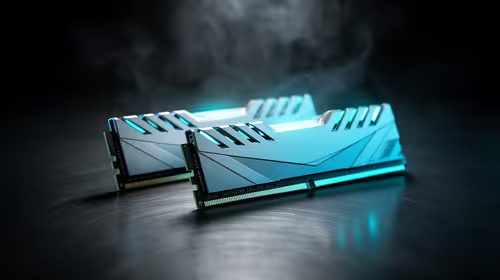
32GB DDR5-6000 is the right target for 1080p and holds up for multitasking. 16GB still runs most games but can limit 1% lows in busy titles, so the move to 32GB is worth it.
What power supply suits a Core Ultra 7 265K build?
An 850W unit covers most single-GPU 1080p systems, while 1000W gives room for top-tier cards. Spending a little more here protects the whole R36,000-class platform from transient spikes.
Is the Core Ultra 7 265K overkill for 1080p?
For pure 1080p gaming it has headroom, so it stays relevant as you upgrade GPUs later. If you also stream or render, that spare CPU power pays off; if not, a cheaper chip near R9,800 may free budget for the screen.
Value Check
If your 1080p frames already clear 240 fps, put the next R9,800 toward a faster panel rather than a pricier chip.