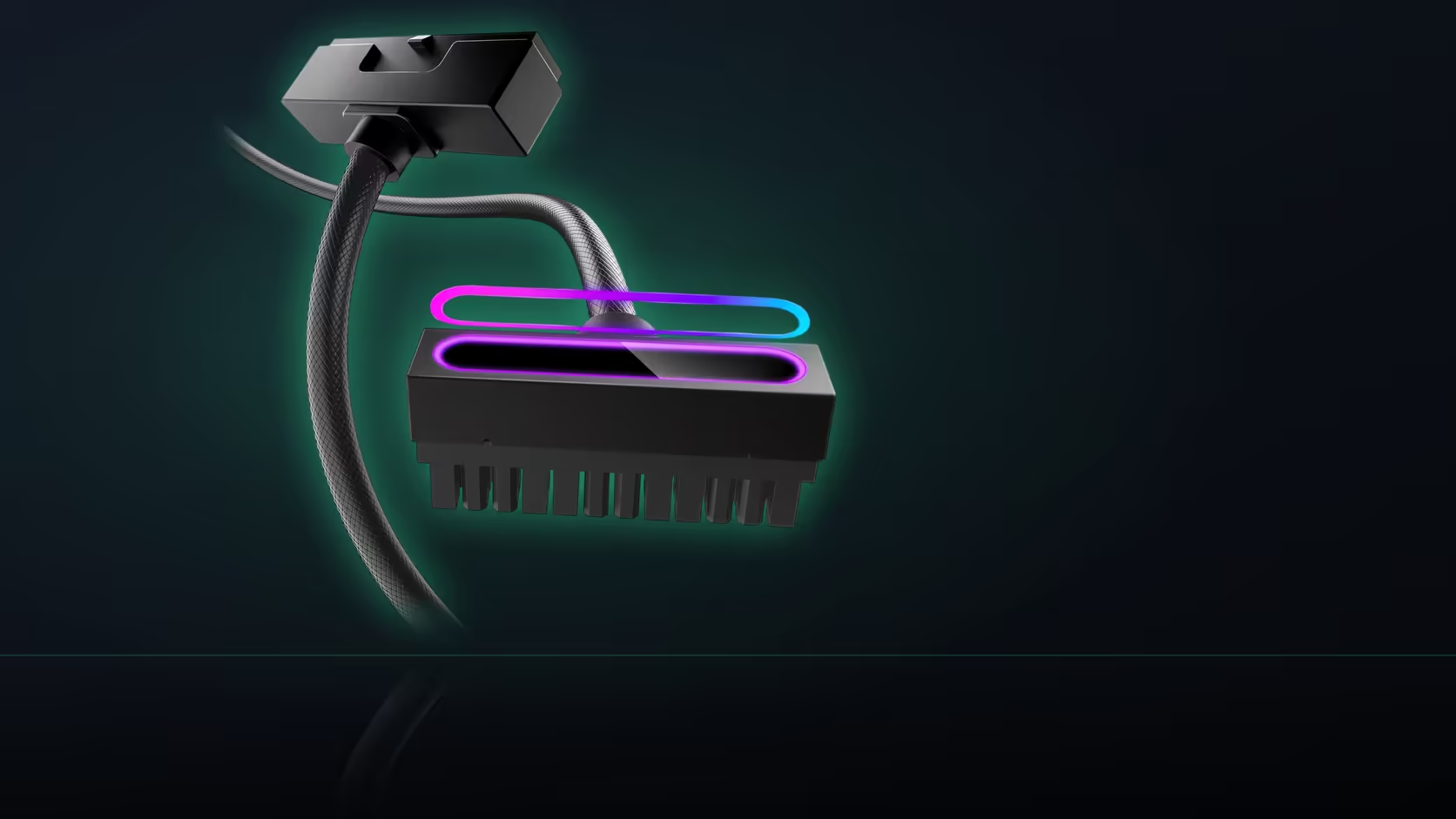
Buying a single Hydrus cable as a first taste of illuminated connectors means picking between two sockets that could not sit in more different positions within a case - one wide open to view, one frequently shadowed by whatever cooler is mounted above it.
Quick Answer
The EPS version costs R499 and the ATX version R599, so the CPU socket is the cheaper place to start. Position decides the rest. The board socket sits in open view on the right edge, while the CPU socket sits at the top where a cooler often shades it.
💵 Why the EPS cable costs less
The EPS extension's lower R499 price reflects a genuinely smaller connector head - an eight-pin plug rather than the ATX cable's full twenty-four-pin one - and the pricing follows that physical difference in scale rather than any gap in build quality or lighting capability between the two. Both are built to the same underlying standard; the EPS piece is simply the smaller of the two jobs.
👁️ Which socket actually gets seen
The main board socket, sitting on the open right edge of most motherboards, wins decisively on raw visibility - nothing typically mounts above or in front of it, so a lit head there sits in direct, unobstructed view through most case windows. The CPU socket occupies a considerably more contested position at the top of the board, frequently partially or fully shaded by whatever cooler - air or liquid - sits directly above it, which can significantly reduce how much of that lit head actually reaches the eye once the build is fully assembled.
🔗 What stays identical between the two
Both cables sync through the exact same standard 5V 3-pin lighting connection to the board, meaning there is no difference in control complexity or compatibility between choosing one over the other - whichever board header you have available, either cable plugs into it the same way. Construction is shared too: both use the identical diamond-frosted PVC jacket over 30cm of 18AWG copper, so nothing about durability or build quality separates the two beyond the connector size itself, and colour choice is identical as well, with both the ATX and EPS versions offered in White and Black.
🎯 Deciding which to buy first
If a tall tower cooler dominates the top edge of your board, the ATX cable is the more sensible starting point, since it sidesteps the visibility problem entirely by lighting a socket the cooler cannot interfere with. If the top edge of your board sits genuinely open - a low-profile cooler, or an all-in-one liquid cooler with its pump block tucked out of the way - the cheaper EPS cable shows just as well and saves R100 in the process. Neither purchase locks you out of the other either: both are entirely separate products, each carrying its own independent lighting lead, so adding the second cable at a later date is a straightforward follow-up purchase rather than something that needs planning around the first. There is more of the category at cable solutions, and a single lit connector that grows into a bigger lighting plan should get a look at NZXT case lighting next.
🏷️ Why the price gap tracks the physical connector, not the effect
It is worth being clear that the R100 difference between the two cables has nothing to do with how impressive or striking the resulting light actually looks once fitted - both use the identical ARGB window design, so neither purchase buys a visually superior lighting effect over the other. The gap exists purely because a 24-pin connector head is a physically larger, more complex piece to manufacture than an 8-pin one, and AsiaHorse prices the two accordingly. Buyers occasionally assume the pricier option must somehow glow brighter or look more premium, and that assumption is simply not supported by anything in the actual product specification.
🧮 Doing the actual maths on a two-cable plan
R499 plus R599 comes to R1,098 for both connectors fitted together, a figure worth writing down plainly before deciding whether to stagger the purchase across two separate paydays or simply commit to both at once. Neither approach is inherently wrong - it depends entirely on how the rest of the build's budget is already allocated, and whether a single striking accent now genuinely satisfies the build's current lighting ambitions or feels like an obvious placeholder for a second connector still to come, quietly waiting on next month's budget before the build feels properly finished.
🧩 Buying both eventually rather than choosing forever
Neither purchase forecloses the other, so treating this as a permanent either-or decision is not necessary. A builder can start with whichever cable better suits the current cooler and case combination, live with that single accent for a while, and add the second one later once budget allows or the build's cooling setup changes in a way that opens up the other socket's sightline. Nothing about fitting one now locks out fitting the other down the line, since each carries its own independent lighting lead and connects entirely on its own terms, with no shared hardware or harness tying the two purchases together in any way.
Frequently Asked Questions
Why is the EPS cable cheaper?
It is a shorter connector serving an eight-pin socket rather than a twenty-four-pin one, and the pricing reflects that smaller head.
Which socket is more visible in a typical build?
The board socket on the right edge, because it sits in open view. The CPU socket is often partly obscured by the cooler above it.
Do both carry the same lighting connection?
Both sync over a standard 5V 3-pin lead, so either plugs into the same kind of board header with no difference in control.
Is the jacket the same on both?
Yes. Both use the diamond-frosted PVC jacket over 30cm of 18AWG copper, so the construction is shared across the family.
Which one suits a first purchase?
If a tall cooler dominates the top of the board, start with the ATX cable. If the top edge is open, the cheaper EPS cable shows well.
Can both be fitted later?
They are separate products and each has its own lighting lead, so adding the second one afterwards is straightforward.
Do colour options differ between them?
Both the ATX and EPS versions are listed in White and Black, so either can be matched to a light or a dark build.
Deciding which lit connector to buy first?
Browse Evetech's power supply range and check whether your cooler shades the CPU socket before choosing.