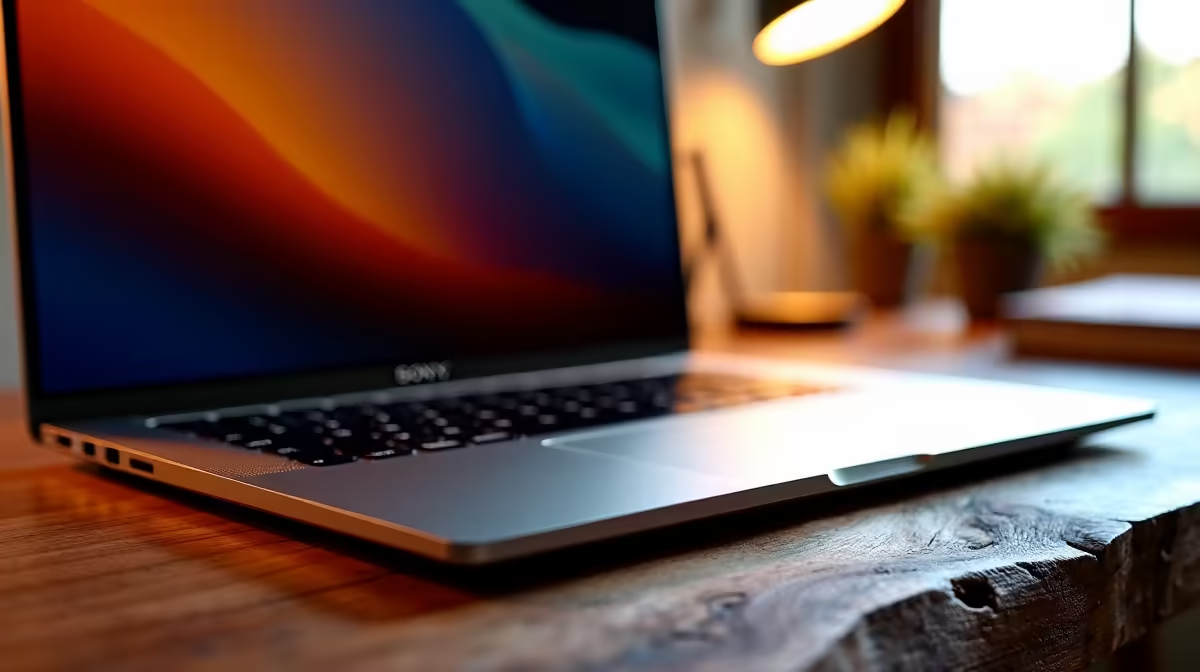
ASUS Vivobook S14 OLED R10,719 suits students who want a sharper screen for notes, slides, research, and light creative coursework on one portable laptop. A creator-focused machine can be enough for studying when the main work is writing, browsing, presentations, online classes, basic editing, and file organisation, as long as you do not expect workstation-level rendering.
What to check before buying
The ASUS Vivobook S14 OLED R10,719 is the most natural fit when screen quality matters. Its OLED spec helps with visual tasks, long reading sessions, design references, and lecture slides where colour and contrast make the desk feel less tiring.
For a more conventional study machine, the ASUS ExpertBook P1503 i5 R9,858 is a sensible lower-cost option. The i5 spec is enough for assignments, spreadsheets, browser research, PDF notes, and video calls without paying for a more powerful i7 model.
The Lenovo IdeaPad Slim 3 i7 R13,400 and ASUS Vivobook X1504VA i7 R13,999 suit heavier multitasking. Their i7 spec makes sense if the student keeps many tabs open, works across documents and presentations, or occasionally edits media for class projects.
Student desk reality in South Africa
At a res desk, digs bedroom, or home study corner, a creator-style machine is useful because it can handle both academic work and creative extras without needing a separate desktop. The Lenovo LOQ RTX3050 R9,500 is different from the slim study picks because its RTX3050 spec gives more room for graphics-heavy tasks, although it is less focused on the light, clean study feel of the ASUS ExpertBook P5405 R12,700.
Ready to choose the right laptop?
Use ASUS ExpertBook P1503 i5 at R9,858 as the student desk benchmark, then check whether its listed spec matches the space, workload, and upgrade path.