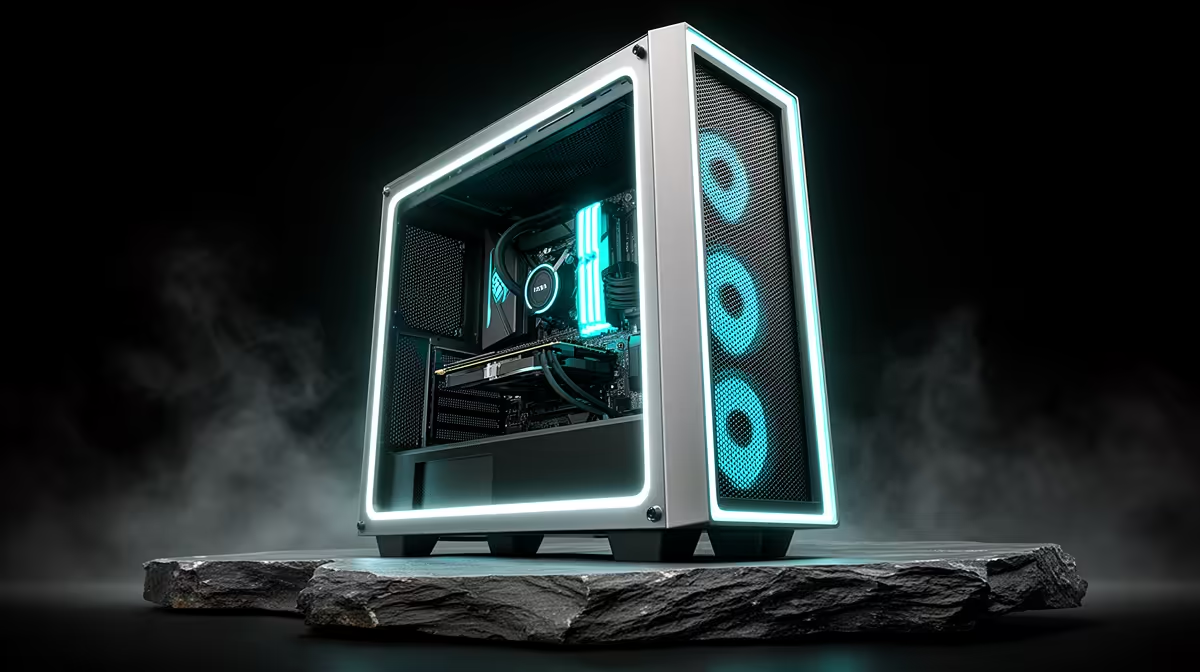
A high-airflow case makes sense for a data science student running long local CPU or GPU jobs. A laptop user or student who trains in the cloud gains little from a large desktop enclosure. Choose the compute plan first, then find a case that fits the parts and keeps them cool without filling the room with fan noise.
Match airflow to the workload
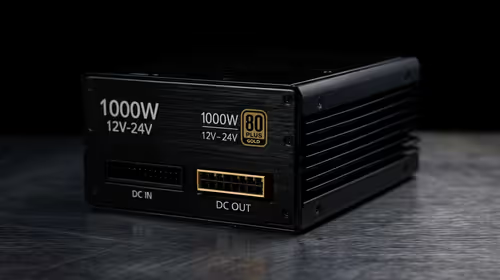
The GAMDIAS AURA GC11 costs R400 in the verified facts, the Antec AX1000 costs R800 and the Evetech REEVE costs R1,300. Check current stock and each product page for fan inclusion, mesh placement, motherboard support, GPU clearance, cooler height and front ports. The price alone cannot tell you which case moves more air.
List the exact motherboard, graphics card, power supply and storage devices. Compare their dimensions with the case limits. Front mesh helps only when cables and drive cages do not choke the intake. Removable filters make cleaning easier in a dusty room, though dense mesh may raise fan speed.
Run a representative notebook, model fit or data conversion for twenty minutes after assembly. Record CPU and GPU temperatures plus noise from the study seat. Adjust fan curves before adding hardware. Choose the smallest case that fits the upgrade path, supports a clear front-to-rear airflow route and stays comfortable during sustained work. Portability may matter more than expansion for a student who moves accommodation.
Housing a student workstation? > Ask Evetech to compare airflow cases and compatible desktop parts.