A processor upgrade can complete the computing side of an AM4 gaming build and still leave the screen completely dark if graphics are overlooked. Do you need a GPU with the Ryzen 7 5800X3D has a definite answer: yes, the CPU requires a discrete graphics card for display output. Its R7,199 price and eight-core specification do not include graphics capability.
Quick Answer
The Ryzen 7 5800X3D cannot produce a picture by itself, so the PC needs a discrete GPU and the monitor must connect to that card. Choose graphics hardware for the intended resolution and games, then confirm motherboard slot access, power-supply connections and case fit. The CPU costs R7,199 separately and also needs its own cooler.
🖥️ Follow the display signal to the right hardware
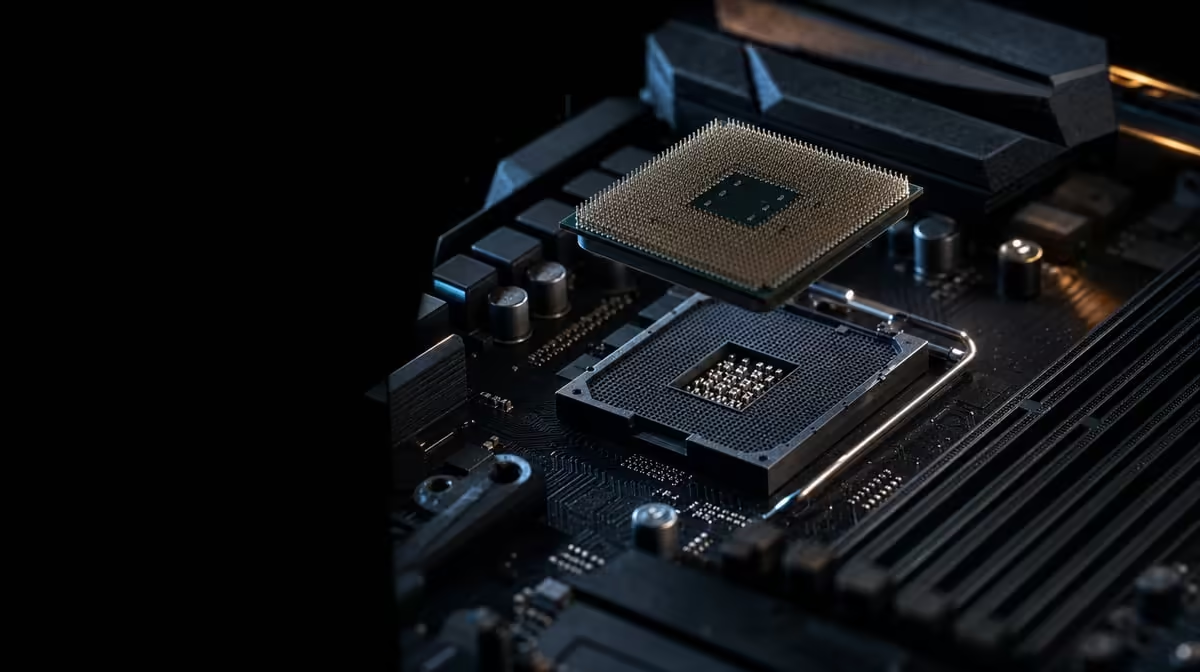
The AM4 motherboard may carry HDMI or DisplayPort connectors, but those sockets only work when the installed processor supplies compatible graphics capability. The 5800X3D does not. A complete system therefore needs a discrete graphics card installed in the appropriate motherboard slot, powered as required and connected directly to the monitor.
This distinction matters during both planning and troubleshooting. A monitor cable attached to the motherboard can leave the user with no image even when the processor, memory and storage are working. Move the display cable to the graphics card before interpreting the black screen as failed CPU compatibility. Confirm the monitor input selection and the card's power leads at the same time.
Starting the machine without a discrete GPU will not create display output from this processor. Fans or lighting may operate, but those signs do not provide a usable screen. The missing image should not be worked around by changing random BIOS settings; complete the required graphics path first.
The AMD CPU category is useful for checking processor-only choices while keeping their graphics requirements visible.
🎮 Choose the GPU around the intended experience
A balanced graphics choice starts with games, resolution, image-quality settings and the desired frame-rate range. The processor's eight Zen 3 cores, 16 threads and 100MB cache can prepare gaming work effectively, but they cannot render the final frames or substitute for a card that is too slow for the chosen visual load.
Resolution changes the division of labour. More demanding visual settings often put greater pressure on the GPU, while high-frame-rate play can expose processor limits more readily. That is why a graphics recommendation cannot be derived from the CPU model alone. Compare tests that use a similar processor, GPU class, game version and settings rather than pairing parts through product tiers.
Physical compatibility is equally important. Check that the motherboard provides the required expansion slot and that no other device blocks it. Measure card length, thickness and cable space inside the case. The power supply must offer the required capacity and connections for the exact graphics card under consideration; assumptions based only on the printed wattage can miss connector or age-related issues.
Monitor capability completes the chain. A card selected for one resolution and refresh target may be excessive or inadequate for another. The correct output port and suitable display cable also matter. These checks make the GPU a planned part of the build rather than an emergency purchase after assembly.
For a broader view of processor platforms and their accompanying requirements, browse Evetech's processor selection.
💰 Include graphics in the real upgrade budget
R7,199 is the processor price. It buys an AM4 Zen 3 CPU with eight cores, 16 threads and 100MB cache. The frequency specification pairs a 3.5GHz base with boost that can reach 4.5GHz. The price does not include a graphics card or CPU cooler, so a new-build budget must add both while an upgrade can count an existing GPU only if it remains capable and compatible.
The CPU is rated at 105W and ships without cooling. Select an AM4-compatible solution with appropriate capacity, case clearance and access to airflow. Evetech's CPU cooler range can help price this separate requirement after measurements are taken.
An existing graphics card can make the R7,199 option more economical, particularly when the current AM4 processor is the identified gaming limit. On the other hand, a system that is already graphics-limited may gain more from funding the GPU first. Use repeatable game tests to find which part is preventing the target experience.
Do not double-count reuse as guaranteed savings. The motherboard must explicitly support the Ryzen 7 5800X3D with the correct BIOS, the power supply must support the graphics card, and the case must fit both the GPU and cooler. Value comes from serviceable parts that pass those checks, not simply from owning older hardware.
🔍 Diagnose a no-image result in a safe order
Begin with the display path. Verify that the monitor is on the correct input, the cable is connected to the graphics card, and the card is fully seated and powered. Recheck any motherboard or GPU power connections disturbed during the CPU installation. Give the board reasonable time to complete its first startup sequence.
If there is still no image, confirm the exact motherboard support entry and required BIOS version. A matching AM4 socket does not establish firmware recognition. If an update was required but not completed, the previous processor may be needed to prepare the board. Keep that old CPU protected until the new system has passed its checks.
Memory can also be disturbed during cooler access. Reseat it according to the board manual and use a simple known configuration for diagnosis. Avoid changing several components at once, because that makes the successful fix difficult to identify.
Once the system displays reliably, confirm CPU and memory detection in the BIOS, load sensible settings and monitor temperatures. Then test graphics and processor behaviour with known workloads. A visible desktop proves the display path; controlled testing proves whether the completed PC is stable.
Game validation should keep the display route unchanged while the processor is assessed. Use one repeatable scene, note the resolution and visual preset, and observe whether the graphics card or CPU becomes the active constraint. This prevents a changed cable, frame cap or game setting from being mistaken for a processor effect. It also reveals whether the chosen GPU is balanced for the experience the buyer actually wants, rather than for an abstract product tier.
Frequently Asked Questions
Can the Ryzen 7 5800X3D produce display output by itself?
No. This processor requires a discrete graphics card for any display output. Motherboard video connectors do not change that requirement.
Where should the monitor cable be connected?
Connect it to an output on the installed graphics card. Also select the matching monitor input and use a cable suitable for the desired display mode.
What happens if the PC is started without a discrete GPU?
The system may power some devices, but it cannot produce a usable image through this CPU. Install and power a compatible graphics card before continuing display diagnosis.
How should the graphics card be chosen for this CPU?
Match it to the intended games, resolution, settings and frame-rate target. Then verify slot access, power requirements, case dimensions, output connections and monitor capability.
Does the graphics requirement change the R7,199 value calculation?
Yes, if the build does not already have a suitable GPU. The processor price excludes graphics, so add the card and supporting power or case costs that the complete system needs.
What should be checked if a newly upgraded PC has no image?
Check the monitor input, cable location, GPU seating and power first. Then verify motherboard BIOS support, processor installation, memory seating and any connections moved during the work.
Ready to plan the processor and graphics path as one working system?
Compare Evetech's AMD CPU options, then build the R7,199 upgrade around a compatible GPU, cooler and supported AM4 board.