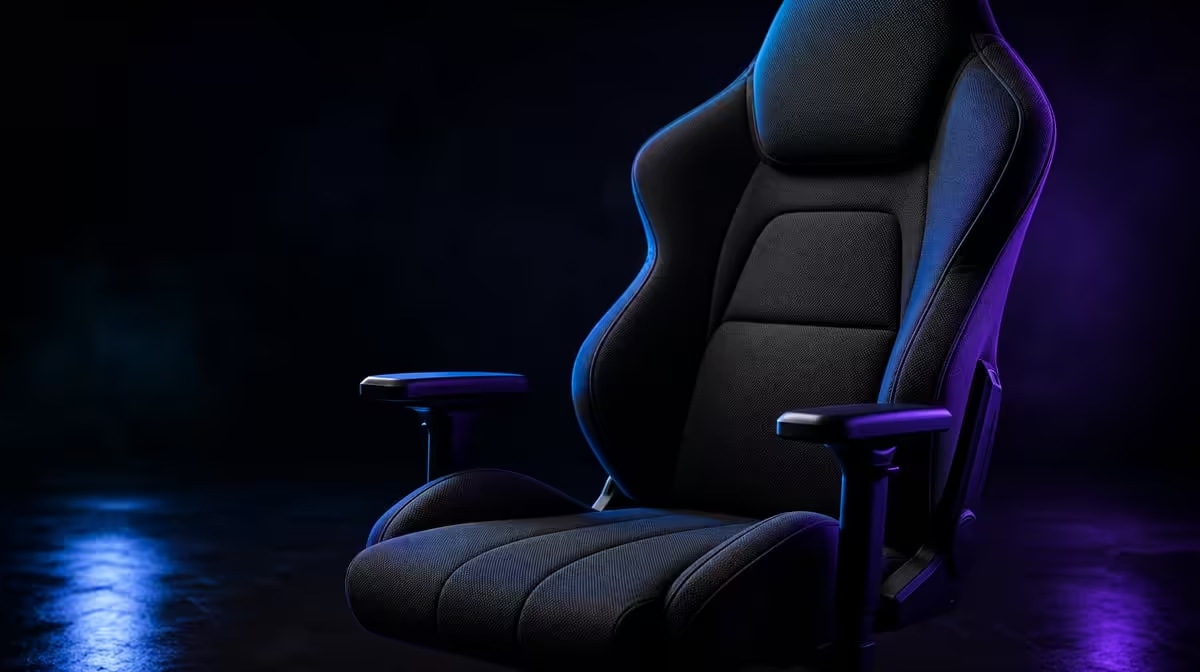
Foam comfort reveals itself after body weight has rested on the cushion for a while. Cold-foam padding for long gaming sessions should be judged through sustained support, pressure feel and the user's movement habits rather than a quick press with one hand.
Quick Answer
The HERO TX uses comfortable cold-foam beneath its premium TX fabric. At R7,899, that cushion material gives buyers a defined seating layer to test over real work and gaming blocks. Posture changes remain necessary, and the foam label establishes neither exact density nor lifespan.
🧊 Test support after the first impression
Sit fully into the seat and allow the body to settle. Notice whether pressure feels spread across the seated area or concentrated at one edge. A cold-foam label does not tell the user where their individual body will meet the cushion.
Continue for at least one representative task. The useful observation is how the seat feels after the initial novelty passes and how easily the user can shift position.
Compare the HERO TX within Evetech's noblechairs chair selection while keeping body fit and desk height in the decision.
Replace the squeeze test
Pressing the seat with a hand reveals little about full-body loading. Sit, type, use a controller and lean back through a normal sequence.
Record any pressure hotspot, sliding or edge contact. Those observations belong to the user and task instead of an unsupported numeric density.
Compare the front edge
Check whether the thighs rest without an uncomfortable edge contact. The feet should have a stable position and the user should not perch forward to escape the cushion.
If desk geometry forces perching, correct chair-to-desk position before blaming the foam.
Move on purpose
Shift the pelvis, stand briefly and return. A supportive cushion should allow ordinary movement rather than reward one rigid pose.
Cold-foam can shape contact, but it cannot erase fatigue caused by uninterrupted sitting.
🧵 Include the TX fabric surface
The textile upholstery is the layer the user feels first, while the foam manages pressure beneath it. Test the combination in normal clothing and room conditions.
Fabric feel, friction and heat perception can change the experience without altering the cushion material. Keep surface and underlying support as separate notes.
Observe warmth and movement together
Remain seated long enough for the initial surface temperature to change. Stand for a short break and return.
The room, clothing and ventilation still influence warmth. Do not assign a cooling claim to the foam.
Check fabric tension visually
Look at the seat surface after use and follow the care guidance appropriate to textile upholstery. Do not turn a temporary visual change into a durability conclusion.
The queue confirms premium TX fabric and comfortable cold-foam, not a numerical wear cycle.
Compare with another real seat
Use the same task duration, clothing and desk when comparing chairs. Keep the feet and controls in similar positions.
A fair trial reveals whether the HERO TX cushion supports the particular user better rather than declaring one foam label universally superior.
🪑 Coordinate back, arms and head
Bring each enlarged 4D pad up to an unshrugged forearm, stopping before shoulder height changes. Place the controls within reach and let the torso use the backrest.
The memory headrest should meet the head only where it feels natural during reclined moments. These upper-body settings can change how weight settles through the cold-foam seat.
Explore the broader gaming-chair range in South Africa if cushion feel needs to be compared with other adjustment packages.
Review seated depth without inventing dimensions
Check whether the user can sit back while keeping the legs comfortable. Do not quote seat measurements that are not established.
Personal fit is demonstrated by body position, not inferred from the 150kg maximum load.
Read the load limit narrowly
The HERO TX has a 150kg maximum. That fact frames supported load, but it does not predict comfort, foam compression or service years for every user.
Fit, habits and care still matter within the limit.
Revisit the cushion after armrest changes
An armrest set too high can shift body weight or encourage leaning. Recheck seat pressure after the shoulders settle and the controls move closer.
This prevents a desk-fit problem from being mislabelled as inadequate foam.
📅 Judge consistency across several days
Use the chair for mixed work and gaming sessions, not one uninterrupted marathon. Keep a note of pressure comfort at the start, middle and end of each block.
Change position and take breaks. The test asks whether the cushion remains supportive within healthy movement habits, not whether it makes stillness consequence-free.
The best-selling chair selection provides another price benchmark for the R7,899 HERO TX; recheck the live product choice before payment.
Avoid lifespan guesses
Cold-foam does not justify a claim that the seat will last a stated number of years. Material, construction, load, frequency and care all influence wear.
Buyers can inspect present support, compare current warranty terms where available and track how the chair behaves through normal use.
Build a return-to-seat test
Stand for several minutes, then sit in the same position. Notice how quickly the user finds a stable contact point and whether the seat encourages a balanced posture.
Repeat on another day. Consistency is more useful than a single softness score.
Price the whole chair
At R7,899, the TX covering and cold-foam define the main seated surfaces. A memory headrest, multi-adjustable arm pads, premium steel levers and the stated 150kg ceiling complete the package; remove unused functions from the value case.
The cushion earns its share when longer sessions remain comfortably supported without requiring the user to perch or compensate.
Compare start-of-day and end-of-day feel
Use the same chair arrangement during an early work block and a later gaming session. Record pressure and ease of movement at similar intervals.
Fatigue elsewhere in the day can influence perception, so treat the notes as a pattern rather than a precise material measurement.
Distinguish settling from bottoming discomfort
Allow the body to sink into its normal contact, then notice whether support remains broad or pressure becomes concentrated. Describe what the user feels without assigning a density number.
Change foot and desk position once to rule out a posture-created hotspot.
Review cushion and surface care separately
Keep loose dirt away from the TX textile and use minimal, appropriate moisture where cleaning is needed. The cushion beneath should not be saturated.
Record visible upholstery condition apart from seated support. One layer can need attention while the other still feels unchanged.
End with a task-based verdict
Choose the longest recurring desk task and complete it without changing the comparison conditions. Note support, repositioning and any pressure that interrupts focus.
The cold-foam has practical value when the user prefers that sustained result, not merely the material name.
Frequently Asked Questions
What does cold-foam change in a gaming chair?
It forms the cushion layer that manages how body weight meets the seat.
Which padding is used in the HERO TX?
The chair uses comfortable cold-foam.
Why is a quick softness test incomplete?
It does not reproduce full-body pressure or the duration of a normal session.
Does cold-foam remove the need to change position?
No. Regular movement and breaks remain important.
How does TX fabric relate to the foam beneath it?
The fabric shapes surface feel while the cold-foam manages support below.
Can the foam material predict an exact lifespan?
No. The material name does not establish a service-life number.
Ready to judge a chair cushion through more than a quick squeeze?
Compare Evetech's gaming chairs using a real desk task, sustained seating trial and your normal movement routine.