Most gaming PCs do not need a Tier A power supply. A well-reviewed mid-tier model with the right capacity, cables and protection behaviour can serve a mainstream GPU for years. Tier A becomes easier to justify when the graphics card is expensive and power-hungry, or when the whole build runs near the upper end of the PSU class. Buy evidence, not a letter.
Quick Answer
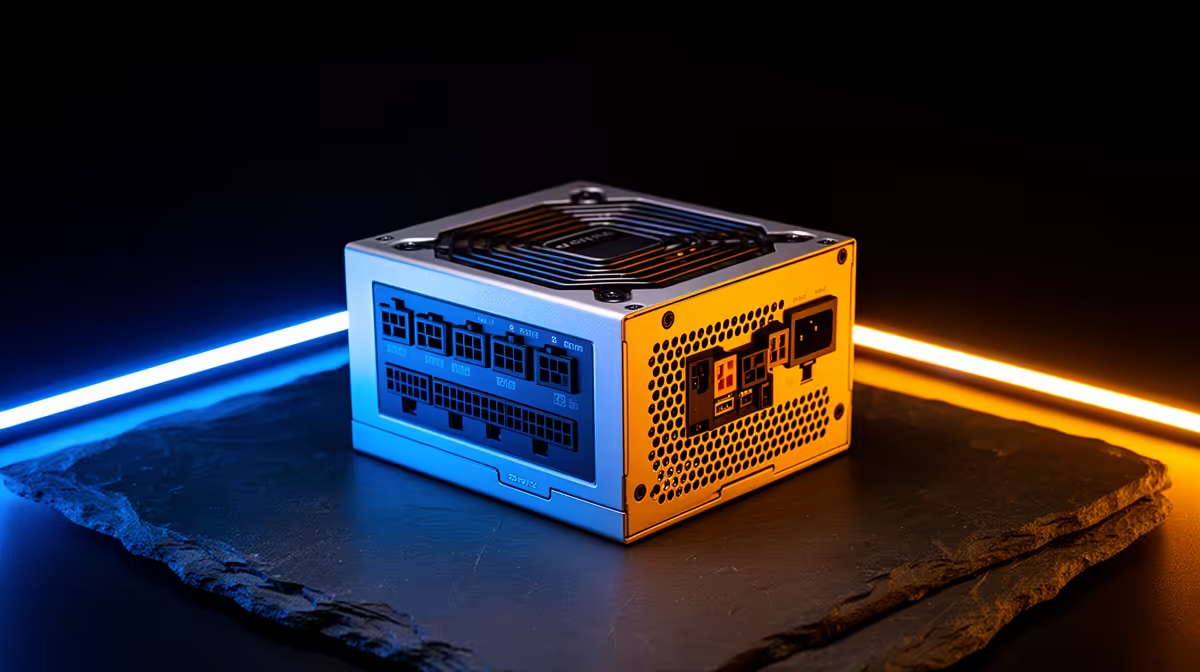
Choose a suitable mid-tier PSU for a typical RTX 5060-class or similar gaming build when independent testing supports the exact model. Consider a top-tier platform for flagship GPUs, heavy combined workloads, low-noise goals or long upgrade plans. A tier placement cannot replace wattage calculation, connector matching or a clear local warranty.
Compare the current Corsair power-supply range and other best-selling PSU models, then search each exact revision in credible reviews and current tier-list notes.
What Tier A Can Tell You
A well-run tier list places products according to its methodology and the evidence available. High placement may reflect strong voltage regulation, low ripple, useful transient response, a broad protection set or proven component choices. Some lists also account for design flaws and power-class suitability.
That is useful screening information. It is not a certification, and it is not official approval from every component maker. List authors can disagree, new evidence can move a product, and a revision may change the internal platform.
Read the notes attached to the ranking. A model can have restrictions that matter to your particular build even when the letter looks reassuring.
Why Mid-Tier Can Be Enough
A mainstream gaming system does not place flagship demand on the power path. An RTX 5060 or RX 9060 XT class card beside a balanced CPU leaves generous capacity on a suitable 550W or 650W supply.
If a mid-tier unit has good model-specific test results, the required native cable and documented protections, it can be a rational match. Paying more for a top placement may bring no visible improvement to gaming.
Budget builders should protect the essentials: adequate 12V output, controlled electrical performance, safe cabling and support. A larger or higher-ranked PSU that forces a weaker GPU choice can make the overall gaming PC worse for the money.
When the Higher Tier Earns Its Cost
Flagship GPUs raise both the component value at risk and the electrical demands. Fast load changes, high connector capacity and sustained heat make the PSU platform more important. A premium supply can offer better measurements, quieter operation, longer warranty or a more suitable modern GPU cable.
Creator work can provide another reason. A system rendering on CPU and GPU together for hours runs differently from a mid-range gaming tower. The extra evidence and operating margin are valuable even when the total wattage calculation fits.
Enthusiast tuning also narrows margins. If you raise power limits, size and test the supply for that behaviour rather than expecting a tier label to absorb it.
Tier Does Not Change Capacity
A Tier A 550W unit cannot take the place of the 850W supply required by a high-power graphics card. The internal design may be excellent, yet the output and cable rating remain bounded.
Size the complete system first. Follow the GPU maker's recommendation, add the actual CPU and workload, then choose the quality level among products with suitable capacity.
This order prevents a common mistake: stretching a respected low-wattage unit because its ranking sounds invincible.
Tier Does Not Guarantee Performance
Once a PSU delivers stable, clean power within its specification, a higher list placement does not add gaming frames. It may reduce fan noise or improve efficiency and warranty, but these benefits need their own evidence.
Do not interpret a stable benchmark result as proof of long-term PSU quality either. Electrical review equipment sees behaviour that software frame counters cannot.
Buy the performance tier of the GPU for your games and the power-supply quality needed to support it. Those decisions work together without being the same thing.
Use Tier Lists With Exact Model Discipline
Match the full product name, wattage and revision. A 650W member of a series may not share every internal detail with its 850W sibling. Regional variants can also differ.
Check the list's update date and methodology. Look for a link to the underlying test or technical basis. Treat a model with little evidence as unknown rather than declaring it good or bad from absence.
Then verify the practical details: combined 12V output, GPU plugs, case fit, acoustic measurements and the warranty that applies in South Africa.
Can a Lower Tier Still Be Safe?
The answer depends on what the tier means in that list. A lower placement may reflect limited features, unsuitable use with demanding hardware, a known issue or missing evidence. Read the reason before deciding.
Do not use a unit where credible tests identify unsafe protection behaviour or poor electrical performance for your load. A modest office PC and a high-end gaming rig also place different demands on the same product.
When the evidence is unclear, choose a better-documented alternative. Power supplies last through several component cycles, so certainty has value.
Installation Can Waste a Good Ranking
Use only modular leads supplied for the exact PSU. Seat every graphics connector and avoid hard bends at a high-power plug. Give the fan a clear intake and clean the case filter.
Return unexplained CPU and GPU tuning to stock for first testing. If the machine shuts down, diagnose cabling, thermals, memory and the supply itself. A top-tier label cannot prevent a loose connector.
Keep the invoice, cable bag and model details. The next upgrade will be easier to assess when the unit's history is documented.
FAQ
Does every gaming PC need a Tier A PSU?
No. A proven mid-tier model with correct capacity and cables can suit a mainstream gaming system well.
When does Tier A matter most?
It is easiest to justify for flagship GPUs, sustained combined workloads, enthusiast tuning or buyers who value premium acoustics and long warranty.
Is a Tier B PSU good enough for an RTX 5060?
It can be, provided the exact model and revision have sound test evidence and meet the complete system requirement.
Does buying Tier A guarantee better performance?
No. It does not increase frame rate once the system already receives stable power. Compare measurable noise, efficiency, cable and warranty benefits.
Match PSU quality to the hardware and evidence, using a sound mid-tier unit for mainstream builds and reserving premium platforms for loads that benefit from them.