The dream of one machine that travels light all week and games like a desktop on weekends is finally practical, and the bridge is an eGPU for laptops. With Thunderbolt 5 enclosures like the Razer Core X V2 delivering up to 140W of charging while driving a full-size desktop graphics card, a thin-and-light becomes a desktop-class rig the moment you dock it. The trade-offs are real, but for the right user this is the most flexible setup money can buy.
Quick Answer
An eGPU is an external enclosure built around a full-size desktop GPU, linked to a laptop via a single Thunderbolt cable. Thunderbolt 5 units such as the Razer Core X V2 supply up to 140W of power to the host while running a full desktop GPU, turning thin-and-light and gaming laptops into desktop-class machines at the desk.
How an eGPU actually works
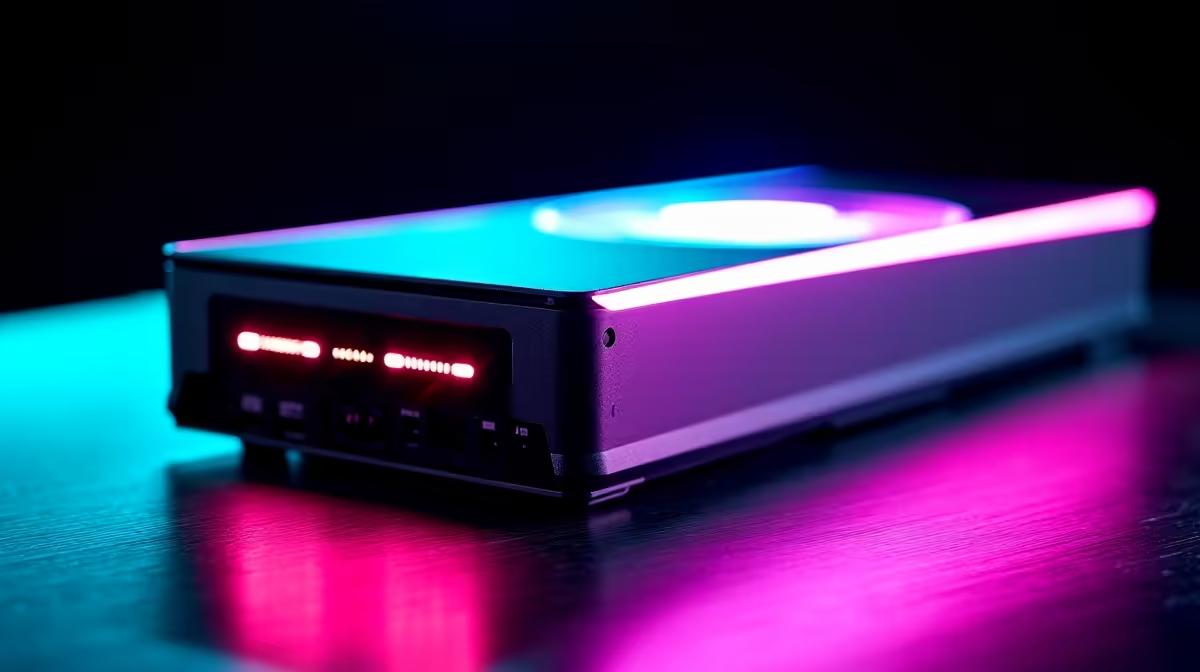
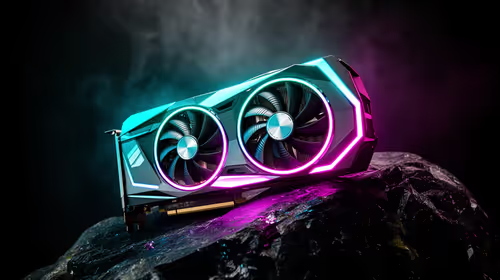
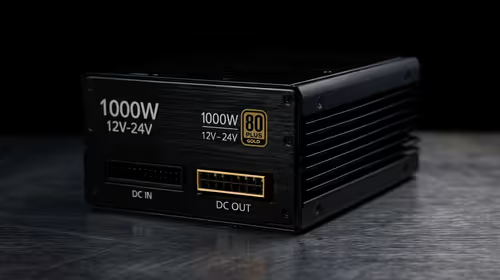
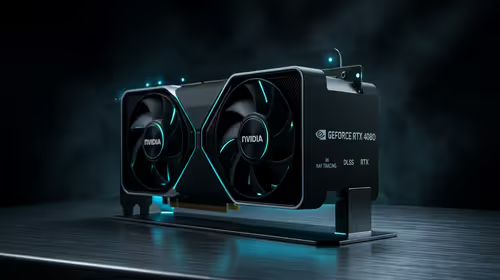
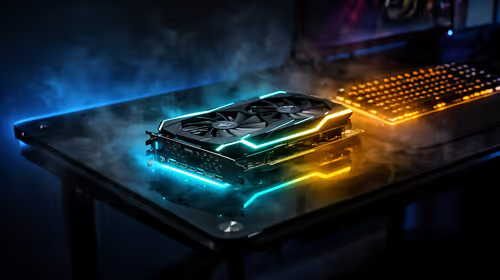
The enclosure houses a full desktop GPU, the same type that fits into a tower build, alongside a dedicated power supply sized to run it. A single Thunderbolt cable carries the data between the card and your laptop, and on Thunderbolt 5 it also delivers up to 140W back to charge the laptop over the same wire. Plug in, and the laptop offloads heavy graphics work to the external card instead of its weak internal one.
The result is a laptop that lives two lives. Undocked, it is a quiet, portable machine for class, work and travel. Docked, it drives modern games and GPU-heavy creative apps at desktop performance levels. One cable switches between the two, which is the whole appeal.
The Thunderbolt 5 leap
Earlier eGPUs were held back by Thunderbolt 3's bandwidth, which throttled fast cards and limited the gains. Thunderbolt 5 roughly doubles available bandwidth, so high-end cards are far less constrained and the performance loss versus a true desktop shrinks. It also raises power delivery to 140W, enough to charge a capable laptop while gaming, removing the second cable older setups needed.
What you need to run one
The non-negotiable requirement is a Thunderbolt port on the laptop, ideally Thunderbolt 4 or 5. USB-C alone is not enough; the port must specifically support Thunderbolt, marked with the bolt symbol. Without it, an eGPU simply will not connect. For understanding Thunderbolt connectivity and the docking ecosystem that underpins these setups, browsing the Thunderbolt docks at Evetech gives a practical starting point when you are sizing up compatible hardware.
You also need the enclosure itself, a desktop graphics card to put in it, and a monitor for best results. That last point matters, which the next section explains.
The performance trade-offs, honestly
An eGPU does not quite match the same card in a desktop, because the Thunderbolt connection adds a small overhead compared to a card slotted directly into a motherboard. On Thunderbolt 5 this gap is much smaller than it used to be, but it exists, and it is most noticeable at very high frame rates.
There is a second, often overlooked catch. Driving the laptop's own internal display through an eGPU costs extra performance, because the frames have to travel back over the same cable to reach the screen. Connect an external monitor directly to the enclosure instead, and you avoid that round trip and get the best results. For desk use this is no hardship, since an external screen is usually what you want anyway.
Who an eGPU suits
This setup is ideal for someone who needs one machine for two contexts: a student or professional who carries a thin-and-light all day and wants real gaming or rendering power at home, or a gaming-laptop owner who wants to push beyond the internal GPU when docked. It is not the cheapest path to performance, but it is the most flexible, and it lets you upgrade the graphics card later without replacing the laptop.
Who should look elsewhere
If you never move your machine, a desktop gives more performance per rand and easier upgrades. If you want maximum portability with no desk dependency, a gaming laptop with a strong built-in GPU makes more sense. The eGPU shines specifically when you genuinely live in both worlds.
The total cost to consider
An eGPU setup has three layers of cost: the enclosure, the GPU itself, and the monitor (if you do not already have one). Entry-level enclosures with Thunderbolt 4 support start at a few thousand rand; Thunderbolt 5 enclosures cost more. The GPU is the largest variable, ranging from a budget mid-range card to a high-end option, and you can upgrade it later without replacing the enclosure. That upgradeability is part of the appeal: the enclosure is a one-time purchase that accommodates future graphics generations, making the total cost of ownership more predictable than buying a new laptop each generation.
For GPU pairing, match the card's performance tier to what Thunderbolt can feed it. A top-tier GPU in a Thunderbolt 4 enclosure will not reach its potential because bandwidth is the limit; a mid-range to high-range GPU is the sweet spot where the interface does not become the bottleneck.
Building the setup around it
Think of the eGPU as the hub of a docked workstation. One Thunderbolt cable can carry graphics, charging, an external monitor and peripherals at once, so the laptop becomes a desktop with a single connection and reverts to a portable machine when you unplug. Matching the right dock and cabling to your laptop's port is what makes that seamless, and the best-selling GPUs at Evetech help you pick a card that suits both the enclosure and the games or apps you run.
Frequently Asked Questions
Do I need a Thunderbolt port to use an eGPU?
Yes. An eGPU requires a Thunderbolt port, ideally Thunderbolt 4 or 5, marked with the bolt symbol. A plain USB-C port without Thunderbolt support will not work with an external graphics enclosure.
Does an eGPU perform as well as a desktop?
Not quite. The Thunderbolt connection adds a small overhead versus a card installed directly in a desktop. Thunderbolt 5 narrows that gap significantly, but a true desktop still edges ahead, especially at very high frame rates.
Should I use the laptop screen or an external monitor with an eGPU?
Use an external monitor connected to the enclosure for the best performance. Driving the laptop's internal display sends frames back over the cable, which costs speed. An external screen avoids that round trip.
Can a Thunderbolt 5 eGPU charge my laptop?
Yes. Thunderbolt 5 enclosures such as the Razer Core X V2 deliver up to 140W of power, enough to charge many capable laptops while gaming, so you no longer need a separate charging cable.
Is an eGPU worth it over buying a desktop?
It is worth it if you genuinely need one machine for both portability and desktop-class power. If you never move your setup, a desktop offers more performance per rand and simpler upgrades.
Want a laptop that travels light and games hard at the desk? Start with the right connection: explore the docking station range at Evetech to confirm your Thunderbolt setup, then pair it with a desktop card to build a docked rig that performs.