Buying an eGPU dock and discovering it needs a power supply you do not own is an expensive surprise. The eGPU power supply question is the first one to answer before you spend, because docks split into two camps: those that take a standard ATX or SFX PSU you provide, and those that ship with power built in. Get the form factor and wattage right up front and everything else in the build slots in cleanly.
Quick Answer
eGPU docks divide by how they handle power. The Minisforum DEG2 accepts a standard ATX or SFX PSU through 24-pin and 8-pin inputs, so you supply your own. The Razer Core X V2 ships without a PSU and you add one. Match the PSU wattage to your graphics card and the form factor to the dock before buying, or you will hit a costly incompatibility.
Why eGPU Docks Handle Power Differently
An external GPU dock takes a full desktop graphics card and links it to your laptop, usually over Thunderbolt or USB4, to deliver real graphics power. A desktop GPU draws far more than a laptop port can supply, so the dock must provide that power on its own. Manufacturers solve this two ways: some build the power supply into the enclosure, and others leave the PSU bay empty so you fit your own. Knowing which kind you are buying decides whether you need to budget for a separate PSU. The graphics cards that go inside these docks are the same desktop models in the GPU best sellers at Evetech, so the power requirement matches a normal desktop card.
Docks That Need Your Own PSU
The Minisforum DEG2 Approach
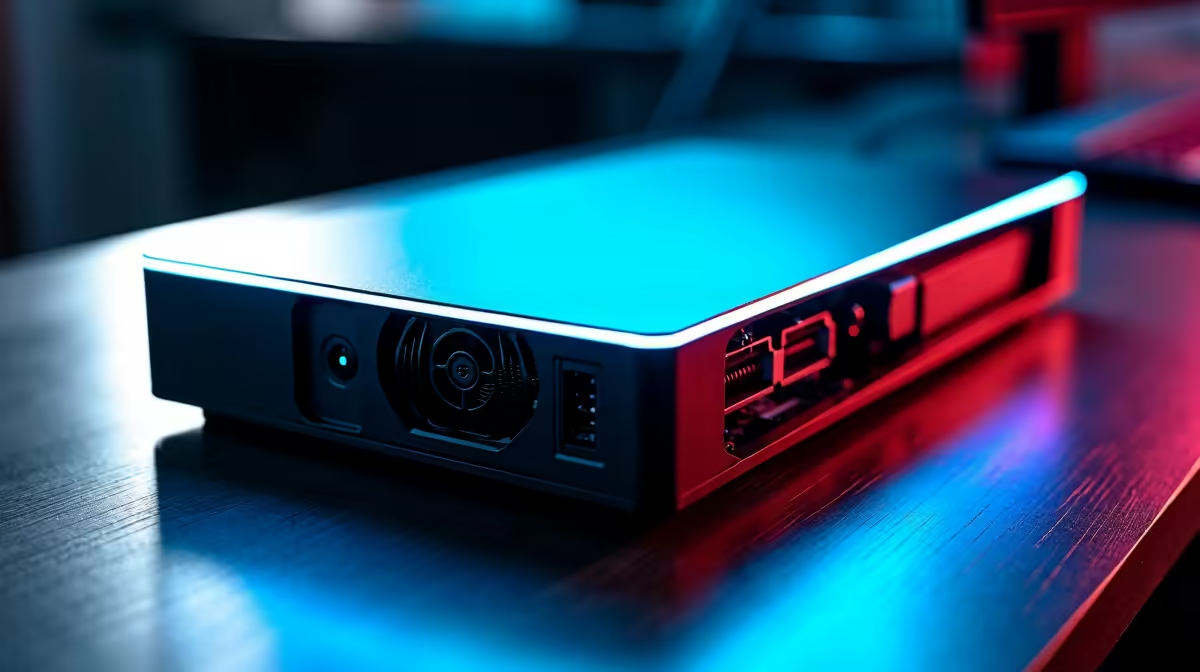
The DEG2 is an open-frame style dock that takes a standard PSU you supply. It accepts both ATX and SFX power supplies through a 24-pin motherboard connector and an 8-pin input, the same connectors a desktop PSU already provides. This gives you flexibility: you can fit a full-size ATX unit you already own or a compact SFX one to keep the footprint small. The trade-off is that the PSU is a separate purchase and you need to choose its wattage and form factor yourself.
The advantage of this design is freedom. You are not locked into a fixed power budget, so if you upgrade to a more demanding card later, you swap the PSU rather than the whole dock. The catch is the homework: you have to make sure the PSU has the right connectors and enough wattage for the card you plan to run.
Matching the PSU to the Card
Size the PSU to the graphics card plus a safety margin. Check the card's recommended PSU wattage and add headroom, since running a PSU near its limit causes instability under load. Confirm the PSU has the PCIe power connectors the card needs, as modern high-end cards use multiple connectors or the newer 12-pin standard. A PSU that fits the dock's inputs but cannot feed the card's connectors is no use.
Docks That Ship With or Without Power Built In
The Razer Core X V2
The Core X V2 ships without a PSU, so like the DEG2 you add your own power supply sized to your card. Earlier Core X models included a built-in power supply, which is the simpler plug-and-play route since you only choose a card. The shift to a PSU-free design gives buyers the same flexibility as open-frame docks: pick the wattage and connectors that suit the card rather than being capped by a fixed internal unit.
Built-In PSU Docks
Other docks include a fixed internal power supply rated for a certain wattage. These are the easiest to buy because the power side is solved, but the fixed rating caps which cards you can run. If a built-in PSU is rated for a mid-range card, you cannot drop in a top-tier card that exceeds its budget. Convenience versus flexibility is the core trade-off across the whole category.
Form Factor: ATX Versus SFX
The two PSU form factors differ in size. ATX is the full-size standard, common, often cheaper for a given wattage, and easy to source, but it takes more space. SFX is the small-form-factor standard, more compact and tidier for a desk eGPU, though usually pricier per watt. Docks like the DEG2 accept both, so choose based on how much room you have and whether you already own a suitable unit. Check the dock's stated clearance before assuming a full ATX unit fits.
Putting It Together Before You Buy
Work in this order. First, identify your dock and whether it includes a PSU or expects you to add one. Second, pick the graphics card and note its recommended wattage and power connectors. Third, choose a PSU with enough wattage, the right form factor for the dock, and the connectors the card needs. Doing the homework in that sequence avoids the classic mistake of buying a dock and card, then finding the PSU does not match either. For broader desk connectivity beyond the eGPU itself, Evetech's docking station range spans the wider category these enclosures sit within.
Frequently Asked Questions
Do all eGPU docks come with a power supply?
No. Some ship with a built-in PSU for plug-and-play simplicity, while others, including the Minisforum DEG2 and the Razer Core X V2, expect you to add your own. Always confirm which kind a dock is before buying so you can budget for a separate PSU if needed.
What PSU form factor do I need for an eGPU?
It depends on the dock. The DEG2 accepts both ATX and SFX, so you choose based on space and what you own. ATX is larger and often cheaper per watt; SFX is more compact for a tidy desk setup. Check the dock's clearance before assuming a full ATX unit fits.
How much wattage does an eGPU PSU need?
Match the graphics card's recommended PSU wattage and add headroom, since running a PSU near its ceiling causes instability under load. A demanding card may want a high-wattage unit, while a mid-range card needs much less. Also confirm the PSU has the card's PCIe power connectors.
Why does the Minisforum DEG2 use 24-pin and 8-pin inputs?
Those are the same connectors a standard desktop PSU provides, the 24-pin motherboard connector and an 8-pin power input. Using them lets the DEG2 accept any compatible ATX or SFX PSU, giving you the freedom to pick and later upgrade the power supply.
Can I reuse an old desktop PSU for an eGPU dock?
Often yes, if it fits the dock's form factor and inputs, has enough wattage for the card, and provides the right PCIe power connectors. An older PSU may lack the newer 12-pin connector that recent high-end cards use, so check the connectors against the card first.