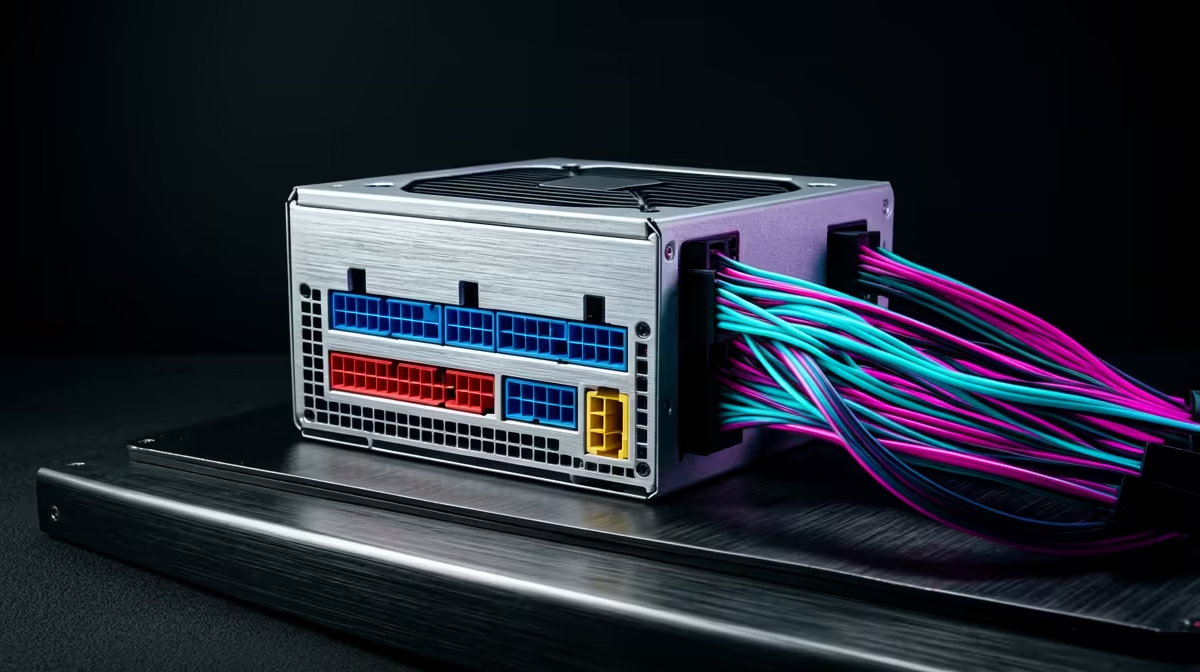
Strategy and sim games stress the system in bursts of heavy calculation, so the ATX 3.1 PSU pick should favour stability and headroom. This guide matches options to that load. Start from the spec your build is short on and the rest narrows fast.
Quick Answer
For most SA buyers the value ATX 3.1 PSU sits in the mid tier, not the flagship. An ATX 3.1 unit with a native 12V-2x6 connector spans roughly R2,000 (650W) to R5,500 (1000W) and is the safe choice for RTX 40/50-series cards. Pick the tier that matches your real build, then let stock and rand value decide the exact model.
Headroom For Heavy Calculation
Strategy and sim games spike the system in bursts, so the ATX 3.1 PSU should carry headroom for those peaks. A tier rated comfortably above your average load keeps late-game turns and large maps stable.
Value For Sim Builds
Most strategy builds are well served by the mid-tier ATX 3.1 PSU. It absorbs the calculation spikes without the flagship premium, leaving rands for more RAM or a faster CPU.
Pro Tip
Match the ATX 3.1 PSU to the part it serves, not to the biggest number on the shelf. Headroom you never use is just spent rands.
FAQ
Why choose ATX 3.1 over ATX 3.0?
ATX 3.1 tightens the power-excursion spec and standardises the safer 12V-2x6 connector. For a new RTX 50-series build it is the better long-term buy.
How do I compare ATX 3.1 PSU value across brands?
Compare on rand-per-real-benefit and warranty, not headline specs. Two models at the same tier often differ more on support and reliability than on the numbers.
What should I check before buying a ATX 3.1 PSU?
Confirm the fit spec, the warranty length, and SA stock before price. A great deal on a part that does not fit or lacks local support is no deal at all.
Shortlist Your ATX 3.1 PSU
Browse the Evetech atx 3.1 power supplies range, filter to your build's tier, and pick the model that clears your real demand with the best rand value.