



PCIe 5.0 vs PCIe 4.0 for Video editing in 4k in SA
PCIe 5.0 vs PCIe 4.0 for video editing in 4k is mainly about fit, features, compatibility, cost, and upgrade path, not one automatic winner. SA buyers should match the choice to the setup.
Read moreEvery esports mouse in SA should be shortlisted around the job it must do. South African buyers should compare sensor, shape, weight, and wireless latency, warranty path, and upgrade room before treating any pick as best.
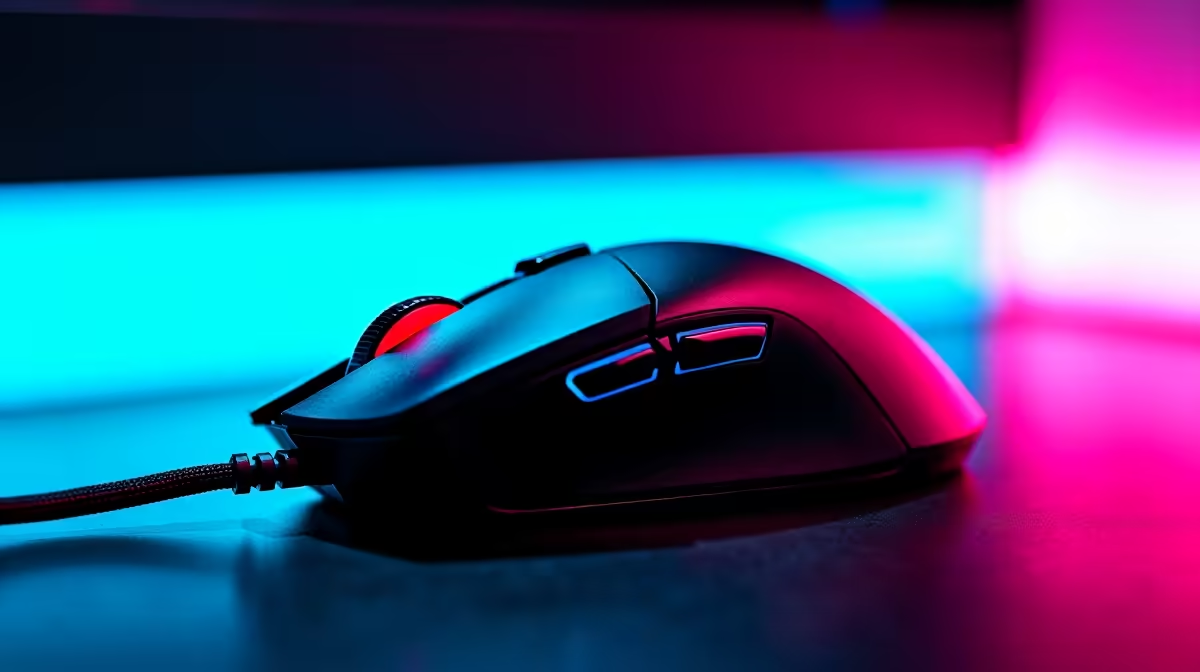
For decision-makers choosing an esports mouse, whether for yourself or a team, the feature grid clarifies the trade-offs: weight, sensor, switch type, wireless, and shape. Beyond the spec sheet, grip fit decides comfort, so the grid balances measurable specs with the human factor.
On a feature grid, the best esports mice are sub-60g wireless models with flagship optical sensors, optical switches, low-latency 2.4GHz wireless, and a shape matched to grip style, typically R1,000 to R2,500 at Evetech. For a confident pick, weight the sensor and weight for performance, the switch type for longevity, and the shape for comfort, since an ill-fitting shape undermines even the best internals.
Five rows lead the choice. Weight: sub-60g is the competitive target for fast, fatigue-free aim. Sensor: a flagship optical unit with no smoothing or acceleration. Switches: optical switches avoid the double-click failures common in older mechanical ones. Wireless: a low-latency 2.4GHz dongle, not Bluetooth, for competitive response. Shape: palm, claw, or fingertip fit. Map these to your hand size and game and the choice becomes clear and confident.
For a single competitive player, pick the lightest comfortable shell with a flagship sensor and optical switches. For a team or LAN setup, standardise on one model so muscle memory transfers between stations, and confirm each unit has a high polling rate (1000Hz or more) and a quality mousepad. A wireless model removes cable drag, but keep charging cables on hand. The shape decision is personal, so let each player confirm grip fit before committing to a bulk choice.
out multiple players, let each confirm grip fit on the shape first, standardising the model only works if the shape suits every hand.
Weight the sensor and weight for performance, switch type for longevity, and shape for comfort. A sub-60g wireless mouse with a flagship sensor and the right shape is the confident pick.
Yes, optical switches avoid the double-click failures that affect older mechanical switches over time. They improve long-term reliability for heavy competitive use.
Yes, so muscle memory transfers between stations, but let each player confirm the shape suits their grip first. The shape is the one personal factor a spec grid cannot decide.
Use the weight, sensor, switch, and shape rows to pick a confident esports mouse, in stock at Evetech.
PCIe 5.0 vs PCIe 4.0 for video editing in 4k is mainly about fit, features, compatibility, cost, and upgrade path, not one automatic winner. SA buyers should match the choice to the setup.
Read more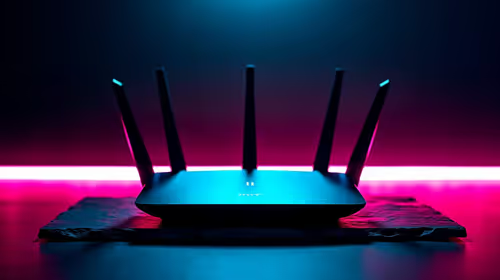
Wi-Fi 7 vs Wi-Fi 6e for competitive esports comes down to router support, latency goals, device compatibility, and coverage. SA buyers should match the choice to the real network setup.
Read more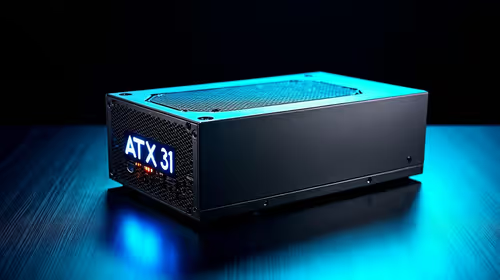
ATX 3.1 vs ATX 3.0 for mMO and live-service games buyers - what changes is mostly about compatibility, budget, upgrade path, and setup fit. SA buyers should check device support and real needs before expecting a clear win from either option.
Read more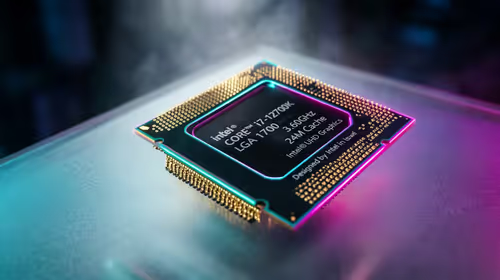
LGA 1851 vs LGA 1700 can affect Twitch and YouTube streaming when gaming and encoding share CPU resources. For SA creators, the real-world difference depends on encoder choice, memory support, motherboard cost, thermals, and upgrade plans.
Read more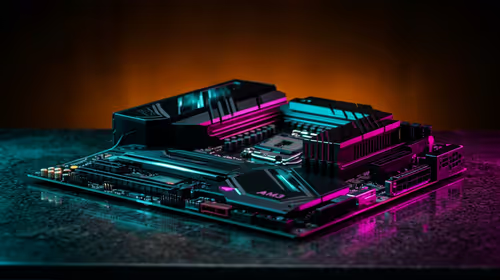
X870E vs X670E for aaa single-player gaming is mainly about fit, features, compatibility, cost, and upgrade path, not one automatic winner. SA buyers should match the choice to the setup.
Read more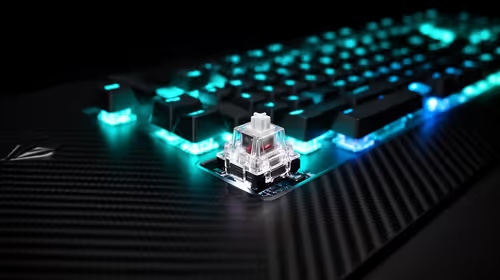
Hall Effect switches vs Mechanical switches for mMO and live-service games is mostly about compatibility, budget, upgrade path, and setup fit. SA buyers should check device support and real needs before expecting a clear win from either option.
Read more
A fake 113GB GTA VI ISO reportedly used empty padding around a small malware payload. SA gamers should delete unofficial builds, keep Windows security active and wait for official channels.

Wi-Fi 6E vs Wi-Fi 6 matters for 4K video editing when files move across a network. The real-world difference between Wi-Fi 6E and Wi-Fi 6 for video editing in 4K depends on NAS access, cloud uploads, router range, and SA creator workflows.

The difference between PCIe 5.0 and PCIe 4.0 for SA gamers is mostly bandwidth headroom. Compare GPU slot needs, NVMe speed, motherboard support, and upgrade timing before paying extra for a newer platform.

Gaming PC stuck pixel checks in South Africa should confirm the monitor fault first. Use colour tests, screenshot comparison, cable swaps, display menu checks, and clear photos before deciding on support.

Shokz OpenFit Air 2 earbuds weigh 7.2g each and use a redesigned dual-driver open-ear layout. SA buyers should choose them for comfort and awareness, not maximum isolation.

AMD's current driver now lists a Radeon RX 9050 4GB, while product coverage details a narrowed memory system. SA buyers should weigh the low VRAM ceiling against current local Radeon options.

Samsung Display has demonstrated a 16-inch 2.5K OLED laptop panel running at 300Hz. SA buyers should wait for a named notebook, full panel specifications and a local price before planning an upgrade.

Microsoft says some Windows 11 game crashes after recent updates are linked to RGB-related drivers. Affected SA gamers should confirm the update and driver before using the published registry workaround.
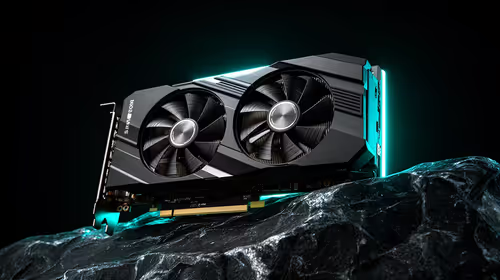
RTX 5090 on a 650W PSU is a tight pairing with very limited headroom. For SA gaming PCs, focus on total system draw, PSU quality, connector support, CPU choice, and avoid OC plans unless the full build is carefully power-limited.
PCIe 5.0 vs PCIe 4.0 for video editing in 4k is mainly about fit, features, compatibility, cost, and upgrade path, not one automatic winner. SA buyers should match the choice to the setup.
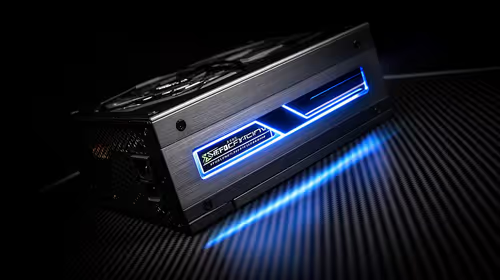
850W PSU safety for RTX 5090 is plausible with a quality unit and balanced parts. In SA, confirm connector support, CPU power draw, case airflow, PSU age, and spare capacity before building around 850W.
Wi-Fi 7 vs Wi-Fi 6e for competitive esports comes down to router support, latency goals, device compatibility, and coverage. SA buyers should match the choice to the real network setup.