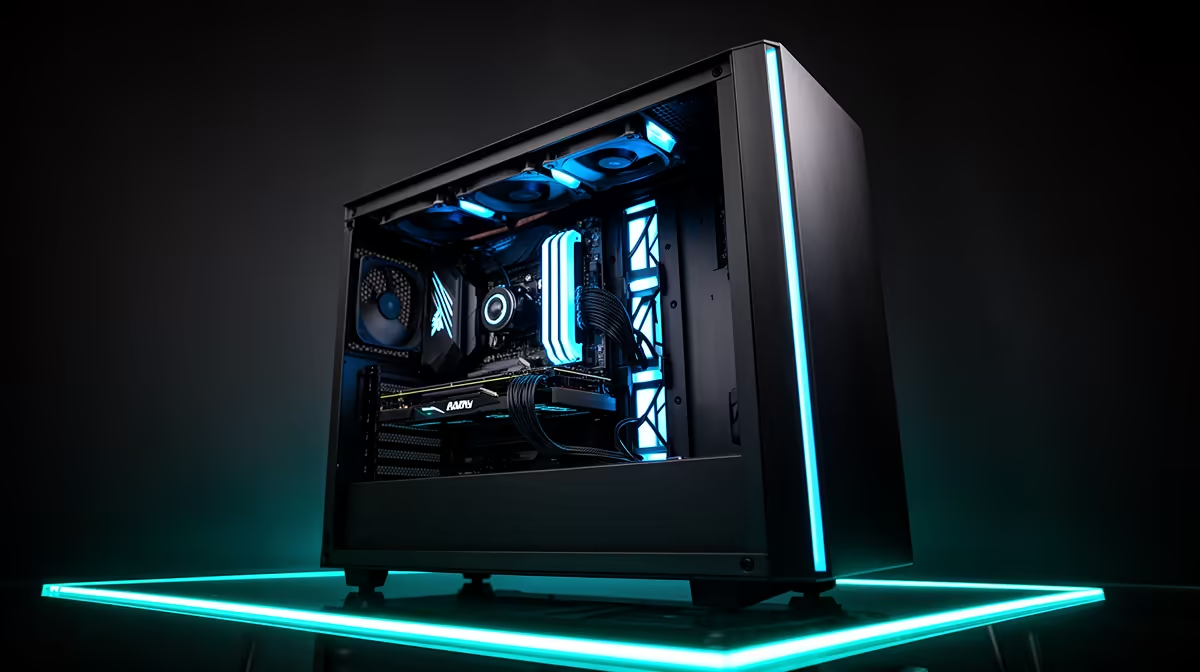
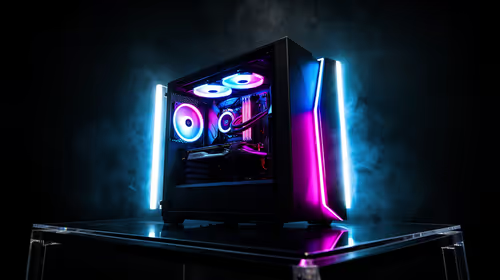
Case listings throw around clearance numbers as if they are all measuring the same thing, but GPU length, cooler height and cable depth are three completely separate figures that happen to share a unit of measurement. Confusing one for another is how builders end up with a graphics card that will not close the side panel, or a cooler that fits fine but leaves no room to route cables. This breakdown of an atx mid-tower case walks through all three numbers and what each one actually limits.
Quick Answer
This case lists three separate clearance figures: 330mm for graphics card length, 175mm for CPU cooler height, and 24mm for cable management depth, and all three apply at the same time rather than trading off against each other. At R1,499, the chassis is sized so a long card, a tall air cooler and tidy cable routing can all coexist in the same build.
🎮 GPU length clearance
What 330mm measures
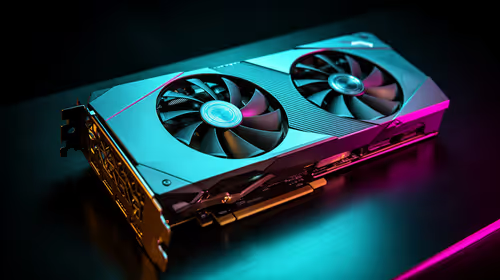
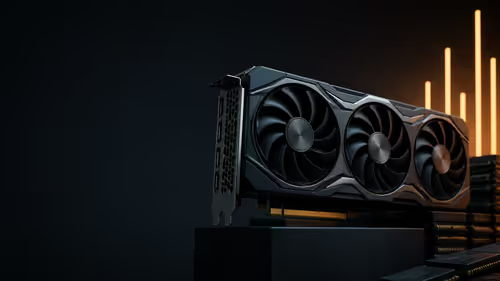
This figure runs from the back of the motherboard's expansion slot bracket to the front of the case, or to the nearest obstruction such as a front radiator bay, whichever comes first. A card measuring 330mm or less down its full length, including any shroud overhang past the PCB, will clear this case with room to spare.
Where builders get caught out
Some listings quote a graphics card's PCB length rather than its full shroud length, and the shroud is often longer, so it is worth checking a card's overall length rather than just the circuit board dimension before assuming it will fit.
Why this figure changes when a radiator is fitted
Fitting a front radiator inside the same bay that GPU clearance is measured against can shorten the usable length for a card, since both share the same front section of the frame, so it is worth checking a case's clearance figure again once a specific radiator size has been decided on rather than relying on the GPU number alone.
🌬️ CPU cooler height clearance
What 175mm measures
Cooler height clearance runs from the CPU socket on the motherboard to the inside face of the side panel, which in this case is a sliding tempered glass panel rather than a solid metal one. Any tower air cooler at or under 175mm total height, measured the same way from socket to fan top, will close without contact.
Liquid cooling as an alternative
Builders who want to sidestep the cooler height question entirely can use the case's separate 360mm front radiator support instead of a tall air tower, since an all-in-one liquid cooler's radiator sits in the front bay rather than stacking height above the socket.
Measuring an existing cooler at home
If a cooler's box or spec sheet does not list total height, measuring from the base plate that sits on the CPU to the highest point of the fan shroud with a tape measure gives a reasonably accurate figure to compare against the case's clearance before committing to a build.
🧵 Cable management depth
What 24mm measures
This is the gap between the back of the motherboard tray and the inside of the side panel, which is where power, fan and front panel cables get tucked away once a build is finished. It is a tighter figure than the other two clearances, which is normal for a mid-tower this size, and it rewards planning cable routes before final assembly rather than after.
Making the most of limited depth
Using a modular power supply, routing the largest cables first along the main channel, and leaving thinner headers for last all help fit routing into 24mm without bulging the panel. The case's full listing shows all three figures together, which is worth bookmarking while planning a build around it.
What happens if the panel does not close flush
A slight gap or bulge along the side panel is usually a sign that cables are bunched rather than routed flat, and going back to redistribute a thick cable bundle along the channel, rather than forcing the panel shut, avoids stressing the glass or the rail mechanism over time.
📋 Reading clearance specs across different cases
Not every case manufacturer measures these three figures the same way, so when comparing more cases from EINAREX or any other brand, check whether GPU clearance accounts for front radiator bays and whether cooler height is measured to the fan top or the heatsink fins alone, since small differences in method can make two similar-sounding specs mean different things in practice. Builders wanting to add cooling capacity beyond the stock three fans can also look at spare case fans sized for this class of chassis.
Frequently Asked Questions
Are GPU clearance, cooler height and cable depth measured from the same starting point?
No, each is measured differently: GPU length runs front to back, cooler height runs from the socket upward, and cable depth is measured sideways behind the motherboard tray.
Can I max out all three clearances in one build?
Yes, this case is sized so a 330mm graphics card, a 175mm cooler and full use of the 24mm cable space can all be used together without conflict.
Does adding a front radiator reduce GPU clearance?
It can, since the radiator occupies part of the same front section, so it is worth checking clearance again if fitting both a long card and a 360mm radiator at once.
Why is cable management depth smaller than the other clearances?
It serves a different purpose entirely; it only needs to hide cables rather than house a component, so cases generally allocate far less depth to it than to GPU or cooler room.
What happens if a component is exactly at the clearance limit?
It should fit, though a small margin is safer in practice, since real-world measurements can vary slightly between a component's spec sheet and the physical part.
Should I check clearance before or after choosing a motherboard?
Check clearance figures early, ideally before finalising any component, since GPU length and cooler height decisions are easier to change than a case once cables and hardware are already installed.
Do all EINAREX cases share the same three clearance figures?
No, clearance varies by model and size, so it is worth checking the specific listing for each chassis rather than assuming every case in a range shares identical numbers.
Ready to know every clearance figure that matters?
Go browse the white EINAREX case from Evetech's build range for R1,499 even now. Its GPU, cooler and cable clearance specs sit in one place.